What Makes Differential Pressure Sensors Essential in Industrial Applications
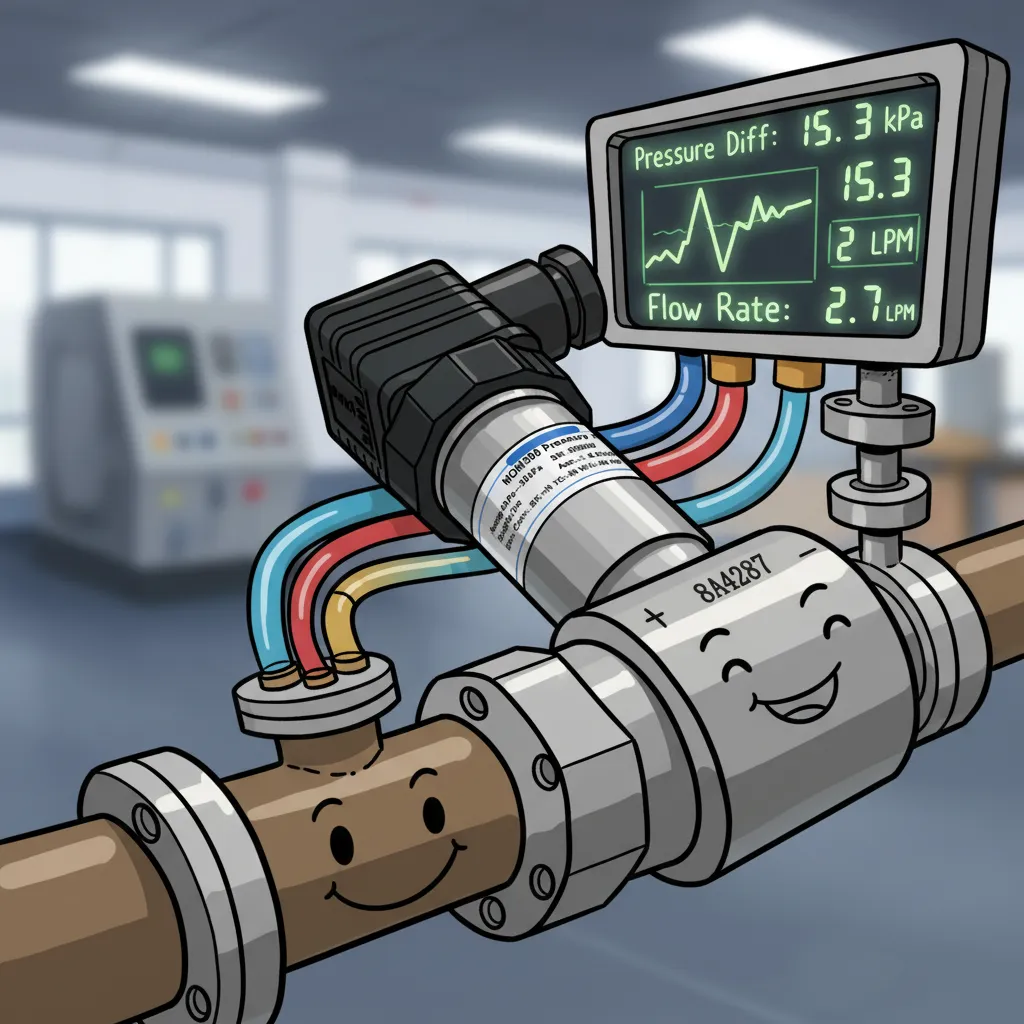
Differential pressure sensors play a vital role in industrial applications, supporting both safety and compliance in critical applications. Nearly half of industrial facilities now rely on a differential pressure sensor for process monitoring and control, with 46% of equipment using smart sensors to boost operational efficiency. These devices monitor filters, flow, and liquid levels in settings like water treatment, HVAC, and chemical plants. By providing real-time data, differential pressure sensors help detect issues early, maintain operational efficiency, and reduce downtime.
Key Takeaways
Differential pressure sensors measure pressure differences to monitor flow, filters, and liquid levels, helping industries detect problems early and improve efficiency.
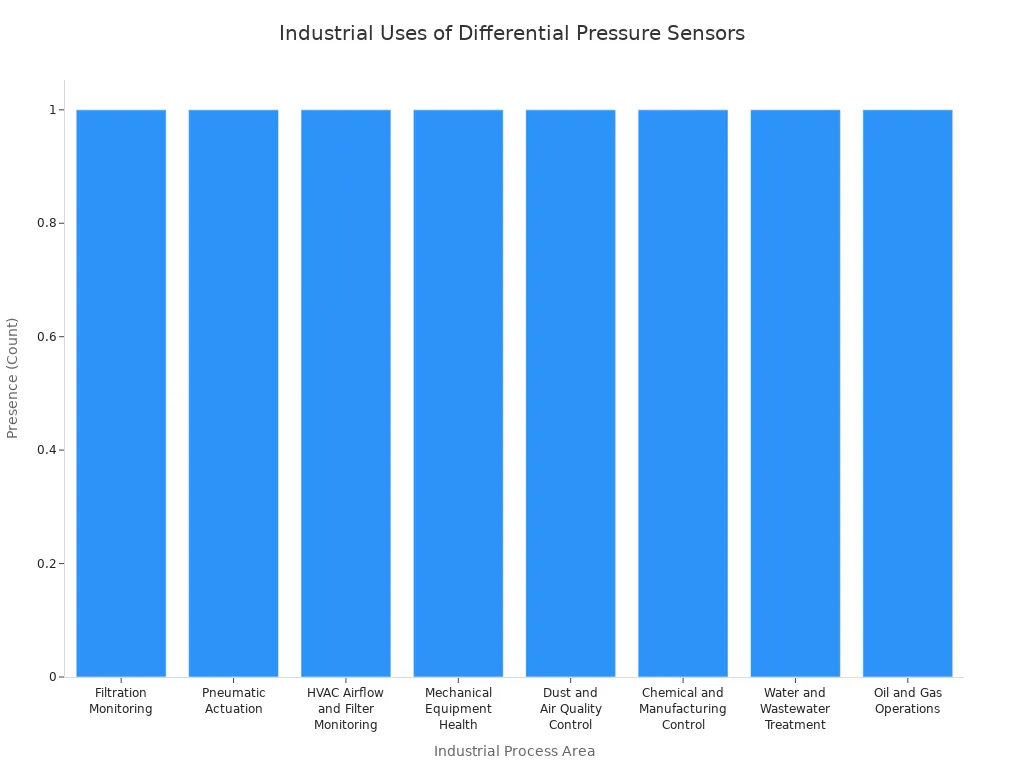
These sensors are vital in many fields like HVAC, water treatment, oil and gas, and chemical plants, supporting safety, compliance, and cost savings.
Real-time data from differential pressure sensors enables precise process control, reduces downtime, and optimizes maintenance schedules.
Choosing the right sensor involves considering material compatibility, accuracy, environment, and installation to ensure reliable performance.
Regular calibration and proper installation keep sensors accurate and extend their lifespan, preventing costly errors and equipment failures.
How Differential Pressure Sensors Work
Differential Pressure Measurement Basics
Differential pressure sensors help industries monitor and control many processes. These devices measure the pressure difference between two points in a system. Unlike absolute or gauge sensors, a differential pressure sensor does not use a fixed reference. Instead, it compares two variable pressure points. This method allows operators to track changes in flow, filter condition, or liquid level.
The Bernoulli equation explains how fluid flow creates a pressure differential. When fluid passes through a constriction, such as an orifice plate, its velocity increases and pressure drops. The resulting pressure difference can be measured and used to calculate flow rate. This principle forms the basis of differential pressure measurement in many industrial settings.
Note: Differential pressure measurement often uses sensing elements like diaphragms or bellows. These elements deform when exposed to different pressures, and the deformation is converted into readable values or electrical signals.
Key Components and Types
A typical industrial differential pressure sensor contains several important parts:
Pressure ports allow fluids or gases to enter and create a pressure differential.
A diaphragm acts as a flexible membrane that responds to pressure changes.
The sensing element converts diaphragm movement into electrical signals.
The transmitter processes these signals for display or further analysis.
Different types of differential pressure sensors use various operating mechanisms. The table below highlights some common types and how they work:
Sensor Type | Operating Mechanism |
|---|---|
Two pressures act on opposite sides of a diaphragm; deflection shows the pressure differential. | |
Two absolute pressure sensors | Two sensors measure pressures independently; electronics calculate the difference. |
Piezoresistive (Wheatstone bridge) | Pressure changes resistance in a bridge circuit; output is amplified. |
Measures capacitance change as an elastic element twists under pressure. | |
Resistive differential | Bending metals change resistance, providing fast response. |
These types of differential pressure sensors support a wide range of industrial applications. Their robust design ensures accurate and reliable pressure measurement technology, even in harsh environments.
Industrial Applications
Filtration and Filter Monitoring
Differential pressure sensors play a crucial role in filtration systems across many industrial applications. These sensors monitor the pressure difference across filters, providing real-time data that helps operators detect blockages or filter degradation early. For example, in HVAC systems, a differential pressure sensor measures the pressure before and after an air filter. As dust accumulates, the pressure drop increases, signaling the need for maintenance. This approach prevents unnecessary filter changes and reduces energy costs by ensuring fans do not work harder than necessary.
In water treatment plants, differential pressure sensors detect clogs in filtration stages, helping maintain water quality and regulatory compliance. Pharmaceutical manufacturers use these sensors to monitor HEPA filters in cleanrooms, ensuring sterile environments and product safety. The table below highlights common filter monitoring applications:
Application Examples | Description |
|---|---|
Air filters | Detect clogging and schedule timely maintenance. |
Fuel filters | Monitor diesel generator filters for optimal performance. |
Diesel Particulate Filter (DPF) | Identify soot buildup and trigger cleaning cycles. |
Chillers | Maintain cooling efficiency by monitoring filter condition. |
Commercial water filtration | Ensure water quality by detecting filter blockages. |
Operators rely on real-time alerts from differential pressure sensors to prevent downtime, avoid costly repairs, and maintain system reliability.
Flow and Level Measurement
Flow measurement is another key area where differential pressure sensors excel. In industrial pipelines, these sensors measure the pressure drop across a restriction, such as an orifice plate or venturi tube. The resulting data allows operators to calculate flow rates accurately. This method supports process control in industries like oil and gas, water treatment, and chemical processing.
For example, in oil pipelines, a differential pressure sensor provides real-time flow measurement, ensuring safe and efficient transport of crude oil. In food and beverage plants, these sensors help maintain consistent product quality by monitoring flow rates during production.
Level measurement in liquefied gas tanks also depends on differential pressure sensors. By measuring the pressure difference between the bottom and top of a tank, operators can determine the exact liquid level, even in sealed or pressurized environments. This technique is essential for monitoring liquid CO2 and other cryogenic gases, where traditional sensors may fail due to extreme conditions.
Real-time data from differential pressure sensors ensures accurate flow and level measurement, supporting safety, efficiency, and regulatory compliance.
HVAC and Building Systems
HVAC optimization relies heavily on differential pressure sensors. These sensors monitor airflow across filters, ducts, and fans, providing real-time feedback to building management systems. By detecting pressure changes, the system can adjust dampers and fan speeds to maintain comfort and energy efficiency.
In large commercial buildings and data centers, differential pressure sensors help maintain positive or negative pressure zones. This control prevents dust and contaminants from entering sensitive areas, such as server rooms or laboratories. The sensors also support predictive maintenance by identifying clogged filters or leaks early, reducing downtime and repair costs.
Key benefits of using differential pressure sensors in HVAC systems include:
Optimized maintenance schedules based on real-time data
Enhanced energy efficiency by preventing unnecessary fan load
Improved indoor air quality and occupant comfort
Support for sustainability initiatives through demand-controlled ventilation
Building operators achieve reliable HVAC optimization and regulatory compliance by integrating differential pressure sensors into their systems.
Oil, Gas, and Chemical Industries
Differential pressure sensors are essential for safety and efficiency in oil, gas, and chemical industries. These sectors use the sensors to monitor pressure differences in pipelines, storage tanks, and processing equipment. Real-time monitoring helps detect leaks, blockages, and overpressure conditions before they escalate into hazardous events.
For instance, during drilling operations, a differential pressure sensor tracks fluid levels and pressures, reducing the risk of spills and equipment failure. In chemical plants, sensors monitor reactors and storage vessels, providing early warnings of abnormal pressure changes. This proactive approach protects personnel, assets, and the environment.
Case studies show that differential pressure sensors have prevented overfill accidents at oil terminals and improved operational efficiency through automated proof tests. These sensors also support regulatory compliance by maintaining safe pressure levels and providing accurate records for audits.
The reliability and precision of differential pressure sensors make them indispensable for maintaining safety, efficiency, and compliance in critical industrial applications.
Benefits of Differential Pressure Sensors
Efficiency and Process Control
Differential pressure sensors drive operational efficiency in many industrial settings. These sensors detect blockages and leaks by monitoring pressure drops across filters, pumps, and valves. Operators use real-time data to spot inefficiencies and make real-time adjustments. This leads to enhanced equipment performance and reduced downtime.
Differential pressure sensors enable precise regulation of flow rates, which optimizes process control.
Accurate measurements help companies save costs by reducing energy consumption.
Integration with Industry 4.0 technologies, such as IoT and machine learning, supports real-time performance optimization.
Improved noise immunity and simplified installation reduce maintenance needs and potential leak points.
Differential pressure flow measurement also offers a cost-effective and versatile way to measure fluid flow rates. The use of square root extraction creates a linear relationship between pressure and flow, improving accuracy and instrument rangeability.
Safety and Compliance
Differential pressure sensors play a key role in maintaining safety and meeting regulatory standards. Industries such as pharmaceuticals and cleanroom manufacturing must follow strict guidelines, including FDA and EU GMPs, which require continuous monitoring of pressure differences. These sensors help facilities control contamination and pass audits.
Regulatory standards like ANSI/ISA-60079, IEC 61508, and ISO 5167 guide the use of differential pressure sensors in hazardous areas.
Certifications such as ATEX and IECEx ensure sensors meet safety requirements.
Companies rely on these sensors to detect leaks or airflow disruptions that could cause violations.
Automated systems use real-time data to stabilize air pressure and prevent unsafe conditions.
By maintaining proper airflow and pressure, companies avoid fines, shutdowns, and contamination risks.
Maintenance and Cost Savings
Routine calibration and maintenance keep differential pressure sensors performing at their best. Regular inspections, cleaning, and calibration extend sensor life and reliability. Operators benefit from real-time monitoring, which enables timely filter replacement and prevents unnecessary maintenance.
Explanation | |
|---|---|
Optimized Maintenance | Replace filters only when needed, saving money. |
Downtime Prevention | Early warnings reduce costly interruptions. |
Energy Efficiency | Maintain optimal airflow and pressure, lowering energy costs. |
Proactive Asset Management | Remote monitoring and data-driven decisions improve resource use. |
IoT-enabled sensors allow real-time remote monitoring and predictive maintenance. These features help companies avoid downtime, reduce energy waste, and achieve long-term operational efficiency.
Choosing a Differential Pressure Sensor
Selection Criteria
Selecting the right differential pressure sensor requires careful evaluation of several factors. Engineers must match the sensor type to the specific application. The following list highlights key criteria:
Material Compatibility: The sensor’s wetted parts must resist corrosion and damage from the process media. For example, titanium or nickel alloys work well in harsh chemical environments.
Measurement Range: The sensor should cover the expected pressure range without sacrificing accuracy.
Accuracy Requirements: High-precision applications, such as pharmaceutical or cleanroom monitoring, demand sensors with tight accuracy specifications.
Environmental Conditions: Temperature extremes, humidity, and contaminants can affect sensor performance. Specialized construction or isolation techniques may be necessary.
Installation Environment: The sensor housing must withstand vibrations, electromagnetic interference, and physical impacts.
Long-term Operational Costs: Maintenance, calibration needs, and downtime affect the total cost of ownership.
Sensor Interchangeability: Replacement sensors should maintain system performance, accounting for zero and span offset errors.
Smart differential pressure sensors offer advanced features, such as remote monitoring capabilities, which help reduce maintenance costs and improve system reliability.
Common Challenges
Industrial teams often face several challenges during installation and calibration:
Improper mounting or positioning can lead to inaccurate readings.
Inadequate sealing exposes sensors to moisture or chemicals, causing damage.
Electrical wiring errors disrupt sensor signals.
Environmental interference, such as vibrations or electromagnetic fields, degrades performance.
Neglecting regular calibration results in measurement drift.
Human errors, like incorrect setup or misreading data, impact reliability.
Low-pressure calibration can be difficult due to the need for stable reference standards.
A common misconception is that all differential pressure sensors are the same. In reality, each application requires a tailored solution.
Implementation Tips
To ensure accurate and reliable sensor performance, teams should follow these best practices:
Place sensors away from turbulence, vibration, and electromagnetic sources.
Follow manufacturer guidelines for orientation and alignment.
Use secure mounting to minimize mechanical stress.
Protect sensors from dust, humidity, and chemical exposure.
Schedule regular calibration and maintenance.
Maintain clear documentation of installation and calibration activities.
Consult experts or manufacturers for application-specific advice.
Tip: Always verify system compatibility before integrating new sensors to avoid data or control issues.
Differential pressure sensors remain vital for modern industry. They deliver accurate data for flow, level, and filter monitoring, supporting safety and efficiency in many sectors. Their adaptability and precision help extend equipment life and reduce costs. New trends, such as IoT integration and advanced materials, promise even smarter and more reliable sensors. Decision-makers should review their process needs, pressure ranges, and environmental factors before choosing a solution. Regular calibration and expert guidance ensure long-term success.
FAQ
What is the main function of a differential pressure sensor?
A differential pressure sensor measures the difference in pressure between two points. This information helps operators monitor flow, filter condition, or liquid level in industrial systems.
How often should teams calibrate differential pressure sensors?
Experts recommend calibration at least once a year. Some critical applications may require more frequent checks to ensure accuracy and compliance with industry standards.
Can differential pressure sensors work in harsh environments?
Yes. Many industrial sensors use robust materials like stainless steel or titanium. These materials resist corrosion and withstand extreme temperatures, making the sensors reliable in tough conditions.
What industries benefit most from differential pressure sensors?
Oil and gas
Water treatment
HVAC
Chemical processing
Pharmaceuticals
These industries use sensors to improve safety, efficiency, and regulatory compliance.