How to Identify a Bad MAP Sensor in 2025
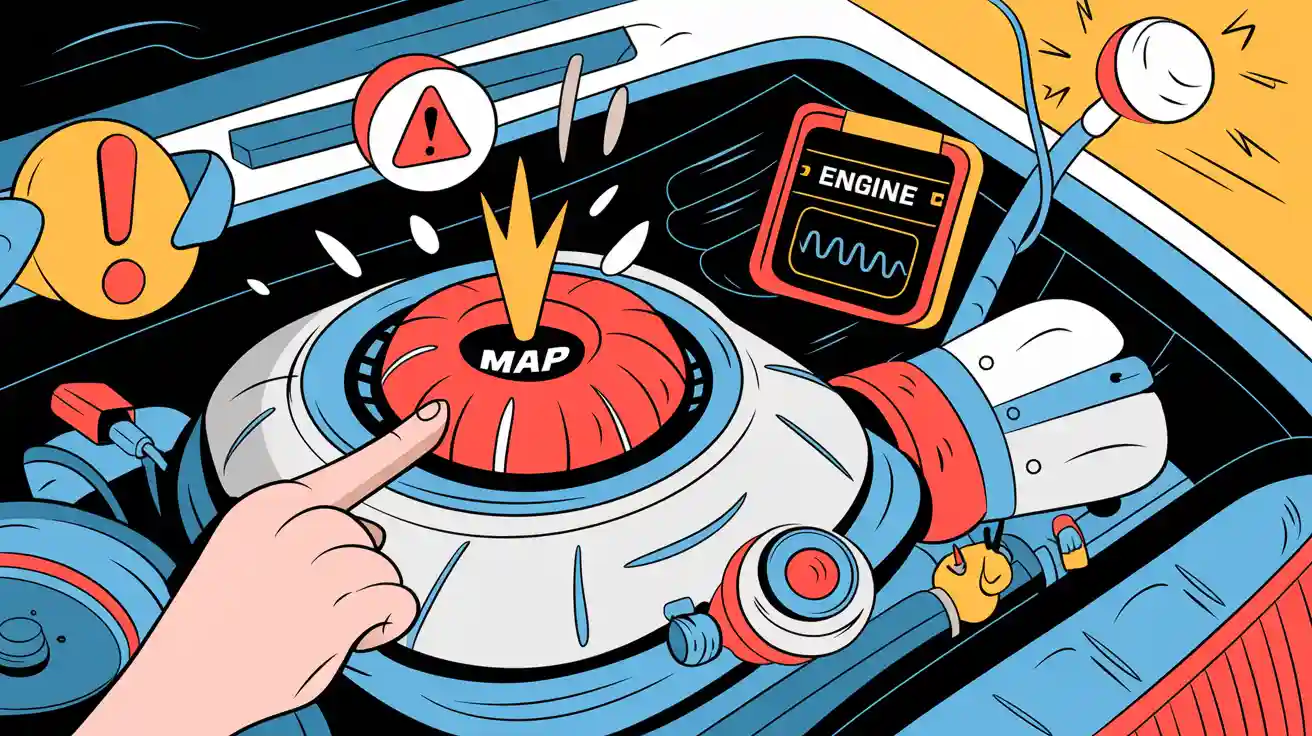
You may notice poor fuel economy, rough idle, or hesitation when you accelerate. These signs often point to a problem with your manifold absolute pressure sensor. Quick action helps your engine last longer and saves money.
| Benefit | Engine Longevity | Repair Costs |
|---|---|---|
| Prevents severe engine damage | Increases longevity | Saves thousands |
| Improves fuel efficiency | Enhances performance | Reduces costs |
| Reduces harmful emissions | Maintains reliability | Lowers maintenance costs |
| Enhances throttle response | Improves cold-start | Streamlines repairs |
Key Takeaways
- Watch for signs like poor fuel economy, rough idle, and stalling. These symptoms indicate a potential issue with your MAP sensor.
- Perform a visual inspection of the MAP sensor. Look for damaged wires, corrosion, or dirt that could affect its performance.
- Use a multimeter or scan tool to test the MAP sensor. Ensure voltage readings match your car's service manual for accurate diagnosis.
MAP Sensor Symptoms
Common Signs
You may notice several early warning signs when your manifold absolute pressure sensor starts to fail. These symptoms often appear during everyday driving and can affect your car’s performance and efficiency.
- Poor fuel economy: Your car uses more gas than usual. You might visit the pump more often.
- Rough idle: The engine shakes or vibrates when you stop at a light. The RPM needle may jump around.
- Hesitation during acceleration: You press the gas pedal, but the car feels slow to respond.
- Excessive fuel consumption: The engine burns more fuel, sometimes causing a strong gasoline smell, especially when idling.
- Rich or lean mixture: The air-fuel ratio becomes unbalanced. A rich mixture can cause rough idle and poor fuel economy. A lean mixture may lead to surging or stalling.
Tip: If you notice a strong gasoline odor or your car struggles to maintain a steady idle, check the manifold absolute pressure sensor first.
Severe Issues
If you ignore the early signs, more serious problems can develop. These issues can make driving unsafe and may damage your engine.
- Stalling: The engine shuts off unexpectedly, especially when you stop or accelerate.
- Lack of power: Your car feels weak and struggles to climb hills or pass other vehicles.
- Backfiring through the intake: You hear popping sounds from the engine, which can signal a lean air-fuel mixture.
- Overheating: The engine temperature rises quickly, which can lead to costly repairs.
- Failed emissions test: Your car may not pass inspection due to increased emissions.
You should address these symptoms quickly. A faulty manifold absolute pressure sensor can cause both minor annoyances and major engine problems.
Diagnosing the Manifold Absolute Pressure Sensor

Visual Inspection
You can start by looking at the manifold absolute pressure sensor and the area around it. Find the sensor on the intake manifold. Check for broken wires, loose connectors, or signs of corrosion. Dirt and oil can build up on the sensor and cause problems. If you see cracks or damage, the sensor may not work right.
- Look for frayed or disconnected wires.
- Check for rust or greenish corrosion on the sensor terminals.
- Make sure the sensor is firmly attached to the manifold.
Tip: Use a flashlight to see small cracks or dirt that might hide in hard-to-reach spots.
Testing with Tools
You can use simple tools to test the manifold absolute pressure sensor. A multimeter helps you check the voltage. A scan tool lets you read sensor data from your car’s computer.
-
Multimeter Test
Set your multimeter to measure voltage. Turn the ignition key to the "on" position, but do not start the engine. Touch the multimeter probes to the sensor terminals. Compare the voltage reading to the numbers in your car’s service manual. If the reading is far off, the sensor may be bad. -
Scan Tool Test
Plug a scan tool into your car’s OBD-II port. Start the engine. Look for the manifold absolute pressure sensor readings. The numbers should change when you press the gas pedal. If the readings stay the same or jump around, the sensor may not send the right information.
| Tool | What It Checks | What You Should See |
|---|---|---|
| Multimeter | Voltage at sensor terminals | Steady voltage within spec |
| Scan Tool | Sensor data from computer | Changing values as engine runs |
Note: Always check your car’s service manual for the correct voltage and sensor readings.
Causes and Fixes
Many things can cause the manifold absolute pressure sensor to fail. Heat, moisture, and dirt can damage the sensor over time. Electrical problems like short circuits or broken wires also lead to failure.
Common causes include:
- Old age and wear
- Water or oil leaks
- Damaged wiring
- Faulty connectors
You can fix some problems by cleaning the sensor and connectors. If the sensor is broken or the wires are damaged, you may need to replace them. Always use a new sensor that matches your car’s make and model.
⚠️ Driving with a bad manifold absolute pressure sensor can hurt your engine. You may waste fuel, fail emissions tests, or even damage the engine. Fix the problem as soon as you can to keep your car running well.
You can spot a bad MAP sensor by watching for rough idle, poor fuel economy, or stalling. Ignoring these signs can lead to bigger problems:
| Symptoms of Bad MAP Sensor | Potential Risks |
|---|---|
| Rough or uneven idling | Poor engine performance |
| Difficulty starting | Lower fuel efficiency |
| Engine stalling during acceleration | Potential damage to the catalytic converter |
| Lack of power | Increased emissions |
| Check engine light | Diagnostic challenges |
If you feel unsure, seek help from a professional repair facility. You can also use an OBD-II scanner or consult your service manual. Regular maintenance and using quality parts help you keep your car running strong. Stay alert, act early, and you will drive with confidence. 🚗
FAQ
How often should you replace a MAP sensor?
Most MAP sensors last over 100,000 miles. Replace yours if you notice symptoms or after a mechanic confirms it is faulty.
Can you drive with a bad MAP sensor?
You can drive for a short time, but you risk engine damage and poor fuel economy. Fix the sensor as soon as possible.
Will a bad MAP sensor trigger the check engine light?
- Yes, a faulty MAP sensor often causes the check engine light to turn on.
- Use an OBD-II scanner to confirm the problem.