The Ultimate Guide to DSP Applications in 2025
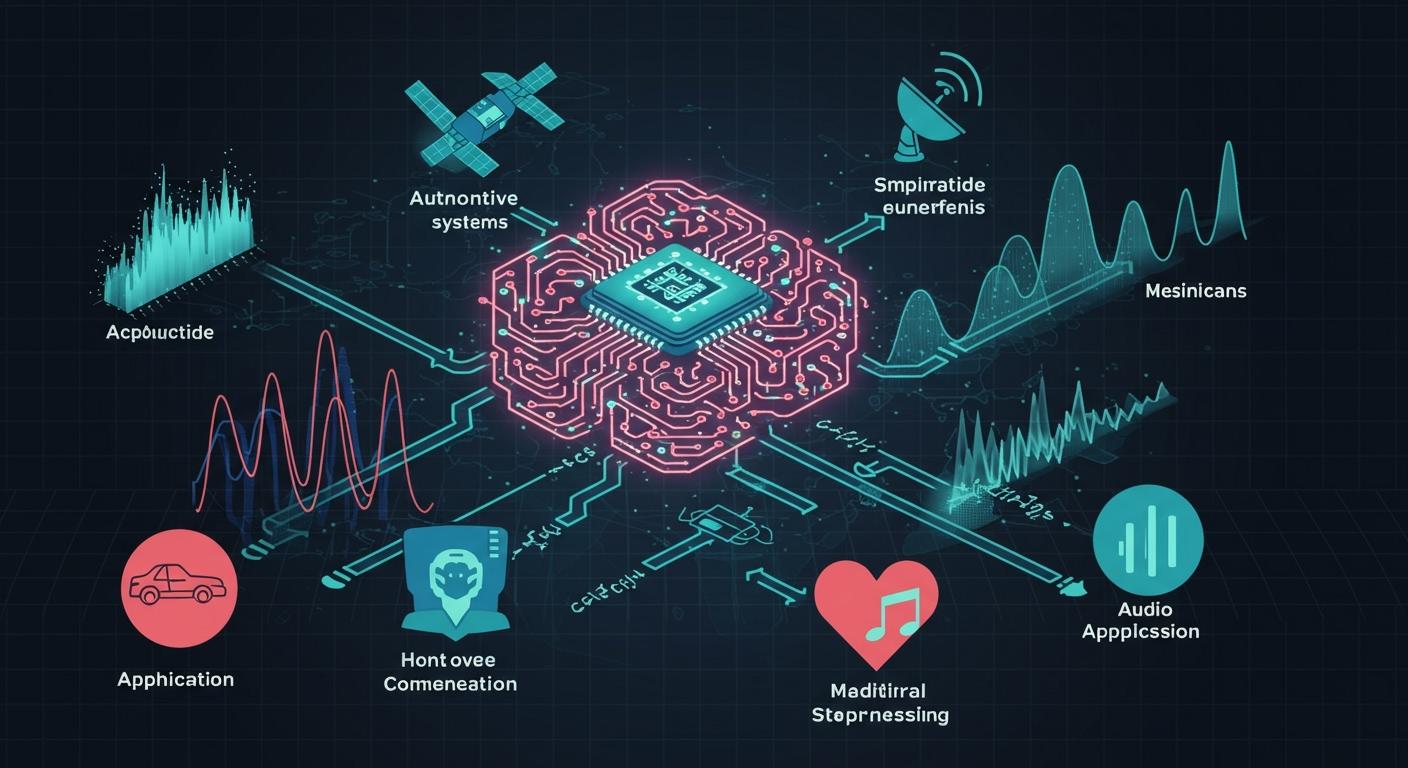
Digital Signal Processing (DSP) is the invisible technology powering many of our favorite smart devices. This technology makes modern life easier. It is the magic behind clear audio calls, stunning photos, and smooth video streams. The global Digital Signal Processor Market was valued at USD 10.1 billion in 2024 and is projected to increase to USD 11.04 billion in 2025. This growth highlights the expanding applications of digital signal processing. We can define digital signal processing with a simple analogy.
DSP acts as a digital filter. It cleans up and enhances the signals of our modern world. This process improves voice, audio, and speech communication.
The field of DSP continues to expand its applications. Its market size is projected to grow to USD 25.92 billion by 2035, showing its lasting impact.
Key Takeaways
- Digital Signal Processing (DSP) improves our daily lives. It makes audio clear, photos sharp, and videos smooth.
- DSP changes real-world signals into digital data. It then cleans and enhances this data for our devices.
- DSP is important for many things. These include clear phone calls, better photos, and fast wireless internet.
- DSP helps in important areas like medical imaging and car safety. It makes diagnoses better and driving safer.
- The future of DSP includes AI. This will make devices smarter and process information even faster.
Define Digital Signal Processing
To define digital signal processing, we must first understand signals. The world around us creates analog signals, like the sound waves from your voice. Computers, however, only understand digital information—ones and zeros. Digital signal processing is the technology that translates, cleans, and improves these signals for our digital devices. This powerful field makes modern communication and entertainment possible.
From Analog to Digital
The first step in digital signal processing is converting a real-world signal into a digital format. This process is called analog to digital conversion. It uses a special piece of hardware called an Analog-to-Digital Converter (ADC). These converters are complex integrated circuits that sample an analog signal at regular intervals and turn each sample into a digital number.
A crucial rule for this conversion is the Nyquist-Shannon sampling theorem. It states that the sampling frequency must be at least twice the highest frequency in the signal. This ensures a perfect digital copy without losing information. A low-pass filter is often used beforehand to remove frequencies that are too high, preventing errors. After the DSP processes the data, a digital to analog conversion turns it back into a signal we can hear or see.
The Core Process: Filter, Compress, Enhance
Once a signal is digital, a DSP chip can perform mathematical operations on it. This is how we define digital signal processing in action. The core processes involve filtering, compressing, and enhancing the data.
- Filter 🎧: Digital filters remove unwanted noise or isolate specific frequencies.
- Infinite Impulse Response (IIR) filters are great for tasks like audio equalization.
- Finite Impulse Response (FIR) filters are used in audio and biomedical applications where signal purity is critical.
- Compress 📦: Compression makes files smaller. The JPEG format for images uses a technique called the Discrete Cosine Transform (DCT) to remove less important visual data. Similarly, MP3 audio compression removes sounds the human ear cannot hear. This is a key function of digital signal processing.
- Enhance ✨: By filtering and applying other algorithms, DSP can sharpen images, clarify voices in a phone call, and improve overall quality. The final step is often a digital to analog conversion, presenting the improved signal back to the user.
Core Applications of Digital Signal Processing

Digital signal processing is a cornerstone of modern technology. Its applications are widespread and deeply integrated into our daily lives. The technology works behind the scenes to improve our communication, entertainment, and safety. These core applications of digital signal processing show how essential the field has become.
Audio and Speech Processing 🎤
Users enjoy crystal-clear phone calls and immersive music thanks to audio processing. DSP is the engine that drives these high-quality audio experiences. It refines sound for better communication and listening pleasure.
In teleconferencing, DSP makes conversations intelligible. Software like Zoom and Microsoft Teams uses built-in noise suppression algorithms. These tools improve call clarity on many devices. For professional setups, external DSP processors provide even better results. They often feature superior Acoustic Echo Cancellation (AEC) algorithms. AEC stops sound from loudspeakers from entering microphones, which prevents echo. DSP with Noise Reduction (NR) also filters out constant background sounds like air conditioners or traffic. This makes every voice easier to hear. Modern systems combine adaptive filters with AI models. These advanced tools can predict and remove echo even when people talk over each other.
DSP is also vital for voice recognition in virtual assistants. When a user speaks to a device like Amazon Alexa, the audio signal processing begins.
- The system samples the audio, typically at 16kHz.
- It then uses a technique called Mel-Frequency Cepstral Coefficients (MFCC).
- This technique converts the time-domain speech signal into frequency-domain features.
- The AI can then analyze these features to understand the command.
This entire voice processing pipeline relies on fast and efficient DSP to provide instant responses.
Image and Video Processing 📸
DSP technology is crucial for the amazing photos and videos we capture on our devices. Digital signal processors inside cameras and smartphones enhance image quality. They reduce noise, improve sharpness, and optimize exposure for a perfect shot. These applications of digital signal processing turn simple snapshots into vibrant memories.
One of the most important functions is image stabilization. DSP algorithms analyze motion data from sensors in real time. If the DSP detects a shaky hand, it adjusts the image to counteract the blur. This results in a sharper, clearer picture. This same processing power supports other advanced features, including augmented reality applications.
DSP also enables powerful security and identification features. Advanced image processing techniques allow for facial recognition and object detection. Some security systems use a dedicated DSP core processor for this task.
This shows how DSP can handle massive amounts of data for complex image analysis, making our environments safer. The role of DSP in video processing continues to grow with these new applications.
Wireless Communications 📶
Fast and reliable wireless connections are essential for modern life. Digital signal processing is the invisible force that makes robust Wi-Fi and 5G communication possible. DSP engineers implement complex algorithms that improve how our devices send and receive data. These algorithms help create faster and more stable communication systems.
A key technology in modern wireless communications is Multiple-Input Multiple-Output (MIMO). MIMO systems use multiple antennas to send and receive more data at once. DSP is critical to making this work.
- It converts signals from all antennas into the digital domain for advanced processing.
- It solves for complex channel distortions to recover individual data streams cleanly.
- It enables a technique called Eigen-beamforming, which adapts antenna patterns to increase signal gain, even when there are many reflections.
Essentially, DSP helps the receiver solve multiple complex equations simultaneously. This sophisticated baseband processing interprets the communication channel more effectively. The result is higher data throughput for faster downloads, smoother streaming, and more reliable digital communications. The future of high-speed communication systems depends heavily on innovations in DSP.
Advanced DSP Applications
Digital signal processing extends far beyond consumer electronics. It plays a critical role in specialized, high-stakes fields where precision and reliability are essential. These advanced applications show how DSP technology saves lives and powers critical infrastructure.
Medical Imaging
In healthcare, DSP is a key tool for improving medical diagnostics. It sharpens the images from Magnetic Resonance Imaging (MRI) and Computed Tomography (CT) scanners. This enhancement gives doctors a clearer view, helping them make more accurate diagnoses. DSP algorithms filter out noise and artifacts from the raw data, resulting in a cleaner final image.
The technology is also vital for biomedical signal processing. DSP analyzes signals from the human body to detect health issues.
- ECG Signal Analysis: DSP processes electrocardiogram (ECG) signals to monitor heart health. It removes noise, identifies key features like R-peaks, and helps detect arrhythmias or other cardiovascular problems.
- EEG Signal Analysis: For electroencephalogram (EEG) signals, DSP helps study brain function. It removes artifacts like eye blinks and analyzes frequency bands to detect epileptic seizures or aid in the diagnostics of neurological disorders.
These techniques are fundamental to modern medical diagnostics, providing doctors with powerful tools for patient care.
Automotive Safety Applications
DSP is the brain behind many automotive safety features. It processes data from various sensors to make Advanced Driver-Assistance Systems (ADAS) possible. These systems improve driver awareness and vehicle safety. Next-generation ADAS solutions require multiple processing elements, including image signal processing (ISP) and general system processing (CPUs). DSP works alongside these components to handle real-time data.
Automotive DSP chips perform rapid mathematical operations. They enable features like adaptive cruise control by analyzing data from cameras, radar, and lidar sensors. The process involves several key steps:
- Sensor Data Collection: The DSP receives raw data from sensors gathering real-time information.
- Pre-processing: It filters noise from sensor signals to prepare the data for analysis.
- Feature Extraction: The chip identifies important features like other cars, lanes, or pedestrians.
- Data Fusion: It combines inputs from multiple sensors to create a complete environmental model.
- Decision Support: The processed data informs vehicle control systems about necessary actions.
- Actuator Commands: The DSP sends commands to execute driving decisions with minimal delay.
For collision avoidance, DSP interprets data from radar and lidar sensors to identify hazards. It allows the system to apply automatic braking or steering, helping to reduce accidents.
DSP also enhances the in-car audio experience. It uses techniques like equalization and time alignment to create a balanced and immersive soundstage. These applications make driving safer and more enjoyable.
Radar and Control Systems
DSP is essential for modern radar and control systems. In military and air traffic control, DSP ICs process huge amounts of data in real time. This capability allows radar systems to perform target detection, tracking, and identification. DSP uses techniques like Doppler filtering to refine target identification and reduce false alarms. This helps air traffic controllers focus on moving aircraft by filtering out stationary objects.
DSP also improves the accuracy of Global Positioning System (GPS) signals. It enhances weak signals, filters out noise, and corrects for errors caused by atmospheric delays or multipath interference. This digital signal processing ensures that location data is reliable.
In automated manufacturing, DSP provides the precision needed for industrial robotics.
- High-performance DSP chips are found in the control systems of industrial robots.
- They are crucial for achieving precise control over a robot's motion.
- The control system makes real-time adjustments based on feedback to ensure the robot's stability and reliability.
These advanced applications demonstrate the power and versatility of DSP technology in critical industries.
The Future: AI and Real-Time Signal Processing

The worlds of Artificial Intelligence (AI) and digital signal processing are merging. This combination is creating powerful new technologies. It pushes the boundaries of what is possible with real-time data analysis and system intelligence.
Edge AI and IoT Devices
AI and automation are transforming the DSP landscape. They enhance real-time signal processing, signal recognition, and system adaptability. AI-powered DSP systems are now common in smart devices. They optimize signal clarity and processing speed. This is especially true for Edge AI, where real-time processing happens directly on a device instead of in the cloud. This integration is crucial for applications involving audio, video, and sensor data. It enables real-time responses for voice assistants and facial recognition.
The demand for real-time data analytics is growing in the defense and automotive sectors. This growth drives the market for AI in radar signal processing.
| Metric | 2024 Value | 2033 Forecast | CAGR (2025-2033) |
|---|---|---|---|
| Global Radar Signal Processing AI Market Size | USD 1.87 billion | USD 8.27 billion | 17.6% |
North America currently leads this market. However, the Asia Pacific region is the fastest-growing area, fueled by government initiatives promoting AI.
The Future of Digital Signal Processing
The future of digital signal processing will be defined by its partnership with machine learning. This integration enables amazing advances in autonomous vehicles and personalized medicine. A DSP chip can perform real-time processing of sensor data from radar and cameras. This allows a vehicle to understand its surroundings and navigate safely. In healthcare, DSP algorithms learn from patient data to create tailored monitoring systems.
Emerging research trends highlight this shift toward smarter, more efficient DSP technology.
- Hybrid Architectures: New DSP designs include AI accelerators. These hybrid chips offer highly efficient solutions for specific, demanding applications.
- Quantum Interfacing: As quantum computing grows, DSP may act as a bridge. It could help control and read quantum bits, connecting classical and quantum systems.
This evolution ensures that real-time signal processing remains a cornerstone of future technology, from smarter cars to advanced medical devices.
Digital signal processing is the fundamental engine powering modern life. It drives everything from entertainment and healthcare to safety and communication. The technology's main role is to translate and improve the signals that connect our digital and physical worlds.
Its work ensures clear and effective communication.
The importance of digital signal processing will grow with the rise of AI and IoT. Future systems will rely on DSP to handle complex data. These advancements help define digital signal processing as a cornerstone of tomorrow's technology.
FAQ
What is the difference between a DSP and a CPU?
A Central Processing Unit (CPU) handles general computing tasks. A Digital Signal Processor (DSP) is a specialized chip. It performs complex math for signal processing very quickly. This makes it perfect for real-time jobs like audio and video analysis.
Is DSP a good career field?
Yes, DSP offers a strong career path. Experts are needed in telecommunications, consumer electronics, and automotive safety. The demand grows with the rise of AI and IoT devices. This creates many opportunities for skilled engineers in the field.
How does DSP improve my phone calls?
DSP makes your phone calls much clearer. It removes background noise and cancels echoes from the audio signal. This technology isolates the human voice for better communication. It greatly improves the quality of your voice during a conversation.
Can I find DSP in household items?
Yes, you can find DSP technology in many common household items. Smart speakers, digital televisions, and even some modern appliances use DSP chips to perform their functions efficiently and intelligently.