Understanding DC and AC Converter Functions in Sustainable Energy Solutions
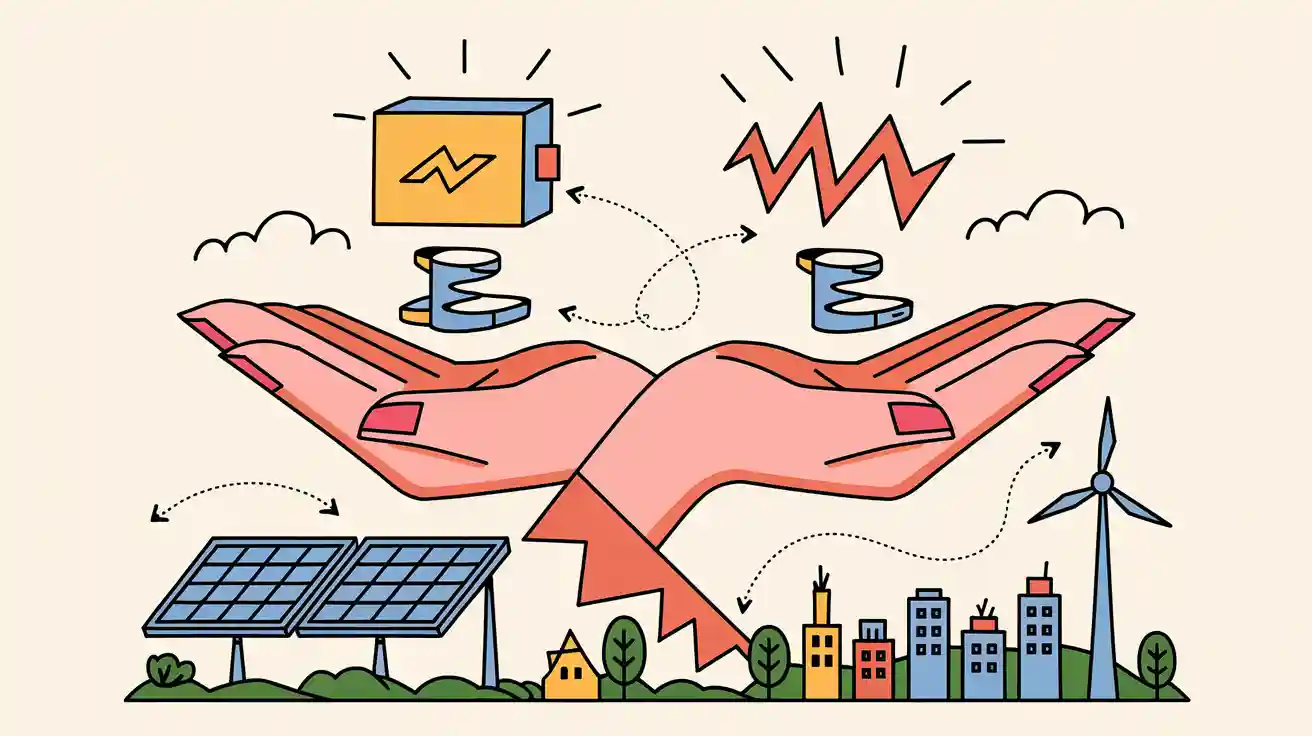
Renewable energy sources like solar panels and wind turbines often produce electricity in forms that homes and businesses cannot use directly. A dc and ac converter changes direct current to alternating current or vice versa, making power from renewable sources ready for everyday use. Converters play a vital role in solar systems, helping store energy and send it to the grid. People often want to know how converters work, what they do, and how they affect energy efficiency and reliability in renewable projects.
Key Takeaways
- Converters change electricity from renewable sources into usable power by matching voltage and current types for homes and the grid.
- Inverters turn direct current (DC) from solar panels or batteries into alternating current (AC) needed for most devices and the power grid.
- Converters improve energy efficiency by optimizing power flow and using smart controls to get the most energy from solar and wind sources.
- Safety features in converters protect equipment and people by preventing overloads, surges, and overheating.
- Advances in converter technology, like smart controls and new materials, make renewable energy systems more reliable and easier to integrate with the grid.
DC and AC Converter Basics
What Are Converters?
Converters change one form of electrical power into another. In renewable energy systems, a dc and ac converter helps match the electricity produced by sources like solar panels or wind turbines to the needs of homes, businesses, and the grid. DC stands for direct current, where electricity flows in one direction. AC stands for alternating current, where the flow of electricity changes direction in a regular pattern. Most household appliances and the power grid use AC, while many renewable sources and batteries produce or store DC.
A dc and ac converter can take DC from solar panels and turn it into AC for use in homes or for feeding into the grid. Power converters also work in the opposite direction, changing AC from the grid into DC for charging batteries or running certain devices. These systems ensure that energy from renewable sources becomes usable and safe for different applications.
Converters play a key role in renewable energy systems by making sure the power produced matches the requirements of the devices and the grid.
Fundamental Differences in Operation and Application
- DC to AC converters, also called inverters, take direct current and turn it into alternating current.
- These converters use high-speed switching parts, such as transistors or MOSFETs, to create pulses from DC, then shape these pulses into smooth AC waveforms using filters and transformers.
- Output can be a modified sine wave, which is less smooth but cheaper, or a pure sine wave, which is better for sensitive electronics.
- Common input voltages include 12V, 24V, or 48V DC, which get converted to standard AC voltages like 110V or 220V at 50Hz or 60Hz, depending on the region.
- DC to AC converters serve in renewable energy systems, vehicles, backup power supplies, industrial machines, and high-voltage DC transmission.
- These converters allow DC sources to power AC devices, improve efficiency over long distances, offer voltage flexibility, and provide safety and cost benefits.
Core Functions
Converters perform several essential functions in renewable energy systems. They enable energy conversion so that power from different sources can be used efficiently and safely. Without proper conversion, the electricity from solar panels, wind turbines, or batteries would not match the voltage, frequency, or phase needed by the grid or by most electrical devices.
| Renewable Energy System | Electrical Output Characteristics | Role of Electrical Conversion |
|---|---|---|
| Solar Power (Photovoltaic) | Produces DC electricity | Converts DC to AC matching grid voltage, frequency, and phase; integrates MPPT to optimize energy extraction. |
| Wind Power | Produces variable-frequency AC power | Converts variable-frequency AC to steady AC at grid frequency; manages wind variability and turbine control. |
| Energy Storage Systems (BESS) | Stores energy as DC | Controls charging (AC to DC) and discharging (DC to AC) to ensure efficient and reliable operation. |
| Grid Integration | Intermittent and fluctuating renewable output | Aligns voltage, frequency, and phase with grid; provides anti-islanding protection for safety during failures. |
Power converters help renewable energy systems deliver stable and reliable power. They adjust voltage and frequency, protect against faults, and support the integration of renewable sources into the grid. This energy conversion process ensures that the power generated can be stored, used, or sent to the grid without causing problems or safety risks.
A dc and ac converter stands at the center of modern renewable energy systems. It bridges the gap between the variable output of renewable sources and the steady requirements of the grid and end-users. By handling energy conversion, these converters make renewable energy practical, efficient, and compatible with existing power systems.
Types of Converters
DC-DC Converters
DC-DC converters play a crucial role in renewable energy systems. They change one level of direct current voltage to another, making sure that the power from sources like solar panels and wind turbines matches the needs of the system. These converters manage power flow and help connect different energy sources and storage units in a DC microgrid.
- They adjust voltage levels between renewable sources and the DC bus.
- They allow bidirectional power flow for charging and discharging batteries.
- They support hybrid storage systems by balancing power between batteries and supercapacitors.
- They use different topologies, such as boost, buck, and dual-active-bridge, to improve efficiency.
DC-DC converters help maintain stable operation and enable flexible power management in renewable energy systems.
AC-DC Converters
AC-DC converters, also known as rectifiers, change alternating current into direct current. Many renewable energy systems use these converters to charge batteries or supply DC loads. AC-DC converters play a key role in storing energy from the grid or from wind turbines that produce AC power. They also help with the conversion process in hybrid systems, where both AC and DC sources are present.
DC to AC Power (Inverters)
Inverters, also called dc to ac converters, change direct current into alternating current. This process is known as dc to ac power conversion. Inverters make it possible for solar panels and batteries, which produce DC, to supply power to homes, businesses, and the grid, which require AC. Inverters are essential for grid integration. They match the voltage, frequency, and phase of the grid, ensuring safe and reliable operation. Modern inverters also provide grid support functions, such as voltage regulation and frequency management.
Inverters stand at the heart of renewable energy systems, making sure that clean energy can be used everywhere.
AC-AC Converters
AC-AC converters change one form of alternating current to another, often adjusting voltage or frequency. These converters help renewable energy systems connect to the grid by matching the output to grid standards. They regulate frequency to keep the grid stable, even when renewable sources fluctuate. Advanced inverter technologies in AC-AC converters provide voltage regulation and reactive power compensation. They also offer synthetic inertia and fault ride-through capability, which support grid stability during disturbances.
Power converters, including dc-ac converters and ac to dc converters, ensure that renewable energy systems deliver efficient, reliable, and compatible power. The right choice of converters supports smooth conversion and integration with the grid.
Renewable Energy Systems
Solar Energy
Solar energy systems rely on converters to make solar power generation practical for homes, businesses, and the grid. Photovoltaic panels produce direct current, but most devices and the grid require alternating current. An inverter changes the DC from solar panels into AC, matching the voltage and frequency needed for safe use.
Solar energy systems often include maximum power point tracking (MPPT) inverters. These inverters adjust the operating point of the photovoltaic panels to extract the most energy possible, even when sunlight changes. Converters also help manage energy storage. When solar power generation produces more energy than needed, converters direct the extra power to batteries. Later, these systems use inverters to release stored energy as AC when demand rises or sunlight drops.
Converters in solar energy systems ensure stable power delivery, protect against faults, and support smooth grid integration.
A typical solar energy system uses several types of converters:
- DC-DC converters adjust voltage from photovoltaic panels.
- Inverters change DC to AC for grid use.
- AC-DC converters charge batteries from the grid if needed.
These systems work together to keep solar power generation efficient and reliable.
Wind Energy
Wind energy systems use converters to handle the variable nature of wind and ensure steady power output. Wind turbines often produce AC with changing frequency and voltage. AC-DC-AC converters first change this variable AC to DC, then use an inverter to convert it back to AC that matches the grid.
Wind energy systems benefit from advanced converter technology. Modern converters use wide bandgap devices and modular multilevel designs to improve efficiency and reliability. Control strategies like MPPT, vector control, and model predictive control help maximize energy extraction from wind. Effective thermal management, such as air or liquid cooling, reduces losses and extends the lifespan of converters.
- AC-DC-AC converters control power flow, voltage, and frequency for grid stability.
- Improved converter efficiency increases energy output and reduces maintenance costs.
- Converters provide grid support, including reactive power compensation and fault ride-through.
Wind energy systems depend on converters to optimize energy flow, support storage, and maintain grid compatibility. These systems ensure that renewable power remains stable, efficient, and ready for use.
Benefits
Efficiency
Converters play a central role in boosting efficiency in renewable energy systems. They manage the flow of power from sources like solar panels and wind turbines, making sure that energy moves with minimal loss. Inverters convert DC from solar panels into AC, which matches the needs of homes and the grid. This process increases conversion efficiency and helps renewable energy reach more users. Modern converters use advanced control methods to track the maximum power point, which means they extract the most energy possible from each source. These systems also reduce waste by adjusting voltage and frequency to match the load. As a result, energy efficiency improves, and more clean power enters the grid.
Grid Compatibility
Reliable grid connectivity depends on the ability of converters to match the output of renewable energy systems with the grid’s requirements. Inverters synchronize voltage, frequency, and phase, allowing renewable sources to deliver stable power. This alignment prevents disruptions and supports smooth integration of solar and wind energy into the grid. Converters also help balance supply and demand by adjusting output in real time. They support both small-scale and large-scale systems, making renewable energy practical for homes, businesses, and utility providers. With these features, converters ensure that renewable energy systems can operate alongside traditional power sources without causing instability.
Safety
Converters enhance safety in renewable energy systems by controlling power conversion and reducing electrical risks. They include built-in features that protect both equipment and users. Some of the main safety benefits include:
- Overload protection and short-circuit prevention
- Surge protection to guard against sudden spikes in power
- Thermal shutdown mechanisms that prevent overheating
- Voltage stabilization to avoid electrical faults and fires
The following table highlights common safety features found in modern DC and AC converters:
| Safety Feature Category | Details |
|---|---|
| Protection Features | Line over and undervoltage protection, output overvoltage and over-current limiting, over-temperature shutdown |
| Fault Response | Auto-restart fault response for output overvoltage and over-current |
| Programmable Thresholds | Accurate programmable output over-current threshold, programmable input undervoltage |
| Isolation and Testing | Reinforced isolation per IEC60664-1, withstand isolation voltage >4000 VRMS, 100% production HIPOT testing |
| Certifications | UL1577, TUV (EN62368), CQC (GB4943.1), EN IEC 60747-17 (VDE 0884-17) |
| Noise Immunity | Meets class “A” performance criteria for EN61000-4 standards (4-2, 4-3, 4-4, 4-5, 4-6, 4-8, 4-9) |
These features make converters a safe choice for renewable energy systems in homes, businesses, and industrial settings. By stabilizing power and preventing faults, converters protect both people and equipment.
Challenges
Efficiency Losses
Converters in renewable energy systems face several types of efficiency losses. These losses can lower the amount of usable energy that reaches homes and businesses. Typical losses include switching losses, conduction losses, and losses from charging and discharging the output capacitance. Inductor losses also play a role, including conduction loss, iron loss, and harmonic ripple loss. Even the resistance in the printed circuit board can add to the total loss.
Device selection matters for reducing these losses. Engineers often choose devices with low conduction resistance and design gate drives to cut switching loss. The circuit layout or topology also affects efficiency. For example, some inverter designs have higher losses due to how they handle voltage and current. Adding more devices in parallel can sometimes increase losses instead of lowering them. Engineers must balance switching and conduction losses to get the best performance. Advanced measurement methods help track these losses with high accuracy. New materials like silicon carbide and gallium nitride push converter efficiency close to 99.9% in some energy systems.
Design Complexity
Modern converters must handle many tasks in renewable energy systems. They need to convert power, manage voltage, and keep the system stable. Each converter must work with different sources, such as solar panels, wind turbines, and batteries. This need for flexibility makes the design more complex.
Engineers must also fit converters into tight spaces and make sure they stay cool. They add safety features and smart controls to protect the system and users. As energy systems grow, converters must support more devices and higher power levels. This growth increases the number of parts and the difficulty of the design. Teams must test each part to make sure the system works well and stays reliable.
EMI Issues
Electromagnetic interference, or EMI, creates problems for converters in energy systems. Fast switching in power devices, like MOSFETs, can cause EMI. Discontinuous input currents and high-speed changes in voltage or current add to the problem. Poor printed circuit board design can create resonant circuits that make EMI worse.
EMI can travel through cables or radiate from connectors and metal cases. High-frequency signals above 30 MHz often radiate from the system, while lower frequencies travel through wires. Other sources include digital signals from processors and clock circuits. Engineers use grounding, shielding, and filtering to reduce EMI. Careful component selection and layout also help. Testing for EMI involves checking the frequency, strength, and timing of signals that might cause trouble.
Addressing these challenges helps converters deliver safe, efficient, and reliable power in renewable energy systems.
Advances and Trends
Smart Controls
Recent advances in smart control technology have transformed how converters operate in renewable energy systems. Engineers now use intelligent controllers, such as the Adaptive Neuro-Fuzzy Inference System (ANFIS), to manage bidirectional converters. These controllers stabilize voltage and reduce DC bus oscillations, keeping the system steady at a set reference. ANFIS-based controllers respond faster and show almost no overshoot, which improves the quality of energy and system stability.
- ANFIS-PI controllers make hybrid systems more robust.
- Smart maximum power point tracking (MPPT) methods increase energy production, especially when wind speeds change.
- Fuzzy logic algorithms help balance loads and battery charge, which extends battery life and boosts reliability.
Simulation results show that these smart controls raise converter performance and efficiency in renewable energy systems. As a result, power delivery becomes more stable and reliable.
High-Efficiency Tech
Converter technology now uses advanced materials and designs to improve efficiency and power output. Wide bandgap semiconductors, such as silicon carbide (SiC) and gallium nitride (GaN), allow converters to switch faster and handle higher voltages. These materials reduce losses and make systems more compact. High-voltage direct current (HVDC) converters, enhanced by artificial intelligence, help connect remote renewable sources to the grid. AI-driven circuit designs improve operational efficiency and grid stability. These advances support the growth of smart grid infrastructure and make renewable energy more accessible.
Storage Integration
Energy storage integration with converters has become a key trend in renewable energy systems. Both AC and DC block energy storage systems offer unique benefits. The table below compares the latest trends:
| Aspect | AC Block Energy Storage Systems | DC Block Energy Storage Systems |
|---|---|---|
| Technology Trend | Bi-directional string inverter technology at grid scale | Central inverter with battery enclosures |
| Control | Decentralized, granular control | Centralized management |
| Availability | High, due to modular inverter replacement | Lower, as central inverter failure affects more of the system |
| Flexibility | Limited inverter selection | High flexibility for project needs |
| Solar Coupling | Less common or complex | Supports efficient DC-coupling with solar |
| Market Status | Emerging, competitive | Established, widely used |
These trends allow renewable energy systems to store and deliver power more efficiently. Projects can now deploy systems faster, improve availability, and match the needs of the grid.
Future developments in converter technology, such as AI-enhanced HVDC converters, will help renewable energy systems grow. These innovations will improve grid stability, increase modularity, and make renewable power more reliable. Market forecasts show strong growth for both AC-DC converters and DC-AC inverters, driven by new applications and stricter energy standards. As a result, renewable energy adoption rates will continue to rise, making clean power a bigger part of the global energy mix.
DC and AC converters enable practical and reliable renewable energy solutions. These devices manage voltage and frequency, helping the grid stay stable when solar or wind power changes.
- Converters allow energy to flow both ways, supporting electric vehicles and storage systems.
- They improve power quality by filtering harmonics and correcting power factor.
- Maximum Power Point Tracking in converters helps use more solar energy.
Ongoing innovation in converter technology will make renewable energy even more dependable and efficient in the future.
FAQ
What is the main job of a DC-AC converter?
A DC-AC converter, also called an inverter, changes direct current from sources like solar panels into alternating current. This process makes the electricity safe and usable for homes, businesses, and the power grid.
Why do renewable energy systems need converters?
Renewable energy systems need converters to match the electricity they produce with what the grid or devices require. Converters help control voltage and frequency, making sure the power stays stable and safe.
How do converters improve energy efficiency?
Converters use smart controls and advanced materials to reduce energy loss. They track the best operating point for solar panels or wind turbines. This process helps get the most energy from each source.
Are converters safe to use in homes?
- Modern converters include safety features like overload protection, surge guards, and thermal shutdown.
- These features protect people and equipment from electrical faults.
- Certified converters meet strict safety standards for home and business use.