Exploring the Most Common Uses for Bridge Rectifiers
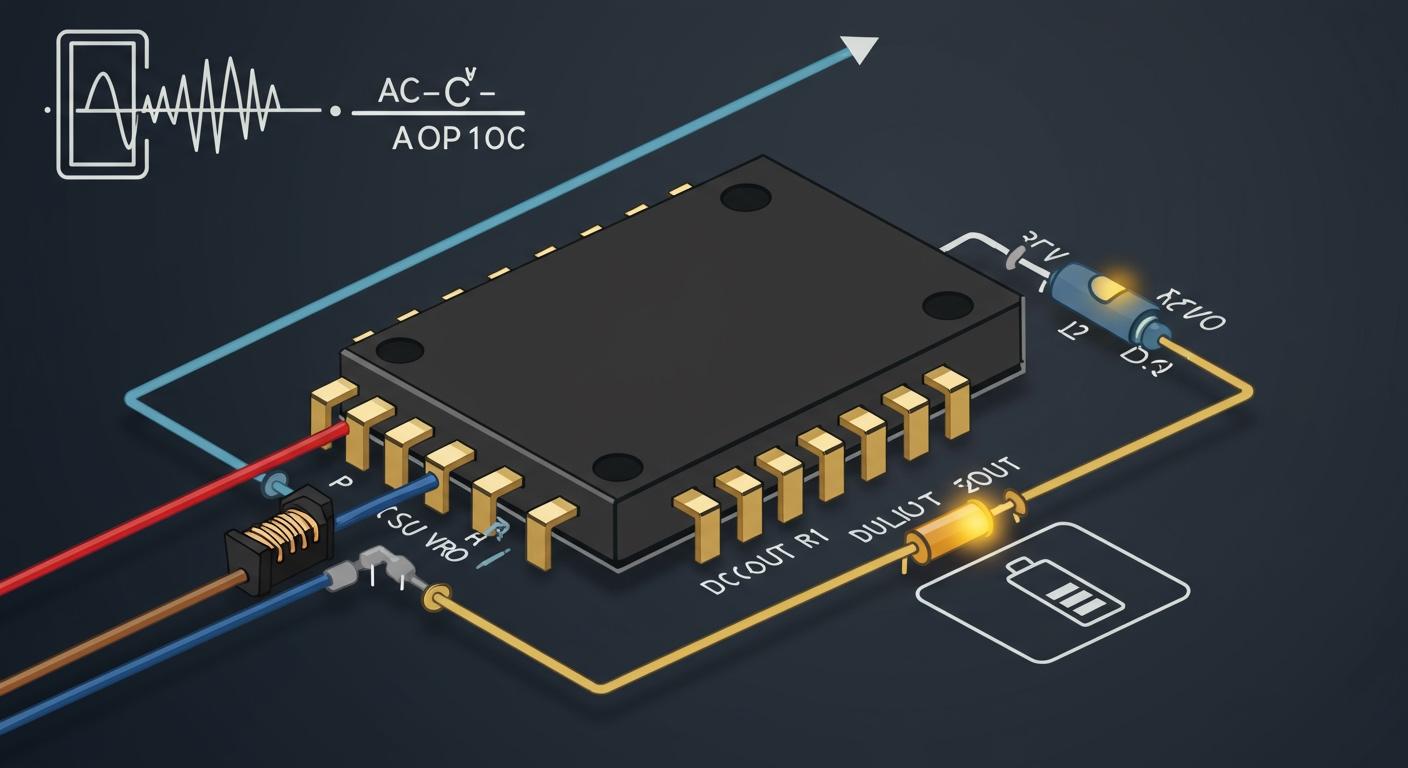
A bridge rectifier's primary and most widespread application is ac to dc conversion. This process allows the rectifier to change alternating current from an outlet into the direct current that powers almost all electronic circuits. The key applications where this bridge rectifier is critical include:
Power supplies for consumer electronics
Battery charging systems
Industrial equipment using full bridge rectification
Automotive electrical systems
The growing reliance on this essential bridge rectifier is clear from its market projections. This simple rectifier is a workhorse component.
Metric | 2023 | 2032 | CAGR |
|---|---|---|---|
1.2 | 2.3 | 7.2% |
Key Takeaways
A bridge rectifier changes AC power from an outlet into DC power. Most electronics need DC power to work.
Bridge rectifiers are in many everyday items. These include phone chargers, home appliances, and car parts.
This device is important for battery charging. It helps power electric vehicles and keeps backup power systems ready.
In factories, bridge rectifiers control motors and help with welding. They also play a role in solar power systems.
Bridge rectifiers are a basic part of modern electronics. They make our digital world possible.
Key Applications of a Bridge Rectifier
The applications of a bridge rectifier are vast and essential to modern technology. This component is a cornerstone in any device that plugs into a wall outlet but runs on low-voltage DC. From the smallest gadget to large household machines, the bridge rectifier performs the critical first step in power conversion.
Consumer Power Supplies
Nearly every electronic device in your home contains a power supply. These dc power supplies convert the high-voltage AC from your wall outlet into the stable, low-voltage DC that microchips and other components need. A bridge rectifier is the heart of this process. There are two main kinds of dc power supplies: linear and switch-mode.
Linear Power Supplies: These are simpler but less efficient. A linear rectifier circuit loses significant energy as heat.
Switch-Mode Power Supplies (SMPS): These are more complex but highly efficient. An SMPS uses a bridge rectifier to create DC, then rapidly switches it on and off to regulate voltage precisely. This method minimizes energy waste.
Modern electronics like computers, TVs, and phone chargers almost exclusively use SMPS because of their high efficiency and compact size. The efficiency difference is significant.
Aspect | Linear Power Supply | Switching Power Supply (SMPS) |
|---|---|---|
Lower (about 60%), as it continuously dissipates power as heat | High (about 80% or higher) due to switching states |
Inside an SMPS, the bridge rectifier uses four diodes to perform full-wave rectification. During the positive part of the AC wave, two diodes turn on and let current flow to the circuit. During the negative part, those diodes turn off and the other two turn on. This action flips the negative half of the wave, ensuring a continuous flow of DC power. This full-wave rectification is a fundamental step for all dc power supplies.
Home Appliance Power Conversion
Large home appliances also rely on the conversion of high AC to low DC voltage. A modern refrigerator, washing machine, or microwave oven has a digital display, electronic timers, and smart sensors. These sensitive electronic modules cannot run on the 120V or 240V AC from the wall.
Note: A small, internal power supply board inside the appliance uses a bridge rectifier to create the low-voltage DC needed for the control circuits. This allows a single power source to run both the high-power motors and the delicate electronics.
This is one of the most common applications for a bridge rectifier. It enables the "smart" features we now expect from our appliances. Different types of bridge rectifiers are chosen based on the power demands of the appliance.
Signal Processing Circuits
Beyond power conversion, the rectifier has other important applications. One key use is in signal processing, particularly for signal detection. An AC signal's strength (amplitude) can carry information. A rectifier can extract this information.
A classic example is an AM radio. The radio receives a high-frequency carrier wave. The amplitude of this wave changes to match the audio signal (like voice or music).
The radio's tuner isolates the desired station's signal.
A simple diode rectifier then processes this signal. It removes one half of the AC wave.
A capacitor smooths the output, leaving a voltage that mirrors the original audio information.
This audio signal is then amplified and sent to the speaker.
In this context, the rectifier acts as a "detector" or "demodulator." It turns an AC signal's amplitude into a usable DC-like signal, demonstrating the versatility of full-wave rectification principles in communications.
Battery Charging Systems
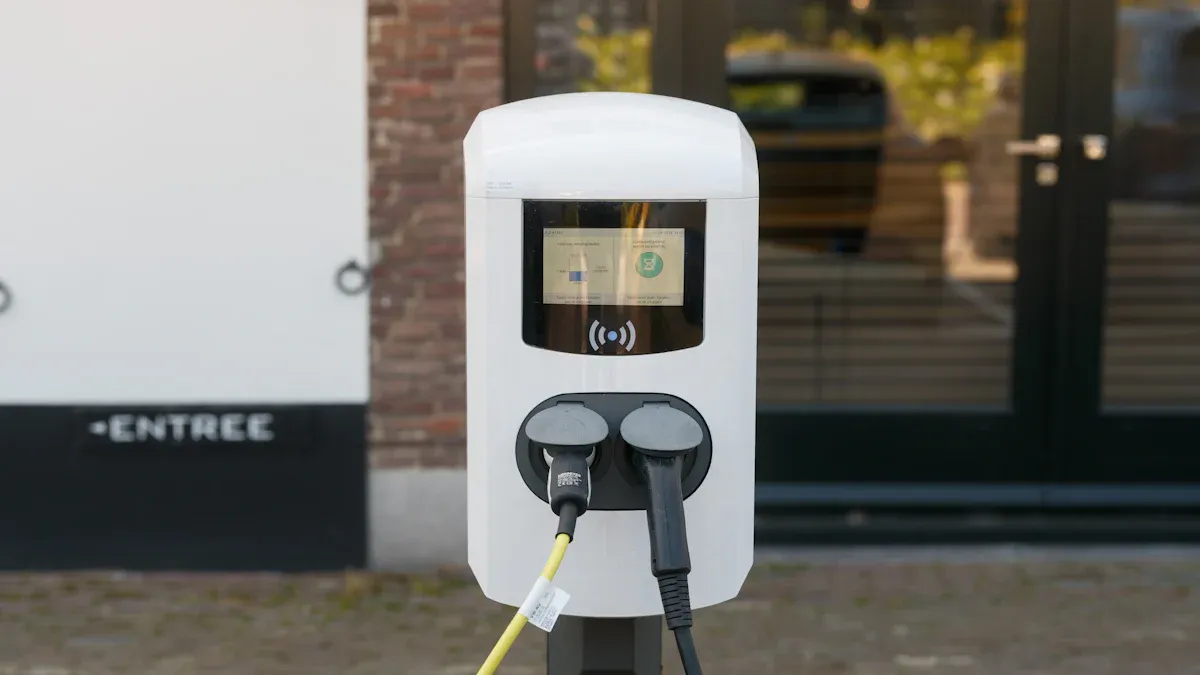
Charging a battery requires a steady supply of direct current (DC). Wall outlets, however, provide alternating current (AC). A bridge rectifier is the essential component that makes battery charging possible by converting AC power into the DC power a battery needs. This function is central to countless charging devices.
The Bridge Rectifier in Chargers
Most battery chargers, from the one for your phone to the one for your power tools, contain a bridge rectifier. The process is straightforward. The charger plugs into an AC outlet. Inside the charger, the bridge rectifier takes this AC input and converts it into pulsating DC. Other components, like capacitors, then smooth this DC into a stable current. This stable current safely recharges the battery. This basic rectifier circuit is the foundation of all common battery chargers. A properly designed rectifier ensures the battery receives the correct voltage.
Electric Vehicle (EV) Charging
Electric vehicles rely on large, high-capacity batteries. Charging these batteries requires a significant amount of power. The onboard charger inside an EV uses a robust bridge rectifier to handle this task.
Note: When an EV is plugged into a standard home charging station (Level 2), it receives high-voltage AC. The car's internal bridge rectifier converts this AC into the high-current DC needed to charge the massive battery pack. This rectifier must be built to handle much more power than one in a phone charger.
Uninterruptible Power Supplies (UPS)
An Uninterruptible Power Supply (UPS) protects electronics from power outages. A bridge rectifier plays a critical role in how a UPS functions. A UPS performs two main jobs:
It uses a rectifier to convert AC power from the wall into DC power. This DC power keeps the internal battery of the UPS fully charged.
During a power failure, the UPS switches to its battery. It then uses a different circuit (an inverter) to turn the battery's DC power back into AC power for the connected devices.
The rectifier in a UPS ensures the backup battery is always ready. This makes the bridge rectifier a key component for power reliability.
Industrial and Power System Uses
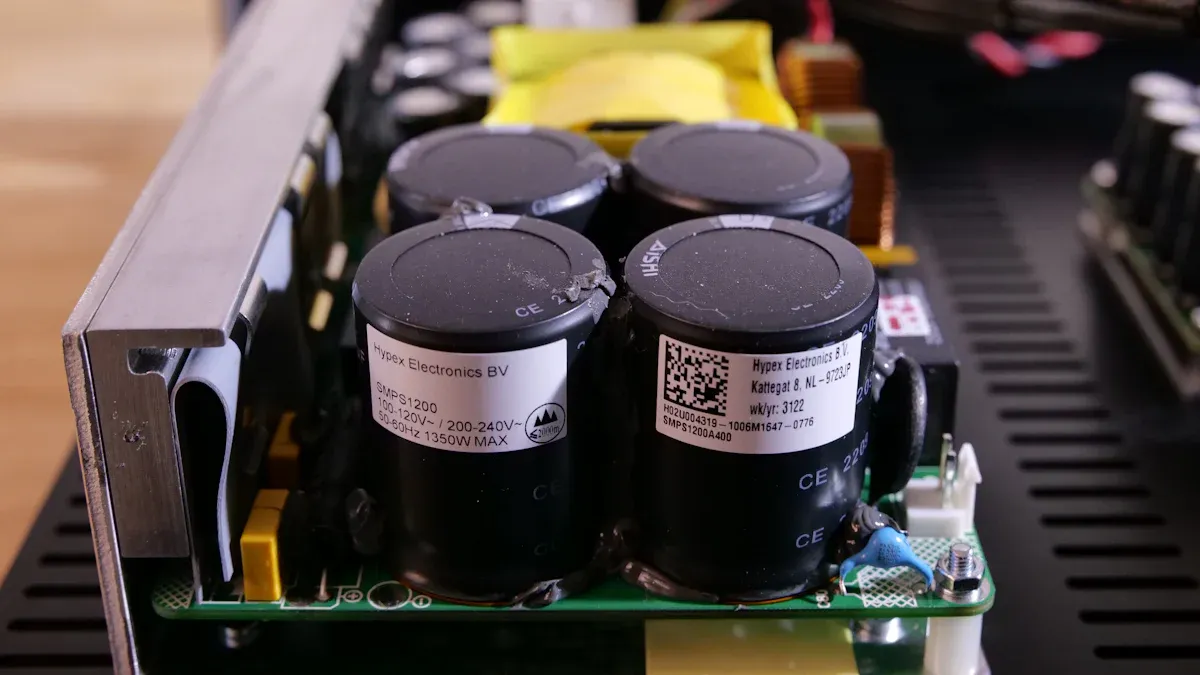
In heavy industry, the bridge rectifier performs critical power conversion tasks. Its ability to handle high power makes it essential for running large machinery and specialized equipment. The process of full bridge rectification is a cornerstone of modern industrial power systems.
Full Bridge Rectification for Motors
Many industrial motors require precise speed and torque control. Variable Frequency Drives (VFDs) provide this control, and they rely on a powerful bridge rectifier. The VFD's first stage uses a rectifier to convert incoming AC power into DC. This DC power is then stored and smoothed in a section called the DC link.
Note: This stable DC voltage is essential for the drive's inverter stage, which creates a clean AC waveform to run the motor at different speeds.
Using a three-phase bridge rectifier for this task offers several advantages:
A smoother DC output with less ripple
Greater power handling for demanding motors
This method of full bridge rectification gives operators precise control over motor voltage, which directly adjusts motor speed.
Arc Welding Equipment
Arc welding requires a very stable and consistent power source to create a strong, clean weld. A DC welding machine uses a bridge rectifier to achieve this. The rectifier converts AC from the power source into a smooth DC output. This full bridge rectification process results in a much more stable arc compared to AC welding.
A stable DC arc provides major benefits for weld quality.
It produces a smoother weld bead.
It creates less spatter.
It allows for deeper weld penetration.
The rectifier in a welding machine must be robust. For example, a specific rectifier might be rated for 40 amps and 800 volts to handle the intense power demands. This application of full bridge rectification is key to professional welding.
Solar Power Inverters
Solar power systems also use rectifier technology. Solar panels generate DC power, but homes and the electrical grid use AC power. A solar inverter converts this DC to AC. Inside many inverters, a rectifier plays a role in managing and stabilizing power. The principles of full bridge rectification help ensure the system operates efficiently. This internal rectifier function is crucial for controlling the DC link voltage, which allows for a stable and safe transfer of power to the grid. This makes the bridge rectifier a vital component in renewable energy integration.
Specialized and Automotive Applications
The bridge rectifier finds many specialized applications beyond consumer goods, particularly in transportation. From personal cars to public transit, this component ensures reliable power conversion for critical systems. These automotive applications showcase the rectifier's versatility.
Vehicle Alternator Systems
A car's electrical system depends on a component called an alternator. The alternator generates alternating current (AC) as the engine runs. However, a car's battery requires direct current (DC) to charge, and its electronic systems run on DC. A bridge rectifier inside the alternator performs the essential conversion from AC to DC. This rectifier ensures the battery stays charged and provides stable power to the entire vehicle. This is one of the most common automotive applications for a bridge rectifier.
Onboard Electronic Modules
Modern vehicles contain numerous onboard electronic modules, like the Engine Control Unit (ECU). These sensitive circuits need protection from electrical faults. A rectifier offers simple and effective reverse polarity protection.
Note: A rectifier diode allows current to flow in only one direction. This simple feature protects the ECU if the battery is connected backward. Advanced components like Super Barrier Rectifiers (SBRs) improve on this by offering the same protection with much lower energy loss, making them a superior rectifier for high-power applications.
Electric Train and Tram Systems
Electric trains and trams run on high-voltage DC power. This power comes from traction substations located along the railway. These substations perform a crucial power conversion task.
A large transformer first steps down high-voltage AC from the power grid.
A high-power bridge rectifier then converts this stepped-down AC into the DC voltage needed for the trains.
This DC power is distributed to the overhead lines or conductor rails.
These systems use a powerful bridge rectifier, often in 6-pulse or 12-pulse configurations, to handle the immense power demands. This is one of the most demanding applications for a bridge rectifier.
The bridge rectifier is a fundamental building block in electronics. This essential rectifier performs critical AC-to-DC conversion. From phone chargers to industrial welders and car alternators, the bridge rectifier is everywhere. The future of this bridge rectifier looks promising, as new materials like SiC and GaN create a more efficient rectifier. This simple bridge rectifier is a vital component. Without this specific rectifier, the modern world would not function.
The bridge rectifier is a true workhorse rectifier, making our digital lives possible. 💡
FAQ
What is the main job of a bridge rectifier?
A bridge rectifier's main job is to change alternating current (AC) into direct current (DC). Most electronic devices need DC power to function. The rectifier makes this conversion possible, acting as a critical power gateway.
Why do electronics need DC power?
Electronic circuits contain sensitive components like microchips. These parts require a stable, low-voltage power source. DC provides this steady flow of energy. AC power, which constantly changes direction, is not suitable for these delicate circuits.
What is the difference between full-wave and half-wave rectification?
A full-wave rectifier uses the entire AC wave to create DC power. A half-wave rectifier only uses half of the wave, wasting the other part.
Key Difference: Full-wave rectification is much more efficient and provides a smoother DC output, making it the preferred method for most power supplies.
Can a bridge rectifier fail?
Yes, a bridge rectifier can fail. The most common cause is overheating from excessive current or voltage. A failed rectifier will typically prevent a device from turning on because it can no longer supply the necessary DC power.