From Volts to Value A Buyer's Guide for Digital Multimeters
Are you trying to figure out how to choose a multimeter? The market for these tools is growing fast, making the process of buying a multimeter feel overwhelming.
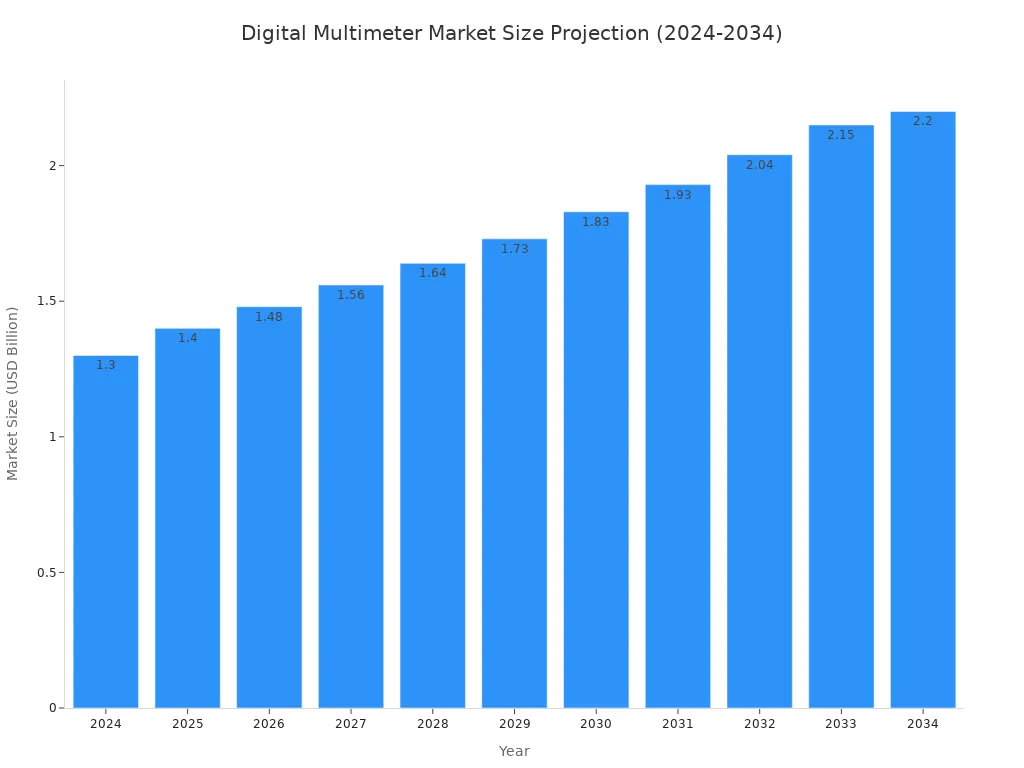
This guide is your simple roadmap. You will learn what to consider when choosing a digital multimeter, empowering you to make a smart choice for your multimeter digital multimeter.
Key Takeaways
- Always choose a multimeter with the correct CAT safety rating for your work. This protects you from dangerous electrical spikes.
- Look for accuracy and resolution that match your tasks. Higher counts give more precise measurements for detailed work.
- Consider a True RMS multimeter if you work with modern electronics. It accurately measures distorted electrical waves.
- Check for important safety features like HRC fuses and shrouded test leads. These protect you from electrical hazards.
- Match the multimeter's features and price to your specific needs. You do not always need the most expensive tool.
WHAT TO CONSIDER WHEN CHOOSING A DIGITAL MULTIMETER
You need to look at a few key factors to find the right tool for your projects. These details help you move beyond price and pick a meter that is both safe and effective. Let's explore what to consider when choosing a digital multimeter to ensure you get the best value.
ACCURACY AND RESOLUTION
Accuracy and resolution are two of the most important technical details. They determine how trustworthy your readings are.
- Accuracy tells you how close a measurement is to the real value.
- Resolution refers to how fine a measurement a meter can show.
Manufacturers specify a digital multimeter's accuracy as a percentage of the reading plus a number of digits. For example, a specification of ±(2%+2) on a 100.0V reading means the actual voltage is between 97.8V and 102.2V. This measurement accuracy is vital for delicate work.
For tasks like electronics repair or industrial diagnostics, you should look for a meter with a measurement accuracy of at least ±(0.5% + 2 digits). This ensures your results are reliable. For general home or auto repairs, a basic accuracy of 0.5% for DC and 1.5% for AC is usually enough.
Resolution is often described by "counts." A higher count means the meter can display more precise numbers before it has to switch to a less precise measurement range.
| Display Count | Example Measurement | Benefit |
|---|---|---|
| 2,000-Count | Measures 24V as 24.0V | Good for basic tasks. |
| 6,000-Count | Measures 24V as 24.00V | Better resolution for more precise work. |
| 20,000-Count | Measures 24V as 24.000V | Excellent for electronics and lab use. |
A higher count gives you more detail. For instance, a 6000-count meter from a brand like Fluke offers much better resolution than a basic 2000-count model, allowing you to see smaller changes in your measurements.
BASICS OF A MULTIMETER DIGITAL MULTIMETER
So, what is a digital multimeter used for? At its core, a multimeter digital multimeter performs three fundamental types of measurements. Understanding these functions is the first step in learning how to use your tool.
- Voltage (Volts, V): Measures electrical pressure. You use this to check if a circuit is "live" or to test battery levels.
- Current (Amps, A): Measures the flow of electricity. This is useful for finding out how much power a device is drawing.
- Resistance (Ohms, Ω): Measures how much a material resists electrical flow. You use this for checking fuses, switches, and wires. A reading of "OL" (Open Line) means the resistance is infinite, indicating a break in the circuit.
Different jobs require different types of measurements and measurement ranges. For example, when you are measuring household appliances, you will encounter various resistance values.
- Fuses and switches: Near 0 Ω
- Heaters: 20–40 Ω
- Pumps and small motors: 50–200 Ω
- Water valves: 2,000–4,000 Ω
Knowing these typical measurement ranges helps you select a multimeter digital multimeter that fits your needs, whether for automotive diagnostics or electronics repair. These are common types of measurements you will perform.
THE ROLE OF TRUE RMS
Have you ever heard the term "True RMS"? This feature is crucial if you work with modern electronics. Electricity from your wall outlet is ideally a clean, smooth sine wave. However, many modern devices create "dirty" or non-sinusoidal electrical waves.
These non-linear loads chop up the smooth wave, creating distortions. Common sources include:
- Computers and televisions
- Variable Frequency Drives (VFDs) in industrial motors
- LED lighting and electronic ballasts
- High-efficiency HVAC systems
A standard, non-True RMS meter can only accurately measure clean sine waves. When it tries to read a distorted wave, its measurement can be off by up to 40%! A True RMS meter contains advanced circuitry that accurately calculates the "true" value of these complex waves. This is why what is a digital multimeter with True RMS is so important for professionals. If you plan to work on anything more complex than simple household wiring, investing in a True RMS meter is a smart choice. It is a key factor to consider when choosing a digital multimeter.
SELECTING THE RIGHT MULTIMETER FOR SAFETY
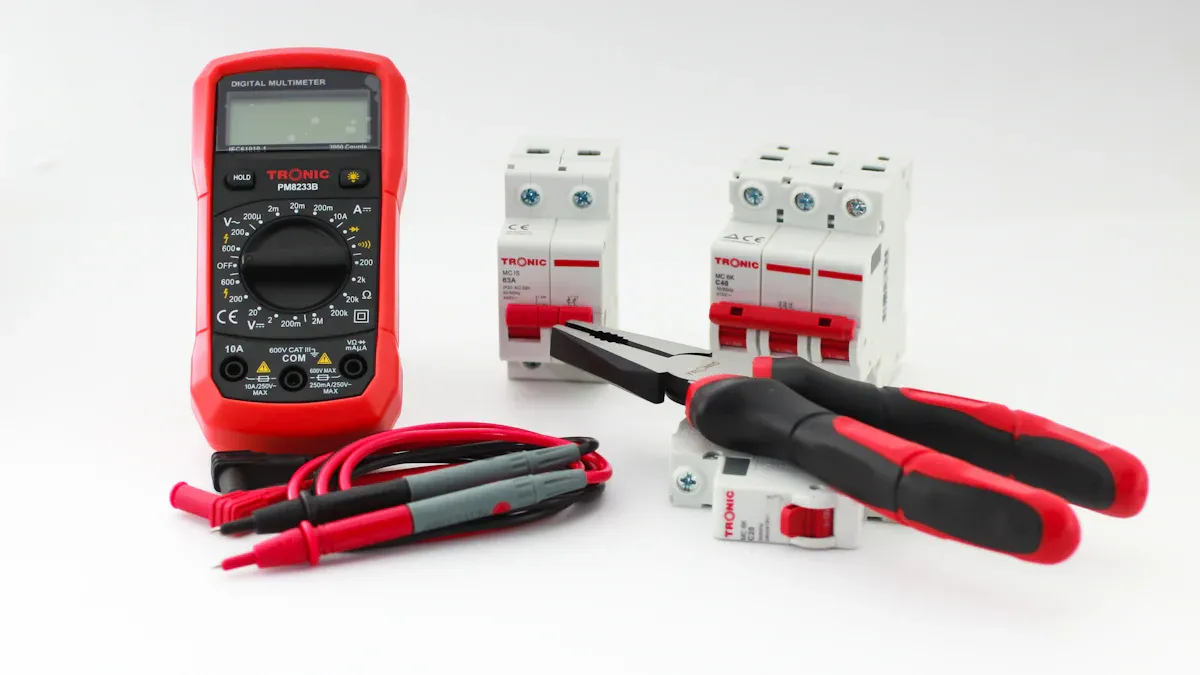
Your safety is the most important factor when you work with electricity. A multimeter is your first line of defense. Choosing a meter with the right safety features protects you from serious injury and prevents damage to your equipment. Let's look at the critical safety ratings you must understand.
UNDERSTANDING CAT RATINGS
You will see a "CAT" rating on any quality multimeter. This is not just a label. It tells you where you can safely use the meter. The CAT rating indicates the meter's ability to handle a sudden, dangerous voltage spike, also known as a transient. These transients can destroy a lesser tool and cause serious injury.
Danger Zone ⚠️ Using a meter with the wrong CAT rating for a high-energy system can lead to severe consequences. The risks are very real and include:
- Electric shock
- Equipment damage
- Fire
CAT ratings are divided into four categories. The number tells you the type of electrical environment. A higher number means the location is closer to the main power source, where the risk of a high-energy transient is greatest.
| CAT Rating | Real-World Examples of Electrical Environments |
|---|---|
| CAT I | Protected electronic equipment, circuits not connected to the main power supply, and high-voltage but low-energy circuits. |
| CAT II | Household appliances (like refrigerators), portable power tools, and single-phase circuits connected to standard wall outlets. |
| CAT III | Distribution boards, fixed installations like switchgear, industrial motors, and the electrical systems inside large buildings. |
| CAT IV | Main service panels, outdoor power lines, utility electricity meters, and any connection point at or near the building's power source. |
You will also see a voltage number next to the CAT rating, like CAT III 600V. This is where things get tricky. A higher voltage rating does not always mean a safer meter. The CAT rating is more important. For example, a CAT III 600V meter is safer in an industrial setting than a CAT II 1000V meter.
Why? The CAT III meter is built to withstand a much higher energy spike.
| Multimeter Type | Peak Transient Voltage Withstand |
|---|---|
| 600V CAT III Multimeter | 6,000 Volts |
| 600V CAT IV Multimeter | 8,000 Volts |
Always choose a meter with a CAT rating that matches or exceeds your work environment. For home use, a CAT II or CAT III meter is usually sufficient. For industrial work, you must use a CAT III or CAT IV meter.
INPUT PROTECTION AND FUSING
Input protection refers to the internal circuits that protect the multimeter—and you—from electrical hazards. One of the most common and dangerous mistakes is trying to measure voltage while the test leads are plugged into the current jacks.
This action creates a direct short circuit through the meter. Without proper protection, a massive current can flow, destroying the meter, damaging the circuit, and potentially causing an arc flash that can severely injure you.
This is where fuses become critical. A cheap meter might use a simple glass fuse. These cannot handle the energy from an industrial circuit and can explode during a fault. A quality multimeter uses special High-Rupture Capacity (HRC) fuses.
- HRC fuses are filled with sand.
- The sand extinguishes the electrical arc when the fuse blows.
- This process contains the energy safely inside the fuse body.
These fuses are a recognized best practice for preventing multimeter accidents. Beyond fuses, look for other safety features that provide layers of protection:
- Overload Protection: Some meters have circuits that detect a voltage overload and protect the meter. This feature often works on the resistance (ohms) setting, saving your meter if you accidentally test a live circuit.
- Shrouded Test Leads: Quality test leads have plastic shrouds covering most of the metal probe tips. This design minimizes the risk of accidentally touching a live component.
- Finger Guards: The plastic ridges on the body of your test probes are called finger guards. They provide a physical barrier to stop your fingers from slipping forward and touching live metal.
Paying attention to these internal and external safety features is a non-negotiable part of selecting the right multimeter for your tasks.
KEY FEATURES OF A DIGITAL MULTIMETER
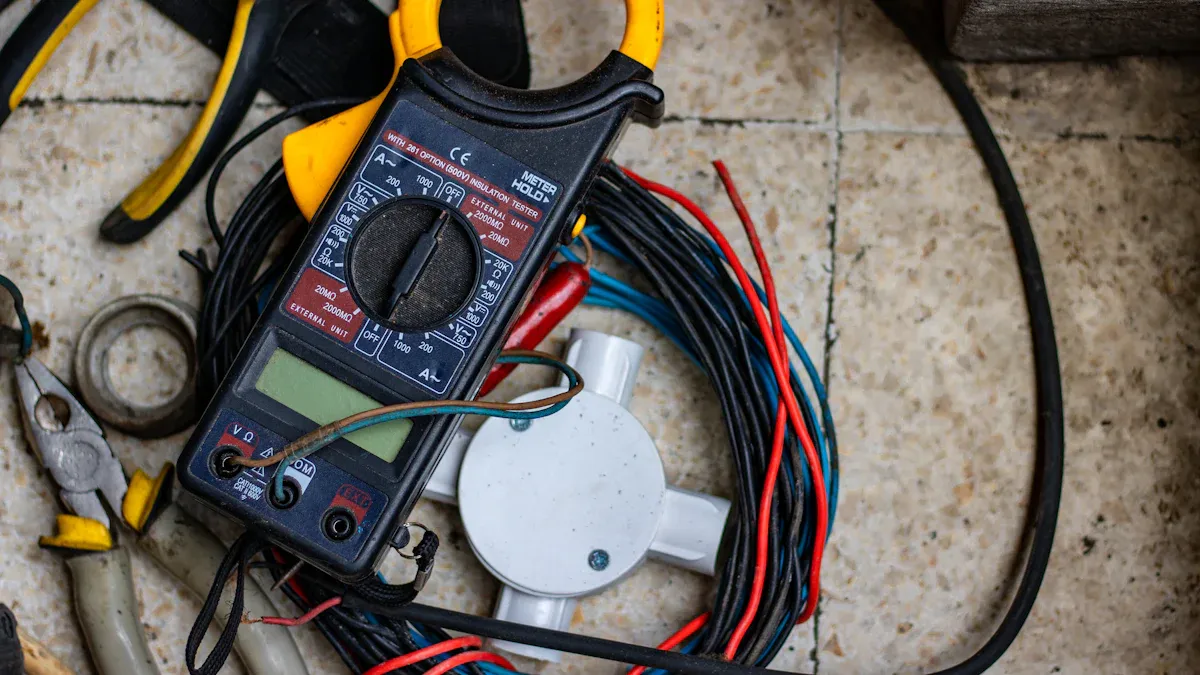
Beyond basic measurements, the right features can make your job much easier and safer. A good multimeter digital multimeter combines core functions with thoughtful design elements. Let's look at the features that separate a basic tool from a great one.
ESSENTIAL CONVENIENCE FEATURES
Certain features make using a digital multimeter much more efficient. You should look for these quality-of-life improvements.
- Auto-Ranging: This feature automatically finds the correct measurement range for you. It saves time because you do not need to guess the value. This function reduces errors and makes the measurement process simpler for everyone.
- Large, Backlit Display: You need to see your readings clearly. A large, backlit screen helps you work in dark or dim areas. Some displays also include a bar graph, which is great for watching fast-changing signals.
- Loud Continuity Beeper: When you check for a complete circuit, you often cannot look at the screen. A loud, fast beeper lets you hear continuity instantly.
ADVANCED AND SPECIALIZED FUNCTIONS
Professionals often need more than just the basics. Advanced functions help you diagnose complex problems.
Other specialized features include:
- Capacitance and Frequency: These are essential for electronics repair and HVAC work.
- Temperature: Many meters come with a thermocouple probe to measure temperature, which is useful for automotive and industrial tasks.
- Data Logging: Some models can record measurements over time. This helps you find intermittent faults. For example, a Fluke multimeter with TrendCapture can graphically display logged data to help you spot anomalies quickly.
BUILD QUALITY AND IP RATINGS
Your work environment determines how tough your multimeter digital multimeter needs to be. A durable tool will last for years. Look for a rugged design with a shock-absorbing shell or rubberized casing for drop protection.
Another key factor is the IP (Ingress Protection) rating. This two-digit code tells you how well the tool is sealed against dust and water. The first digit is for solids (dust), and the second is for liquids (water).
| Rating | Protection Against Water |
|---|---|
| IP65 | Protected from low-pressure water jets. |
| IP67 | Can be submerged in 1 meter of water for 30 minutes. |
A high IP rating like IP67 is vital if you work outdoors or in marine environments. It ensures your digital multimeter can withstand harsh conditions.
BUYING A MULTIMETER: BUDGET VS. NEEDS
The process of buying a multimeter involves matching your tasks to your budget. You do not always need the most expensive tool. Understanding the different tiers helps you make a smart investment. Let's explore the options for buying a multimeter at every level.
ENTRY-LEVEL (HOBBYIST & DIY)
Your first step in buying a multimeter for home projects or electronics hobbies starts here. These tools are affordable and cover all the basic measurements. You can find models under $200 that offer great value. For example, some entry-level Fluke models provide a solid starting point.
| Feature | Fluke 15B+ | Fluke 17B+ | Fluke 113 |
|---|---|---|---|
| AC/DC Voltage & Current | Yes | Yes | Voltage only |
| Resistance & Capacitance | Yes | Yes | Yes |
| Temperature Measurement | No | Yes | No |
| True-RMS Accuracy | No | No | Yes |
| Safety Rating | CAT III 600V | CAT III 600V | CAT IV 600V |
These meters give you the essential functions without overwhelming you with features you may not need. This makes buying a multimeter much simpler for beginners.
MID-RANGE (TECHNICIAN & PRO)
Technicians and professionals need more from their tools. When buying a multimeter for commercial or automotive work, you should expect better durability, higher accuracy, and more functions. The multimeter price in this category often ranges from $200 to over $600. For instance, a specialized tool like the Fluke 88V/A Automotive Multimeter Kit costs around $638. These meters often include features like True RMS, temperature measurement, and higher safety ratings to handle demanding job sites.
HIGH-END (INDUSTRIAL & SPECIALIST)
When you buy a multimeter for industrial environments, safety and specialized features are top priorities. This is where you find the best multimeter brands, like Fluke. These tools are built to withstand harsh conditions and provide maximum protection.
Safety First: High-end meters hold independent safety certifications from labs like UL (Underwriters Laboratories) and CSA (Canadian Standards Association). This verification is crucial for high-energy work.
These premium tools offer advanced functions for complex diagnostics.
- Low Pass Filter: This lets you get accurate readings on variable speed motor drives.
- Advanced Data Logging: You can record up to 15,000 measurements over time to find intermittent problems. Features like TrendCapture even graph the data for you.
Buying a multimeter in this category means investing in a tool known for its extreme accuracy, reliability, and safety. This is the ultimate choice for buying a multimeter for specialized industrial applications.
Your journey to buying a multimeter is now clear. Follow this simple three-step process:
- Prioritize safety with the correct CAT rating.
- Define the accuracy and features your projects require.
- Find a model that aligns with your budget.
The best tool is the one that safely and accurately meets your needs, not just the one with the highest price tag.
You are now ready for buying a multimeter. Use this guide to select your next digital multimeter with complete confidence. ✅
FAQ
Do I need a True RMS multimeter?
You need a True RMS meter for modern electronics like computers or VFDs. These devices create distorted electrical waves. A standard meter gives inaccurate readings for them. For simple home wiring, a non-True RMS meter is often sufficient.
What is the most important safety feature?
The CAT rating is your most important safety feature. It tells you where you can safely use the meter. Choosing the correct CAT rating protects you from dangerous electrical spikes, preventing injury and equipment damage. ⚠️
Is a more expensive multimeter always better?
A more expensive multimeter is not always better for you. High-end models offer specialized features for industrial work. The best tool safely meets your project's needs. You should match the meter's features to your specific tasks.
What does the "count" on a multimeter mean?
The "count" number shows the meter's resolution. A higher count displays more precise measurements. For example, a 6000-count meter can show 24.00V, while a 2000-count meter might only show 24.0V. It gives you more detail.