Understanding Button Battery Sizes for Everyday Devices
Finding the right button battery size for a device starts with checking the device's battery compartment or manual. Matching both the size and type of battery keeps devices safe and running well. Many button batteries share similar shapes but differ in size, chemistry, and capacity. Some common button battery sizes include:
- CR2032
- CR2025
- CR1632
- LR44
- LR1130
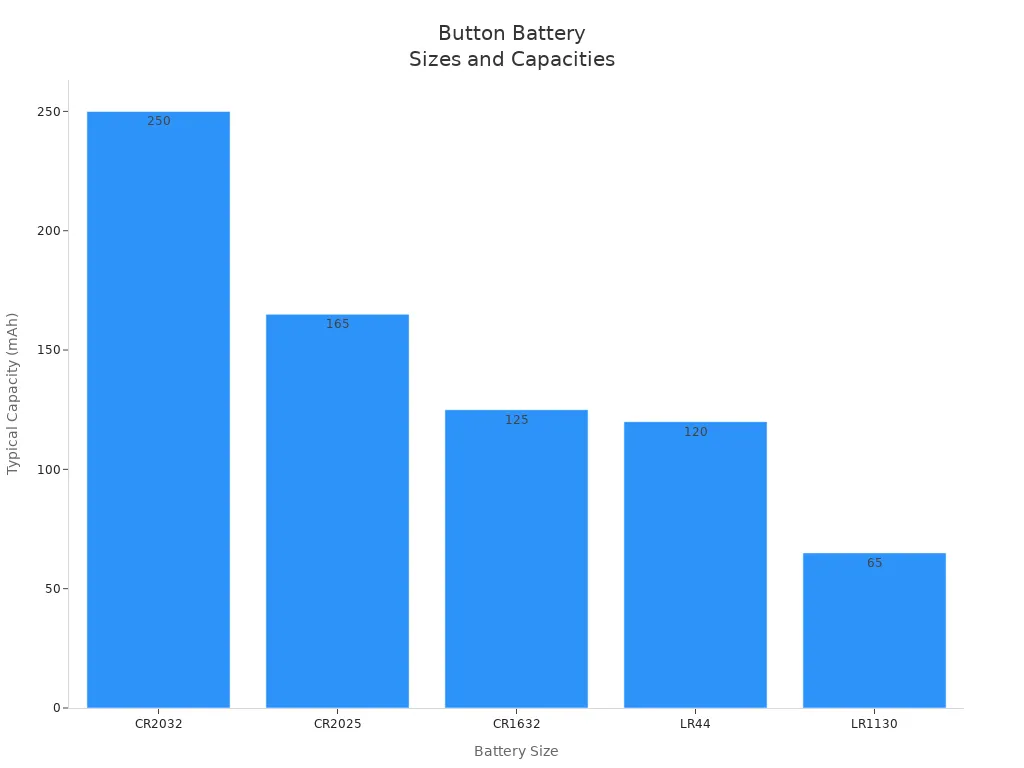
Battery codes and physical measurements help users identify the correct battery size. The table below shows typical sizes and uses:
| Battery Size | Diameter x Thickness (mm) | Typical Capacity (mAh) | Common Applications |
|---|---|---|---|
| CR2032 | 20 x 3.2 | ~250 | AirTags, watches, keyless fobs |
| CR2025 | 20 x 2.5 | 160-170 | Remotes, smart sensors |
| CR1632 | 16 x 3.2 | 120-130 | Medical gadgets, fitness trackers |
| LR44 | 11.6 x 5.4 | 110-130+ | Small electronics, toys, watches |
| LR1130 | 11.6 x 3.1 | 50-80 | Watches, small devices |
Key Takeaways
- Always check your device’s manual or old battery to find the correct button battery size and type before buying a replacement.
- Measure both the diameter and height of the battery carefully to ensure a proper fit and avoid device damage.
- Choose the right battery chemistry—lithium, silver oxide, alkaline, or zinc-air—based on your device’s needs for better performance and longer life.
- Handle and store button batteries safely by keeping them out of children’s reach and using secure compartments to prevent accidents.
- Dispose of used batteries properly by taping terminals and recycling them at designated centers to protect the environment.
Button Battery Sizes
Measuring Diameter and Height
Button battery sizes play a crucial role in ensuring that devices work safely and efficiently. These batteries come in a wide range of diameters and heights, which manufacturers standardize for consistency. Most button batteries have diameters between 4.8 mm and 30 mm, and heights from 1.0 mm to 7.7 mm. For example, the CR2032 battery measures 20.0 mm in diameter and 3.2 mm in height, while the LR44 has a diameter of 11.6 mm and a height of 5.4 mm. These measurements help users select the correct battery size for their devices.
To measure a button battery accurately, users can follow these steps:
- Remove the battery from the device.
- Use a Watch Battery Size Selector Disc or a caliper to measure the diameter and height.
- Slide the battery into the selector slots or measure with the caliper until a snug fit is found.
- Read the size number from the tool or note the measurements.
- Use this information to find the correct replacement.
Tip: Always check both the diameter and height, as batteries with the same diameter may have different heights. This ensures the new battery fits properly and powers the device as intended.
| Battery Model | Diameter (mm) | Height (mm) | Voltage (V) | Common Household Uses |
|---|---|---|---|---|
| CR2032 | 20.0 | 3.2 | 3.0 | Watches, remotes, motherboards, scales |
| CR2025 | 20.0 | 2.5 | 3.0 | Remotes, fitness trackers |
| SR626SW | 6.8 | 2.6 | 1.55 | Watches, thermometers |
| LR44 | 11.6 | 5.4 | 1.5 | Toys, watches, laser pointers |
| 1220 | 12.0 | 2.0 | 3.0 | Key fobs, calculators |
| 1620 | 16.0 | 2.0 | 3.0 | Medical devices, car remotes |
| 2450 | 24.5 | 5.0 | 3.0 | Scales, sensors |
These button battery sizes cover a wide range of devices, including watches, calculators, toys, key fobs, and medical equipment. Coin cell batteries, a common term for lithium-based button batteries, also fall within these size ranges.
Battery Codes and Naming
Manufacturers use a standardized code to identify each button cell battery. This code provides information about the battery’s chemistry, shape, and size. For example, the code CR2032 breaks down as follows:
| Code Part | Meaning | Example (CR2032) | Explanation |
|---|---|---|---|
| Letters | Battery chemistry and shape | C, R | 'C' = lithium manganese dioxide; 'R' = round |
| Numbers | Physical dimensions in millimeters | 20, 32 | '20' = diameter 20 mm; '32' = 3.2 mm height |
The first two digits in the code indicate the diameter in millimeters, and the last two digits show the height in tenths of a millimeter. For instance, a CR2025 battery has a diameter of 20 mm and a height of 2.5 mm. The letters at the beginning of the code reveal the battery’s chemistry and shape. For example, "SR" stands for silver oxide, while "LR" indicates an alkaline battery.
Some button batteries have suffixes such as "SW" or "W." These suffixes describe the battery’s drain characteristics. "SW" means the battery is suitable for low-drain devices, while "W" indicates high-drain compatibility.
Note: Button batteries often have equivalent codes across different brands. For example, the LR44 battery is also known as AG13 or 357. Silver-oxide batteries labeled SR44 can replace LR44 or AG13, but they offer higher capacity and more stable voltage. Cross-reference charts help users find equivalent codes by matching battery dimensions and chemistry.
Button battery sizes remain consistent across brands due to international standards. However, the same battery may appear under different codes, depending on the manufacturer. Checking the battery’s physical measurements and chemistry ensures the correct replacement, even if the code varies.
Button Cell Battery Types
Chemistry Comparison
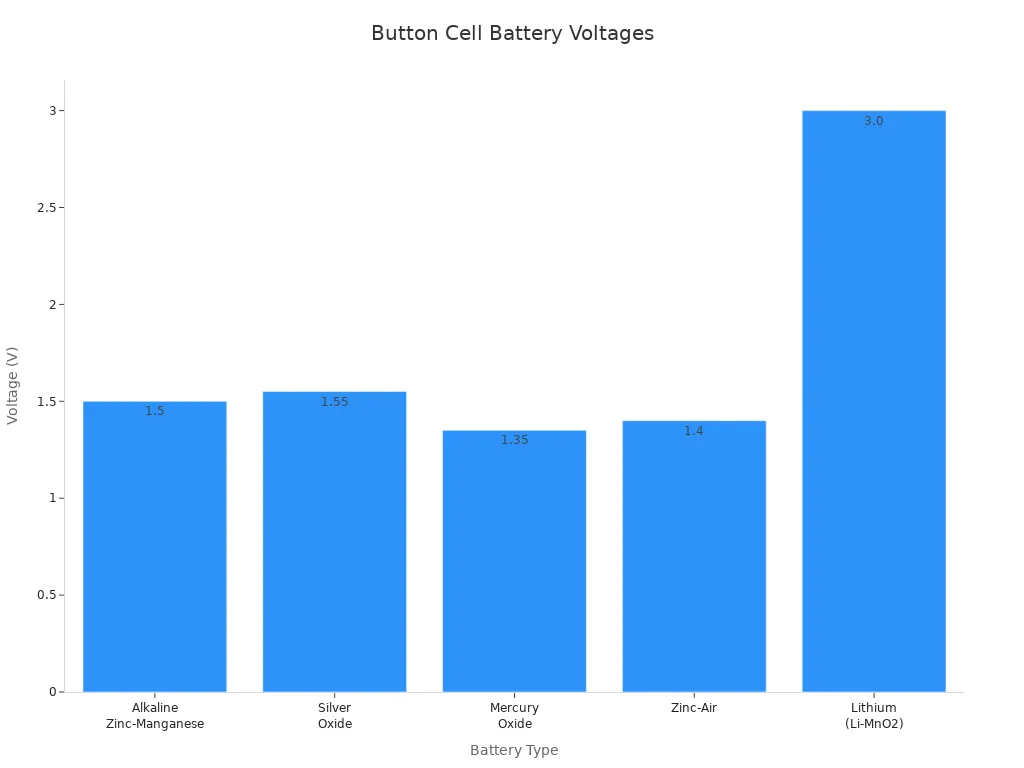
Button cell batteries come in several chemistries, each with unique features. The most common types include alkaline, lithium, silver oxide, and zinc-air. The table below shows how these chemistries differ in composition, voltage, performance, and typical uses:
| Battery Type | Main Chemical Composition | Voltage (approx.) | Performance Characteristics | Typical Applications |
|---|---|---|---|---|
| Alkaline Zinc-Manganese | Zinc, Manganese dioxide | ~1.5V | Good for general use, shorter lifespan | Toys, calculators, small electronics |
| Silver Oxide | Silver oxide, Zinc | 1.55V | Stable voltage, longer life | Watches, hearing aids |
| Zinc-Air | Zinc, Oxygen from air | ~1.4V | High capacity, needs air to work | Hearing aids |
| Lithium (Li-MnO2) | Lithium, Manganese dioxide | ~3.0V | High voltage, long shelf life, stable performance | Watches, calculators, key fobs |
Silver oxide and lithium batteries provide steady power and last longer than alkaline types. Zinc-air batteries offer high capacity but only work after air exposure.
Each chemistry fits different devices:
- Lithium coin batteries power calculators and smart sensors for long periods.
- Silver oxide batteries work best in watches and hearing aids that need steady power.
- Zinc-air batteries suit hearing aids because they balance size, power, and cost.
- Alkaline batteries are common in toys and basic remotes but do not last as long in high-drain devices.
Voltage and Capacity
The voltage and capacity of a button cell battery depend on its chemistry and size. Lithium batteries deliver about 3 volts, which is double the voltage of alkaline or silver oxide types. Silver oxide batteries provide a stable 1.55 volts, while zinc-air batteries offer about 1.4 volts. The table below summarizes these values:
| Battery Chemistry | Typical Nominal Voltage | Typical Capacity Range (mAh) | Notes |
|---|---|---|---|
| Alkaline | 1.5 V | ~110-150 | Voltage drops over time |
| Lithium (LiMnO2) | 3.0 V | Higher than alkaline | Long shelf life, stable output |
| Silver Oxide | 1.55 V | 150-200 | Flatter discharge curve, longer life |
| Zinc-Air | 0.9 - 1.4 V | 600-700 | High capacity, needs air to activate |
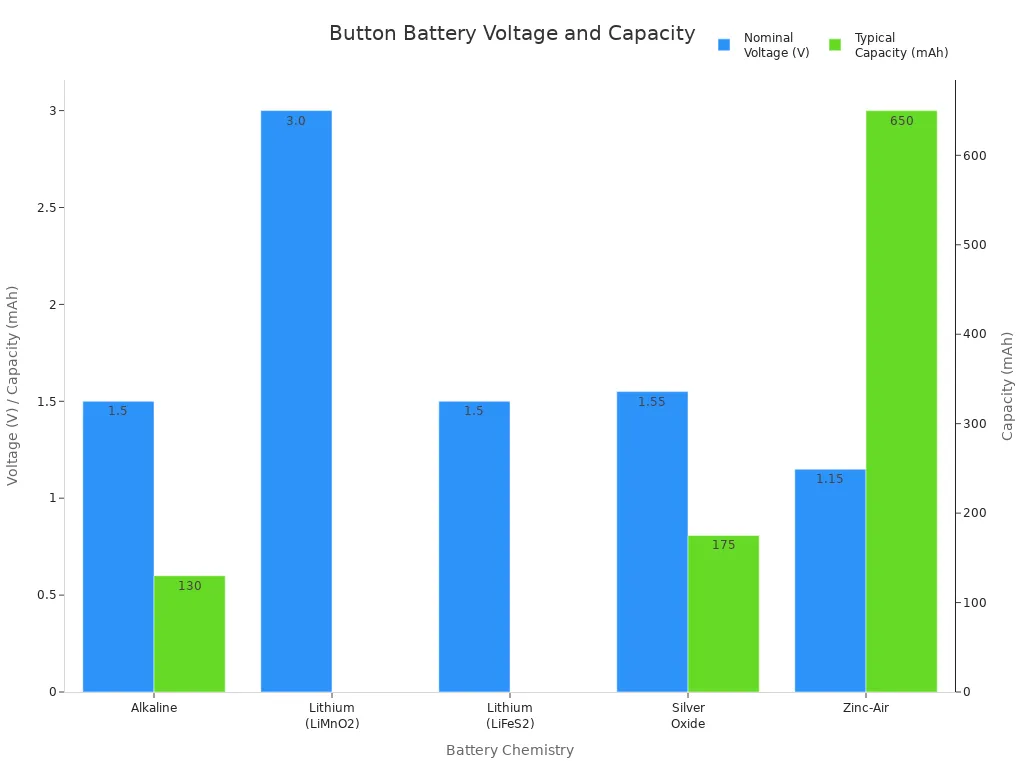
Larger batteries store more energy and last longer. For example, a small SR920SW battery holds about 40-55 mAh, which fits low-drain devices like watches. Bigger batteries, such as the 370 model, support high-drain devices like laser pointers. Using the right size and chemistry helps devices run better and prevents batteries from draining too quickly.
Tip: Lithium batteries resist leaks and have a shelf life of up to 10 years, making them ideal for devices that need to stay ready for long periods.
Button Batteries Safety
Handling and Storage
Safe handling and storage of button batteries protect families from serious accidents. Caregivers should always check that toys and devices have secure, lockable battery compartments. Devices like musical greeting cards, flameless candles, and remote controls often lack secure compartments. Keep these items away from children if the battery compartment is not child-resistant. Reese’s Law now requires child-resistant packaging and warning labels on many products containing button batteries. This law helps prevent children from accessing batteries easily.
Store all spare and used batteries in their original packaging or a dedicated plastic case. Place them on high shelves or in locked cabinets, away from children and pets. Avoid leaving loose batteries on countertops or in drawers. Batteries should never touch metal objects like coins or keys, as this can cause overheating or leaks. Regularly check batteries for damage or corrosion and dispose of any that show signs of wear.
Tip: Even used button batteries can cause harm. Always store and dispose of them safely.
Disposal and Recycling
Improper disposal of button batteries can harm the environment. These batteries contain heavy metals such as mercury, lead, and cadmium. When thrown in the trash, they can leak toxins into soil and water, affecting plants, animals, and people. Burning batteries releases toxic fumes into the air.
To recycle batteries safely, follow these steps:
- Tape the terminals of each battery to prevent short circuits.
- Store different types of batteries separately in a cool, dry place.
- Take batteries to hazardous waste facilities, manufacturer take-back programs, or community collection events.
| Risk or Action | Details |
|---|---|
| Environmental Impact | Contaminates water and soil, harms wildlife, and poses health risks to humans. |
| Recycling Locations | Many towns, like Medway, offer local collection points. Call2Recycle provides drop-off sites at major retailers. |
| Preparation | Tape terminals and sort by type before recycling. |
If a child swallows a button battery, seek emergency medical help right away. Symptoms may include coughing, drooling, vomiting, or refusal to eat. Quick action can prevent severe injury or death.
For more information, visit programs like Call2Recycle or ask your local recycling center about safe battery disposal.
Choosing the right battery for a device involves several important steps:
- Check the device manual or old battery for size, voltage, and chemistry.
- Measure diameter and height to ensure a proper fit.
- Match the voltage and use the recommended chemistry for best performance.
- Install with correct polarity and handle with care.
- Store and dispose of batteries safely, away from children and pets.
Always consult the device manual or seek expert help if unsure. Safe battery use protects both devices and families, especially young children.
FAQ
How can someone tell which button battery a device needs?
Check the device’s battery compartment or manual. Look for a code like CR2032 or LR44 on the old battery. Measure the battery’s diameter and height if the code is missing.
Are button batteries from different brands interchangeable?
Many brands make batteries with the same size and chemistry. Codes like LR44, AG13, and 357 often fit the same devices. Always check the size and voltage before replacing.
What should someone do if a child swallows a button battery?
Call emergency services right away. Do not let the child eat or drink. Quick action can prevent serious injury. Keep batteries out of reach of children at all times.
Why do some button batteries last longer than others?
Battery life depends on chemistry and size. Lithium and silver oxide batteries usually last longer than alkaline types. Larger batteries store more energy and power devices for a longer time.