Brushed and Brushless Motors What You Need to Know
The main difference between a brushed and brushless motor comes from how each transfers power inside an electric device. Brushed motors use carbon brushes that touch a spinning part, while brushless motors use electronic parts to move without any brushes. Choosing between brushless vs brushed motor types affects how much power you get, how often you need repairs, and how much you spend over time. Many industries now choose brushless motors for their electric machines because they last longer and need less care, but brushed motors still play a big role due to their simple design and low cost.
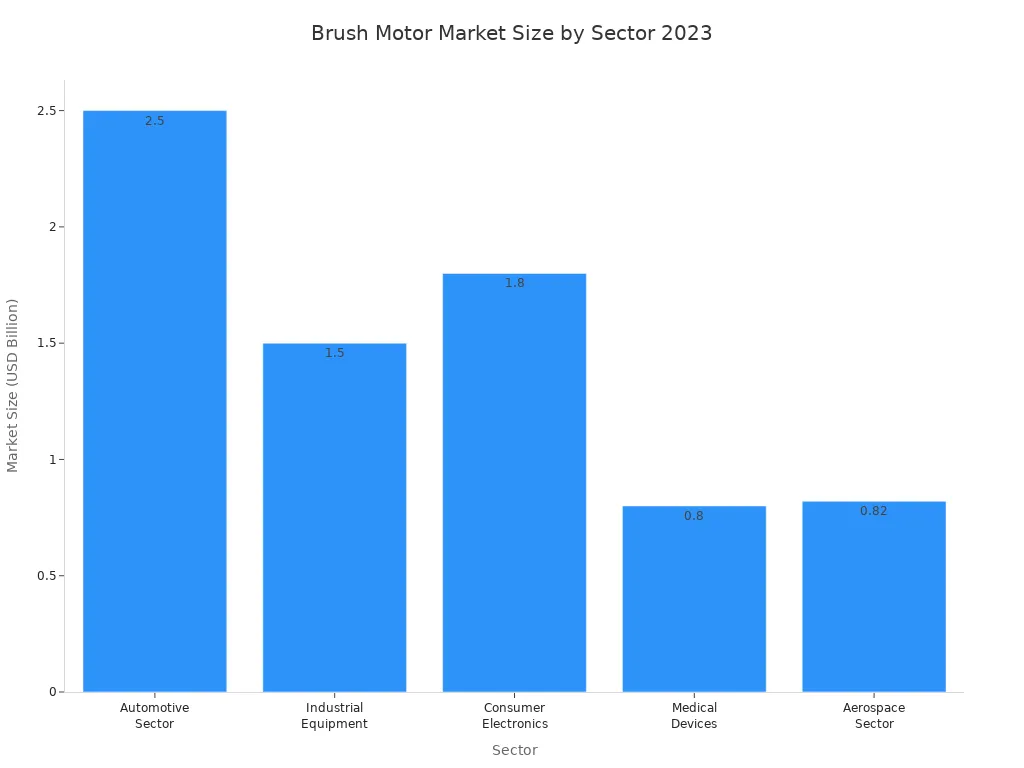
| Market Segment | 2023 Market Size (USD Billion) | Largest Application Share |
|---|---|---|
| Brushed DC Motors | 7.42 | Industrial Equipment (~40%) |
| Brush Motors | 1.35 | Automotive (~25%) |
Key Takeaways
- Brushed motors use carbon brushes that wear out and need regular replacement, while brushless motors use electronic controls with no brushes, making them last longer and need less maintenance.
- Brushless motors run quieter, more efficiently, and provide better speed control, making them ideal for high-performance tools, drones, and electric vehicles.
- Brushed motors cost less upfront and have a simple design, making them good for basic, low-cost devices used occasionally.
- Choosing a brushless motor saves money over time due to lower repair needs and better energy use, especially if you use your device often.
- Consider how often you use your device, your budget, and how much maintenance you want before picking between brushed and brushless motors.
Brushless vs Brushed Motor
Key Differences
When you compare brushless vs brushed motor types, you see clear differences in how they work and what they offer. A brushed motor uses mechanical brushes and a commutator to switch the electric current. This design causes friction, which leads to wear and tear over time. The brushes create sparks and noise, and you need to replace them regularly. In contrast, a brushless motor uses electronic sensors or software to control the current. This means there are no brushes to wear out, so the motor lasts longer and runs more quietly.
You can see the main differences in the table below:
| Aspect | Brushed Motor | Brushless Motor |
|---|---|---|
| Commutation | Mechanical (brushes and commutator) | Electronic (sensors or software) |
| Efficiency | 75% - 80% | 85% - 90% |
| Maintenance | Frequent (brush replacement needed) | Minimal (no brushes to replace) |
| Noise | Higher (sparks and friction) | Lower (smooth electronic switching) |
| Lifespan | Shorter (brushes wear out) | Longer (no brushes, less wear) |
| Initial Cost | Lower | Higher |
| Control Complexity | Simple | More complex (needs electronic controller) |
A brushed motor produces more noise and vibration because the brushes switch the current abruptly. This can cause problems in noise-sensitive places like hospitals or labs. Brushless motors use smooth, sinusoidal current transitions, so they run quietly and with less vibration. You also get better speed and acceleration control with a brushless motor, which is important for electric vehicles, drones, and robotics.
When you look at efficiency, brushless motors win. Laboratory tests show that a brushed motor usually works at 75 to 80 percent efficiency. A brushless motor reaches 85 to 90 percent. This means you get more power from the same amount of electricity, and your batteries last longer.
Maintenance is another big difference. With a brushed motor, you need to check and replace the brushes often. Signs of wear include sparks, noise, and lower power. If you ignore these signs, the motor can fail. Brushless motors do not have brushes, so you spend less time and money on repairs.
Why It Matters
Understanding the differences between brushless vs brushed motor types helps you make better choices for your projects or devices. If you want a motor for a tool you use every day, like a power drill or an electric bike, a brushless motor gives you more reliability and less downtime. You save money in the long run because you do not need to replace parts as often, and you use less electricity.
If you only need a simple, low-cost solution for a device you use rarely, a brushed motor might be enough. You pay less upfront, and the simple design makes repairs easy. However, you should expect to spend more time on maintenance and accept a shorter lifespan.
The choice between brushed vs brushless affects more than just cost. In electric vehicles, drones, and medical devices, brushless motors provide quiet operation, precise control, and longer service life. These features are critical in places where noise, speed, and reliability matter. For example, brushless motors power the fans and pumps in modern cars because they last longer and need less care. In contrast, brushed motors still work well in toys or small appliances where cost is the main concern.
Tip: If you want less noise, longer life, and better efficiency, choose a brushless motor. If you want a simple and cheap solution for light use, a brushed motor can work.
When you compare brushless vs brushed motor options, think about how often you will use the device, how much maintenance you want to do, and how important efficiency and noise are for your application. Your choice will affect not only the performance but also the total cost and reliability of your electric equipment.
Brushed Motor
How Brushed Motors Work
A brushed motor is one of the oldest and simplest types of electric motors you can find. When you look inside a brushed motor, you see four main parts: the rotor (also called the armature), the stator, the commutator, and the brushes. Here is how a brushed motor works:
- The rotor sits in the center and spins when the motor runs.
- The stator surrounds the rotor and creates a magnetic field.
- When you send electricity through the armature windings, it creates a new magnetic field that pushes against the stator’s field.
- The commutator and brushes work together to switch the direction of the current as the rotor turns, so the spinning keeps going.
- The brushes, made from carbon, press against the commutator with the help of springs. This keeps the electrical contact strong, even as the brushes wear down.
The carbon brushes in a brushed motor act as a bridge, letting electricity flow into the spinning part. The commutator reverses the current at just the right time, so the rotor keeps turning. The brushes wear out over time, but they protect the commutator from damage.
Pros of Brushed Motors
You might choose a brushed motor for many reasons. Here are some of the main advantages:
- Simple design: Brushed motors use basic parts, so you can understand and fix them easily.
- Low initial cost: You pay less for a brushed motor than for other types, which helps if you have a tight budget.
- Easy to repair: If your brushed motor stops working, you can often replace the brushes or other parts without special tools.
- Good for basic jobs: Brushed motors work well in toys, small appliances, and even a brushed power tool where advanced control is not needed.
| Aspect | Brushed Motors | Brushless Motors |
|---|---|---|
| Electronics | Simple electronics | Requires a controller |
| Cost | Lower upfront cost | Higher initial cost |
| Suitability | Great for simple, portable devices | Better for advanced, reliable applications |
Note: Brushed motors are a smart choice when you want a low-cost, easy-to-fix solution for simple tasks.
Cons of Brushed Motors
Brushed motors also have some drawbacks you should know about:
- Brushes wear out: The brushes in a brushed motor rub against the commutator, which causes them to wear down. You need to replace them after 1,000 to 3,000 hours of use.
- Regular maintenance: You must check and change the brushes and sometimes the brush holders to keep your brushed motor running well.
- Lower efficiency: Friction between the brushes and commutator creates heat and wastes energy, so a brushed motor is less efficient than other types.
- More noise: The contact between brushes and commutator makes a brushed motor louder, which can be a problem in quiet spaces.
- Shorter lifespan: Because of wear and tear, a brushed motor does not last as long as a brushless one.
“Despite its simple structure, the continual contact between the brushes and commutator as the motor rotates causes wear, and this creates a need for regular maintenance to replace worn parts.”
If you use a brushed motor, you should expect to spend more time on upkeep. The simple design makes repairs easy, but you will need to check the brushes often. Brushed motors are best for jobs where cost matters more than long life or high efficiency.
Brushless Motor
How Brushless Motors Work
A brushless motor uses a smart electronic system instead of brushes to control how it spins. You will find permanent magnets on the rotor, which is the part that turns. The stator, which stays still, has special sensors called Hall effect ICs. These sensors detect the rotor’s position and send digital signals. The motor windings connect in a three-phase star pattern, and six switching transistors form an inverter. The transistors turn on and off in a set order to move the rotor step by step. The control system checks the rotor’s position and speed, then adjusts the switching to keep the motor running smoothly. An electronic speed controller (ESC) acts as the brain. It changes battery power into three-phase AC power, times the current pulses, and uses feedback from the sensors. This setup gives you precise speed control, direction changes, and even braking.
Pros of Brushless Motors
You get many brushless motor advantages when you choose this type of motor:
- High efficiency: Brushless motors reach 90–95% efficiency because they have no brushes to cause friction or waste energy.
- Longer life: The lack of brushes means less wear, so you enjoy an extended lifespan—often up to 10,000 hours or more.
- Less maintenance: You do not need to replace brushes, which saves you time and money.
- Smoother operation: Brushless motors run quietly, often below 50 decibels, making them perfect for noise-sensitive places.
- Enhanced efficiency and reliability: Fewer moving parts mean fewer breakdowns and better performance over time.
- Precise speed control: The ESC lets you adjust speed and direction easily, which is great for a brushless power tool or a drone.
| Feature/Aspect | Brushed Motors | Brushless Motors |
|---|---|---|
| Efficiency Range | 75–85% | 90–95% |
| Maintenance Needed | High | Low |
| Durability/Lifespan | Shorter | Extended lifespan |
Tip: If you want enhanced efficiency, longer life, and smoother operation, a brushless motor is the best choice.
Cons of Brushless Motors
You should also know the brushless motor disadvantages:
- Higher initial cost: Brushless motors cost more because they need advanced electronic controllers.
- Need for ESC: You cannot run a brushless motor without an ESC, which adds complexity.
- Specialized skills: Setting up and fixing the control system requires special knowledge.
- Possible electromagnetic interference: The controllers can affect other electronics if not shielded.
Note: The higher price and need for an ESC make brushless motors less common in low-cost devices, but their extended lifespan and high efficiency often make up for the extra cost in the long run.
Brushed vs Brushless: Comparison
Performance & Efficiency
When you compare a brushed motor to a brushless motor, you notice big differences in how they deliver power and performance. Brushless motors use electronic control, which gives you smoother speed changes and more precise movement. This makes them perfect for devices where you need quick acceleration or steady speed, like a power tool or a drone.
Here is a performance comparison table to help you see the main differences:
| Performance Aspect | Brushless Motor | Brushed Motor |
|---|---|---|
| Torque | Higher, especially in outrunner types; great for heavy-duty power tool use | Lower, limited by brushes and commutator |
| Speed | Higher speed range, smoother operation | Lower speed, more noise and sparking at high speeds |
| Power Output | Higher power density, better acceleration, ideal for demanding applications | Lower power density, less efficient, simpler control |
| Efficiency | 85–90% (very efficient, less energy wasted) | 75–80% (more energy lost as heat) |
| Control Complexity | Needs electronic controller (ESC) | Simple design, no controller needed |
| Lifespan | Longer, fewer parts wear out | Shorter, brushes wear down quickly |
You get more power and performance from a brushless motor. It runs cooler and uses less energy, so your battery lasts longer. This is why most modern power tool brands use brushless motors in their top models. You also get less noise and smoother operation, which helps if you work in quiet spaces.
Tip: If you want a power tool that runs longer and delivers more torque, choose one with a brushless motor.
Cost & Value
The price of a motor matters, especially if you buy many tools or machines. Brushless motors cost more at first. The higher price comes from the need for electronic speed controllers, sensors, and more complex parts. Manufacturers use CNC machining and stronger materials, which adds to the cost. In contrast, a brushed motor uses cheaper, stamped parts and a simpler design.
But you should not look at just the upfront price. Think about long-term value. Brushless motors last much longer and need fewer repairs. You save money over time because you do not need to replace brushes or fix worn parts as often. For a power tool you use every day, this can mean big savings.
- Brushless motors have a higher initial cost due to advanced parts and controllers.
- Brushed motors are cheaper to buy but need more frequent repairs and part replacements.
- Over time, brushless motors offer better value because they last longer and need less maintenance.
Note: If you use your power tool often, a brushless motor pays off in the long run. If you only use it for small jobs, a brushed motor might be enough.
Maintenance & Lifespan
Maintenance is a key factor when you choose between a brushed motor and a brushless motor. Brushed motors need regular care. You must check and replace the brushes, clean out dust, and sometimes fix the commutator. If you ignore these tasks, the motor can lose power or even stop working. Signs of trouble include sparks, burning smells, and lower speed.
Brushless motors do not have brushes or commutators. This means you spend less time on upkeep. The only parts that wear out are the bearings, which last a long time if you keep the motor clean and dry. Most brushless motors can run for over 20,000 hours before you need to think about replacement. In comparison, a brushed motor may need new brushes after just 1,000 to 3,000 hours.
Here is a quick look at maintenance needs:
-
Brushed motors:
- Need regular brush replacement and cleaning.
- Suffer from friction, arcing, and heat, which shortens lifespan.
- More downtime for repairs, especially in high-use power tool applications.
-
Brushless motors:
- Nearly maintenance-free—no brushes to replace.
- Only bearings need occasional attention.
- Less downtime, longer service life, and better reliability.
If you want a power tool that keeps working with little effort, a brushless motor is the best choice.
Typical Applications
You find brushed motors in toys, simple household items, and budget power tool models. They work well for light jobs and when you want a low-cost solution. Brushless motors power high-end power tool lines, drones, electric vehicles, and medical equipment. They shine in jobs that demand high power and performance, long life, and low noise.
| Application Type | Brushed Motor | Brushless Motor |
|---|---|---|
| Toys | Common | Rare |
| Budget Power Tool | Common | Less common |
| Professional Power Tool | Rare | Very common |
| Drones/RC | Rare | Standard |
| Electric Vehicles | Rare | Standard |
| Medical Devices | Rare | Standard |
Remember: For the best power and performance in your power tool, brushless motors lead the way. For simple, low-cost jobs, a brushed motor can still do the trick.
Choosing a Motor
Applications & Use Cases
You will find brushed and brushless motors in many devices. When you look at consumer electronics, brushless motors power home appliances like mixers, vacuum cleaners, and washing machines. They also run cooling fans and hard drives in computers. In power tools and garden machinery, brushless motors appear in electric drills, angle grinders, and handheld saws. These motors give you longer runtime and better durability. Industrial equipment such as CNC machines, robotics, and packaging systems often use brushless motors for their precision and long life.
Brushed motors still play a role in power tools and garden machinery where simple control and low cost matter. You see them in automotive systems, basic industrial machines, and some consumer appliances. In robotics and RC vehicles, brushed motors work well for educational kits and hobby projects. Brushless motors suit high-performance RC boats, drones, and advanced robotics where speed and efficiency are key.
Tip: For high-speed cooling fans, drones, and advanced power tool models, brushless motors deliver the best results. For simple, budget-friendly devices, brushed motors remain a solid choice.
Budget & Frequency
Your budget and how often you use your power tool or garden equipment shape your decision. Brushless power tools and garden machinery cost more at first. They give you higher efficiency, longer battery life, and less maintenance. If you use your power tool every day or rely on it for work, the extra cost pays off over time. Professionals and serious hobbyists often choose brushless motors for their durability and performance.
If you use your power tool or garden machinery only for light or occasional tasks, brushed models save you money. They cost less upfront, though you may need to replace brushes or do more maintenance. Even within brushless technology, you can find options that fit different budgets, from high-end programmable motors to more affordable models.
Making the Right Choice
When you pick between brushed and brushless motors, consider these factors:
| Factor | Brushed Motor | Brushless Motor |
|---|---|---|
| Cost | Lower initial price | Higher upfront cost |
| Service Life | Shorter, needs more maintenance | Longer, less maintenance |
| Noise | Louder operation | Quieter, smoother |
| Control | Simple, easy to use | Precise, needs electronic controller |
| Performance | Good for basic jobs | Best for demanding tasks |
| Application Fit | Simple, cost-sensitive uses | High-performance, long-life needs |
You should match your motor choice to your needs. If you want a power tool or garden machine for heavy use, pick brushless. If you need a simple, affordable solution for light jobs, brushed motors work well. Always think about how much you will use the device, your budget, and how much maintenance you want to handle.
You now know the key differences between brushed and brushless motors. Brushed motors offer simple design and low cost. Brushless motors give you higher efficiency, longer life, and less maintenance.
- Choose brushed motors for basic, budget-friendly tasks.
- Pick brushless motors for high performance and reliability.
Think about how often you use your device, your budget, and how much maintenance you want. The right motor helps you get the best results for your needs.
FAQ
What is the main reason to choose a brushless motor?
You get higher efficiency, longer life, and less maintenance with a brushless motor. You also enjoy quieter operation. Brushless motors work best for devices you use often or need to last a long time.
Can you replace a brushed motor with a brushless motor?
You can replace a brushed motor with a brushless motor in many cases. You need to add an electronic speed controller (ESC) for the brushless motor. Check if your device has enough space and power for the new setup.
How do you know when to replace brushes in a brushed motor?
You should replace the brushes if you see more sparks, hear loud noises, or notice less power. Worn brushes look shorter and may have uneven edges. Regular checks help you avoid sudden motor failure.
Are brushless motors always better than brushed motors?
Brushless motors give you better performance and longer life. Brushed motors cost less and are easier to fix. You should choose based on your needs, budget, and how often you use the device.