The 5 Best PLC Brands Dominating Industrial Automation
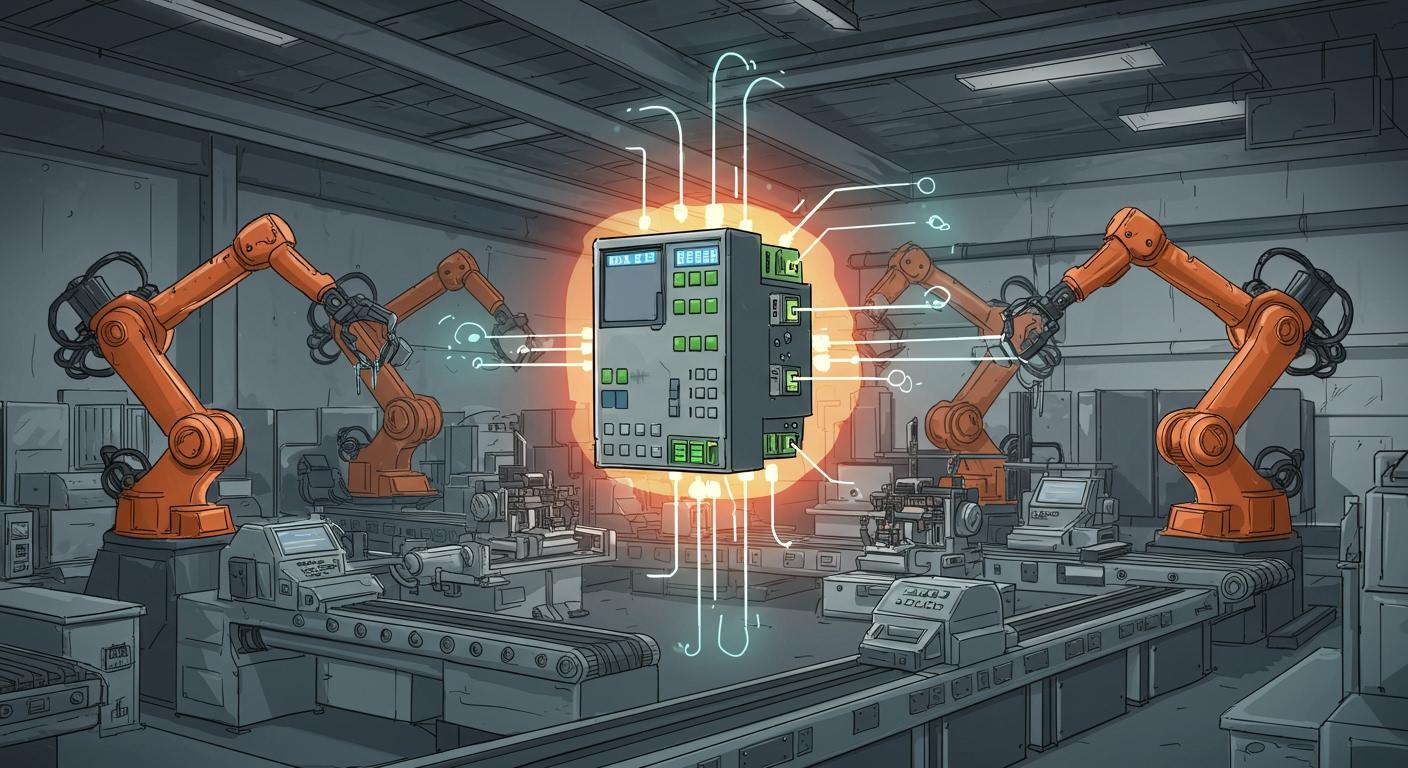
Programmable logic controllers are essential to modern industrial automation. Several popular plc brands consistently dominate the global market. The industry's top manufacturers are:
- Siemens
- Rockwell Automation (Allen Bradley)
- Mitsubishi Electric
- Schneider Electric
- Omron
The PLC software market demonstrates robust health. Projections show it will expand by an estimated 18.7% over the next five years, highlighting the sector's continued importance and growth.
Key Takeaways
- Five main brands lead the PLC market: Siemens, Rockwell Automation, Mitsubishi Electric, Schneider Electric, and Omron.
- PLCs are tough computers. They control machines in factories. They have a brain (CPU), parts for talking to machines (I/O), memory, power, and communication tools.
- Choosing a PLC depends on your project. Think about how fast it needs to be, how much memory it needs, and how many connections it requires.
- Each brand has special strengths. Siemens has integrated software. Rockwell is strong in North America. Mitsubishi is fast. Schneider connects many devices. Omron is known for durability and precise control.
- The best PLC for you depends on your project needs. Consider where you are, your budget, and what your team knows.
Understanding the Most Popular PLC Brands
Choosing the right controller is a critical decision in any automation project. Before diving into specific brands, it is important to understand the technology itself and the factors that guide selection. This knowledge helps you evaluate different plc solutions effectively.
What are Programmable Logic Controllers?
Programmable logic controllers are rugged computers designed for industrial automation. They control machines and processes with high reliability. A PLC operates in a continuous loop called a scan cycle. It reads data from inputs, executes a user-written program, and then updates outputs. This cycle repeats thousands of time per second.
A complete PLC system includes several key parts working together:
- Central Processing Unit (CPU): The brain of the PLC. It runs the program and makes decisions.
- Input/Output (I/O) Modules: These connect the PLC to the factory floor. Input modules get signals from sensors, while output modules send commands to motors and valves.
- Memory: This stores the control program and important operational data.
- Power Supply: It provides stable, low-voltage DC power to the PLC components.
- Communication Interface: This port allows the PLC to talk with other devices like computers and displays.
Criteria for Selection
Engineers must consider many factors when choosing from the popular plc brands. The right choice depends on the specific needs of the project. A careful evaluation ensures the system performs well and meets all requirements.
💡 Tip: Always consider the total cost of ownership. This includes the initial hardware price, software licenses, training, and long-term maintenance.
Key technical criteria often include:
| Criterion | Description |
|---|---|
| CPU Speed | A faster CPU processes logic quicker. This is vital for high-speed applications. |
| Memory Size | More memory allows for larger, more complex control programs and data logging. |
| I/O Capacity | The system must support the required number and type of inputs and outputs (digital, analog). |
| Communications | The PLC must support the right protocols (like EtherNet/IP or Profinet) to connect with other systems. |
Beyond these basics, engineers also evaluate software usability, environmental durability, and the availability of technical support.
1. Siemens
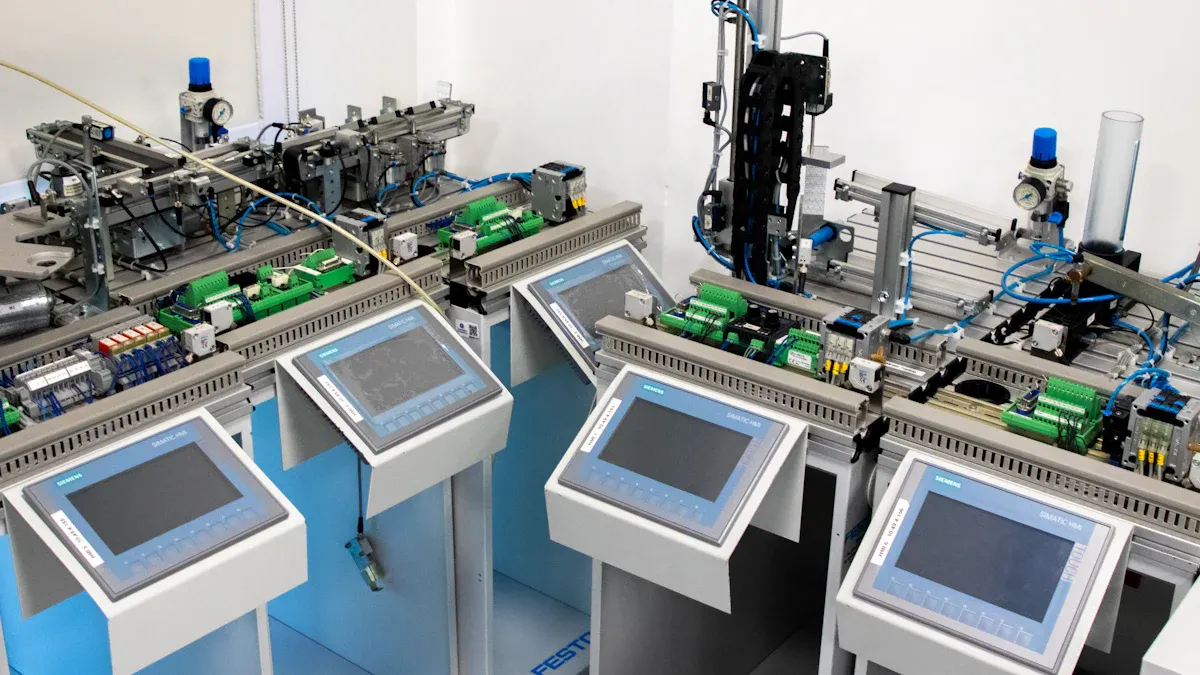
Siemens stands as a global powerhouse in the automation industry. The German company is widely recognized for its innovation, quality, and high-performance products. Industry reports consistently confirm its leadership position. For example, a 2024 analysis shows Siemens holds a dominant 40% of the PLC market, cementing its status as an "automation giant."
Market Position and Reputation
Siemens has built a reputation for delivering reliable and powerful plc solutions. Reports from firms like ConsaInsights identify Siemens AG as a global market leader. This reputation comes from a long history of engineering excellence. Customers trust Siemens for demanding and critical applications where performance cannot be compromised.
Flagship Product Lines
The SIMATIC controller family is the core of Siemens' offering. This product line is highly scalable to fit different project needs.
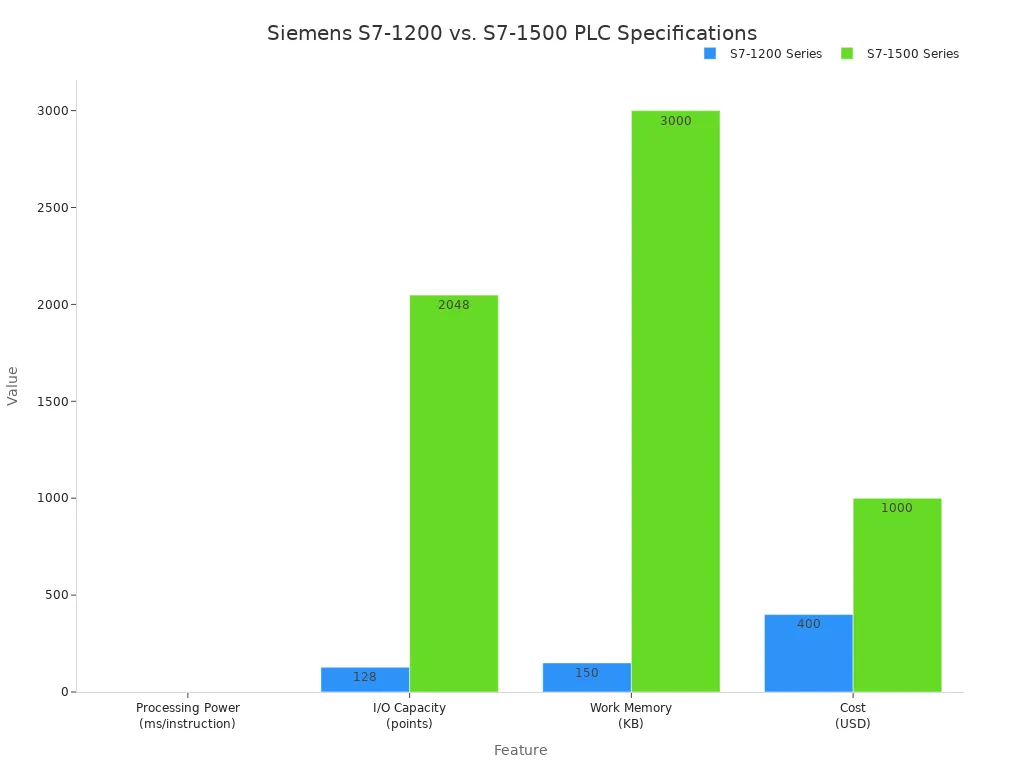
- SIMATIC S7-1200: This is a compact controller for small- to medium-sized automation tasks. It offers a great balance of performance and cost for standalone machines.
- SIMATIC S7-1500: This advanced controller provides maximum performance for large, complex applications. It handles high-speed processes, large data volumes, and sophisticated motion control with ease.
The following chart compares the key technical features of these two popular series:
Key Strengths
Siemens' greatest strength is its Totally Integrated Automation (TIA) Portal. This software platform creates a single engineering environment for all automation components, including PLCs, HMIs, and drives.
The TIA Portal streamlines development significantly. It allows engineers to program, simulate, and diagnose systems within one interface. This integration reduces engineering time, minimizes errors, and helps get products to market faster. Its cloud capabilities also offer flexible access to development tools from anywhere.
Ideal Applications
Siemens PLCs excel in complex and large-scale industrial automation projects. Their power and precision make them ideal for industries with high standards. For example, the automotive industry relies heavily on Siemens. Audi uses SIMATIC controllers to standardize and optimize its car body assembly lines, improving both efficiency and quality.
2. Rockwell Automation / Allen-Bradley
Rockwell Automation is a major force in the automation world, especially in North America. Its Allen-Bradley brand is known for high-quality, reliable hardware. The company has earned a reputation as a premium provider of automation technology.
North American Dominance
While Siemens leads globally, Rockwell Automation is the undisputed powerhouse in the North American market. Many engineers and technicians in the United States and Canada learn on Allen-Bradley equipment. This widespread familiarity creates a strong and loyal user base across the continent.
Scalable Controller Families
Rockwell offers a wide range of controllers to fit any project size. This scalability allows businesses to choose the right product without overspending.
| Controller Family | Typical Application |
|---|---|
| ControlLogix | Large, high-performance systems requiring advanced control. |
| CompactLogix | Mid-range applications for machine and system control. |
| MicroLogix/Micro800 | Small, standalone machines and simple automation tasks. |
Key Strengths
Rockwell's primary strength lies in its integrated software and communication standards. The Studio 5000 Logix Designer software provides an intuitive programming environment. It combines all design elements into one framework, which helps engineers work faster. The platform also includes tools like Logix Emulate, allowing developers to test code without physical hardware.
Strong support for the EtherNet/IP protocol is another key advantage. This standard network simplifies connections from the factory floor to IT systems. It improves data access and can cut wiring time significantly.
Industry-Specific Solutions
Rockwell Automation provides tailored plc solutions for many demanding sectors. The company understands that different industries have unique challenges. It develops systems that help businesses meet strict regulations and optimize their processes. Key industries served include:
- Automotive
- Food and Beverage
- Pharmaceuticals
- Energy and Logistics
These industry-specific approaches ensure that customers get the most effective automation solutions for their needs.
3. Mitsubishi Electric
Mitsubishi Electric has earned a strong reputation for speed, precision, and reliability. The company is a major player in the Asian market and is known for its high-performance controllers. These PLCs are often the top choice for complex machine control and high-speed applications.
Reputation for Speed and Precision
The brand's controllers are engineered for rapid and accurate operations. The MELSEC-Q Series, for example, is an 'all-round model' built for high-speed data processing. This performance is clear in its technical benchmarks.
| Metric | Value |
|---|---|
| Minimum communication cycle | 31.25 µs |
| Processing speed increase | 16 times faster |
| Synchronization accuracy | ± 1 µs |
| Maximum synchronized axes | 256 axes |
These specifications show the controller's ability to handle demanding tasks with exceptional precision.
Flagship Product Lines
Mitsubishi offers a versatile lineup to meet different automation needs. Its two main product families are the MELSEC iQ-R and iQ-F series.
- MELSEC iQ-R Series: This is the flagship line for medium-to-large systems. It focuses on boosting productivity and security while offering backward compatibility with older systems.
- MELSEC iQ-F Series: This compact series is perfect for small-scale applications. It provides powerful features like built-in Ethernet and high-speed processing in a small footprint.
Core Strengths
A key strength of Mitsubishi PLCs is their ability to deliver tangible performance gains. The hardware's modularity and speed help companies improve their output significantly.
A packaging company adopted Mitsubishi’s FX5U PLC for its high-speed operations. The system’s modularity allowed them to scale up production lines efficiently, leading to a 20% increase in output within six months.
Another core advantage is forward compatibility. This allows manufacturers to run programs from the 1990s on new platforms with minimal changes, ensuring long-term value.
Ideal Use Cases
These PLCs excel in industries that require fast and precise motion control.
- High-Speed Inspection: Vision systems use Mitsubishi controllers to precisely position items like bottles for inspection on fast-moving conveyor belts.
- Packaging Machinery: The controllers provide delicate torque control for tasks like capping small bottles at high speeds, preventing errors and ensuring quality.
- Complex Assembly: Their ability to synchronize many axes makes them ideal for sophisticated robotic and assembly applications.
4. Schneider Electric
Schneider Electric is a key player known for its versatile automation solutions that span from machine control to energy management. The company provides a wide range of products that serve many different industries and project sizes.
Versatility in Machine Automation
The Modicon family of controllers demonstrates the brand's adaptability. Different series are designed for specific tasks, from simple machine logic to complex process control. This allows engineers to select a PLC that perfectly matches their performance and budget needs.
| Modicon Series | Primary Application | Key Features |
|---|---|---|
| M580 | Demanding Industrial Automation | High-end platform with Ethernet connectivity and cybersecurity. |
| M340 | Machine Automation | High performance with extensive communication options. |
| M221 | Simple to Moderate Automation | Cost-effective with a built-in web server for easy use. |
Flagship Product Lines
The Modicon M580 and M262 controllers are at the forefront of the company's offerings. These PLCs are built for the Industrial Internet of Things (IIoT) era. Key features include:
- Deep integration with the EcoStruxure Plant IIoT platform.
- A secure Ethernet backbone for safe communications.
- Compatibility with mobile devices to access operating data.
- Dual TÜV certification for both process and machine safety.
Core Strengths
The brand's greatest strength is its EcoStruxure platform. This open architecture connects products from the factory floor to the cloud. It allows devices from different vendors to work together, which protects a company's long-term investments. The platform is proven to reduce energy costs by as much as 30%.
"In this EcoStruxure platform, it’s not just about connectivity," said a company representative. "It’s about taking action, closing the loop."
This approach helps businesses turn data into real improvements in efficiency and profitability.
Ideal Use Cases
Schneider Electric PLCs are well-suited for infrastructure and utility projects. For example, they are widely used in water treatment plants. A Modicon M340 can control pumps, valves, and filtration systems with high reliability. It enables real-time adjustments to chemical levels and flow rates, ensuring water quality and safety.
5. Omron
Omron is a respected name in the automation industry. The company is well-known for producing durable and reliable components. It focuses on creating high-quality controllers that perform consistently in tough industrial settings.
Expertise in Durability and Control
Omron has built a strong reputation for quality and long-lasting products. Engineers trust Omron controllers for their stability and precise control capabilities. This focus on durability ensures that machines run smoothly with minimal downtime, making them a dependable choice for critical operations.
Flagship Product Lines
The Sysmac automation platform is the core of Omron's offerings. This platform includes the powerful NJ and NX series controllers. These controllers are designed for demanding machine control tasks.
- Model: NJ501-5300
- Series: NJ-series NC Integrated Controller
- Key Capability: It performs high-accuracy motion control (MC) and numerical control (NC) functions.
- Integration: A single controller manages all these advanced functions together.
Core Strengths
Omron's greatest strength is its Sysmac Studio software. This platform provides a true Integrated Development Environment (IDE) for engineers. It simplifies the development process by combining many tools into one interface.
Sysmac Studio is the first industry IDE to integrate Logic, Motion, Robotics, HMI, Vision, Sensing, and Safety. It even includes 3D simulation in one single platform. This allows engineers to design and test entire systems without needing separate software.
This all-in-one approach helps reduce engineering time. It also makes it easier to manage complex projects involving robotics and motion control.
Ideal Use Cases
Omron controllers are perfect for industries that need high-speed, precise, and coordinated control. Their integrated automation solutions excel in sectors like packaging, food and beverage, and digital device manufacturing. For example, a food processing plant can use an Omron PLC to perfectly synchronize a conveyor belt, a robotic arm, and a vision inspection system. This ensures fast and accurate product handling.
Siemens, Rockwell, Mitsubishi, Schneider, and Omron dominate the market for programmable logic controllers. Their leadership comes from innovation, reliability, and wide product ranges. Each brand offers unique strengths, from Siemens' integrated software to Omron's advanced robotics control.
The "best" brand depends on your project. Key factors include application requirements, budget, and available regional support. Choosing the right programmable logic controllers requires careful evaluation of these specific needs.
What is your preferred PLC brand? Share your experience in the comments below! 💬
FAQ
Which PLC brand is better, Siemens or Rockwell?
Neither brand is universally "better." Siemens leads the global market with its powerful TIA Portal software. Rockwell Automation dominates in North America with its user-friendly Studio 5000 platform. The best choice depends on project location, team experience, and specific application needs.
Why are some PLCs so expensive?
High-end PLCs cost more for several reasons. They offer faster processors, larger memory, and advanced features like motion control. These controllers also undergo rigorous testing for reliability in harsh industrial environments.
💡 Tip: The total cost includes hardware, software licenses, and training. Always consider the entire investment.
Do all PLCs use the same programming language?
No, different brands often use their own software. However, most follow the IEC 61131-3 standard. This standard defines five common programming languages:
- Ladder Diagram (LD)
- Function Block Diagram (FBD)
- Structured Text (ST)
- Instruction List (IL)
- Sequential Function Chart (SFC)
What is a good PLC for a small project?
For smaller tasks, look at compact PLC lines. The Siemens S7-1200, Rockwell Micro800, and Mitsubishi iQ-F series are excellent choices. They provide strong performance in a small, cost-effective package. An engineer evaluates the required I/O and features to select the right one.