Analogue Versus Digital Signal Why You'll Never See Them Alike
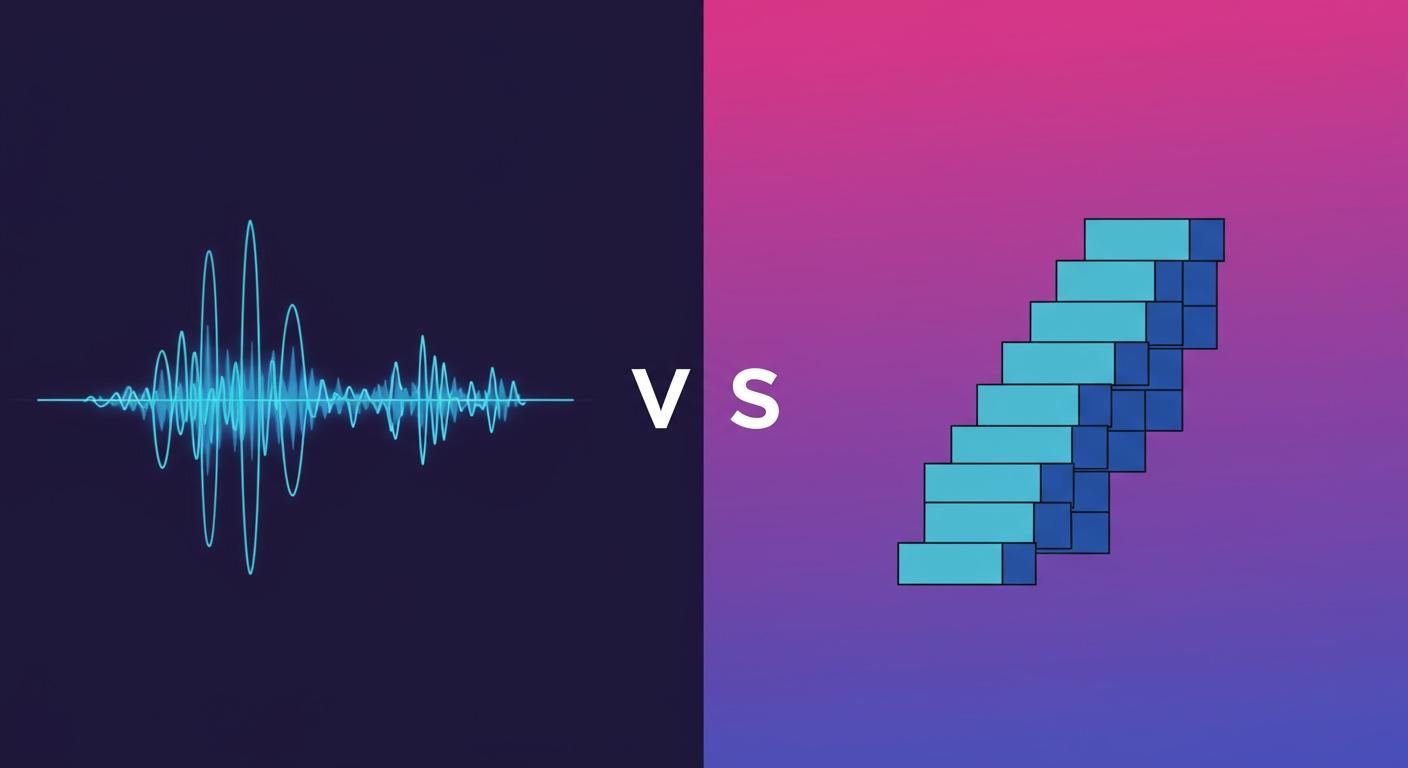
The main difference between analog and digital signals is how a signal carries information. An analog signal is a smooth, continuous wave. A digital signal uses separate, discrete steps.
Think of it this way: An analog ramp lets you stand anywhere. A digital staircase only lets you stand on a specific step. This is the core of the analogue versus digital signal debate.
Ever wonder how your voice travels across the world? Your voice creates analog signals. Your phone converts them into digital signals. This simple signal difference is what makes a modern digital signal possible.
Key Takeaways
- Analog signals are smooth, continuous waves. Digital signals use separate, distinct steps.
- Analog signals are easily affected by noise. Digital signals are much more resistant to noise.
- Digital signals allow for perfect copies and easy computer processing. Analog signals lose quality with each copy.
- Devices often convert analog signals to digital for processing. They then convert them back to analog for us to experience.
- Digital technology is common today. Analog signals are still important for capturing real-world information.
Exploring Analog Signals
An analog signal is a continuous electrical signal. It represents physical measurements using changes in voltage or current. These analog signals capture the smooth, flowing nature of the world around us.
What Is an Analog Signal?
You can think of an analog signal like a dimmer switch for a light. You can smoothly adjust the brightness to any level. This is different from a simple on/off switch, which is more like a digital signal. A microphone is a perfect example of analog technology. It acts as a transducer, converting sound waves into an electrical signal. The microphone's diaphragm vibrates with the sound's air pressure. This vibration creates a tiny, continuous electrical current. This current is an analog electrical signal that mirrors the original sound wave. Many analog signals work this way.
Key Characteristics
The two main characteristics of analog signals are amplitude and frequency. Amplitude is the height or strength of the wave. Frequency is how often the wave repeats. In sound, these analog characteristics correspond to volume and pitch. However, a major weakness of analog signals is their vulnerability to noise.
Watch Out for Noise! ⚠️ Electrical motors, lightning, and other power sources can create electromagnetic noise. This noise easily corrupts analog signals. Once noise distorts an analog signal, the change is often permanent. This is a key difference between analog and digital technology. The core characteristics of analog signals make them susceptible to this interference.
Real-World Examples
You find analog signals everywhere. Your own voice creates real-world signals that are analog. Old-school vinyl records are another great example of an analog format. A record player's stylus traces the physical grooves on a record. The cartridge converts these vibrations into an analog audio signal, which you then hear as music. This analog process captures the sound in a continuous form.
Even in our modern digital world, many sensors still produce analog signals. Industrial sensors for temperature, pressure, and flow often start by generating an analog signal. These real-world signals provide a continuous measurement before they might be converted to a digital format for processing. The world of analog is still very much alive.
Understanding Digital Signals
If an analog signal is a smooth ramp, a digital signal is a staircase. It is not continuous. Instead, a digital signal carries information in discrete, separate steps. This fundamental difference is what powers our modern digital world.
What Is a Digital Signal?
A digital signal represents information using a binary system. Think of it as a series of 'on' or 'off' states. These states are represented by the numbers '1' (on) and '0' (off). Each '1' or '0' is a single binary digit, or "bit." In an electronic circuit, these values correspond to two different voltage levels. The invention of the transistor was a crucial step for digital technology. Transistors act as tiny, reliable switches. They can turn on and off instantly, making it possible to create the complex sequences of 1s and 0s that form a digital signal. This innovation allowed electronics to become smaller and more powerful, paving the way for the digital age.
Core Characteristics
To create digital signals from the analog world, devices use a two-step process. This process helps define the characteristics of digital signals.
- Sampling: First, a device takes snapshots of the analog signal at regular intervals. The number of snapshots per second is the sample rate.
- Quantization: Next, it assigns a numerical value (a binary code) to each snapshot's amplitude.
Bit Rate and Quality 🎧 The amount of data used for each second of a signal is its bit rate. A higher bit rate uses more data, which generally results in better quality but a larger file size. Streaming services often adjust this on the fly to give you the best quality without buffering. This is one of the key characteristics of digital signals.
Unlike analog signals, these digital signals are highly resistant to noise. A small amount of interference will not change a '1' to a '0'.
Common Applications
You use digital signals every day. Your smartphone and computer process everything using digital information. When you look at your screen, the device receives a digital signal that tells each tiny pixel what color to display. This creates the images and videos you see. These devices convert real-world signals into a digital format for processing and storage.
Modern telecommunications also depend entirely on digital signals. Technologies like Wi-Fi and 5G use digital methods to send huge amounts of data quickly and reliably. From phone calls to streaming movies, the efficiency of a digital signal makes our connected world possible. The world of analog is still here, but the world of digital communication is what connects us globally.
Analogue Versus Digital Signal: The Showdown
You now understand the basics of analog and digital. Let's put them head-to-head to see the real-world consequences of the analogue versus digital signal difference. This showdown reveals why one has come to dominate modern technology.
Side-by-Side Comparison
The main difference between analog and digital signals becomes clear when you compare them directly. An analog signal is a continuous representation, while a digital signal is a series of discrete numbers. This single distinction creates a cascade of other differences.
| Feature | Analog Signals | Digital Signals |
|---|---|---|
| Representation | Continuous wave | Discrete binary values (0s and 1s) |
| Noise Immunity | Low (easily corrupted) | High (resistant to noise) |
| Examples | Vinyl records, human voice | CDs, Blu-ray discs, computer files |
This table gives you a quick overview, but the details are where the analogue versus digital signal battle is truly won and lost. For example, performance metrics like bandwidth and signal-to-noise ratio (SNR) tell a deeper story. The quality of analog signals is limited by the physical parts of a circuit and natural electronic noise. In contrast, the quality of digital signals is determined by the sample rate and bit depth set by an analog-to-digital converter.
You can also see this difference in data storage. Analog media, like magnetic tape, stores information in a continuous physical form. Digital media, like a Blu-ray disc, stores data as microscopic pits that a laser reads. While a single high-tech magnetic tape can hold more data than a single Blu-ray, digital storage technology is constantly evolving, becoming smaller and more efficient.
When it comes to sending information, analog signals often rely on older infrastructure like copper wires, which works well for short distances. Digital signals are far more flexible. You can send them over fiber optic cables, wireless networks, and satellite links, making them perfect for our global communication needs. While analog systems can be cheaper to set up initially, digital infrastructure offers better long-term efficiency and scalability.
The Role of Digital Signal Processing
The true superpower of a digital signal is its ability to be manipulated by computers. This is where digital signal processing (DSP) comes in. Digital signal processing is a set of techniques that allows computers to analyze, modify, and improve digital signals. Because analog signals are continuous waves, they cannot be easily processed by a computer. You must first use an analog-to-digital converter to turn the analog wave into a digital format.
Once a signal is digital, you can do amazing things with it.
- Perfect Copies: You can make a perfect copy of a
digitalfile millions of times, and the last copy will be identical to the first.Analog signalsdegrade with each copy, losing quality. - Error Correction:
Digital signal processingcan find and fix errors. If noise interferes withdigital signalsduring transmission, error-correction codes can often rebuild the original data perfectly.
Digital signalscan utilize error detection and correction techniques to resist noise and interference during transmission. This ensures higher signal integrity over longer distances. In contrast,analog signalsare more susceptible to noise, which can accumulate and degrade signal quality.
- Filtering and Compression:
Digital signal processinggives you precise control. Algorithms can remove unwanted background noise from an audio recording or compress a massive video file so you can stream it over the internet. This is how services remove echoes from your calls or reduce file sizes for easier storage. After processing, adigital-to-analog convertercan turn the improveddigital signalback into ananalogsound you can hear. - Security: The binary nature of
digital signalsmakes them easy to secure.Digital signal processinguses encryption algorithms to scramble data, making it unreadable to anyone without the correct key. Techniques like AES and RSA work together to protect your private information, from secure websites (HTTPS) to encrypted messages. This level of security is nearly impossible to achieve with rawanalog signals.
The analogue versus digital signal debate often concludes here. The precision, reliability, and flexibility offered by digital signal processing are why the digital world has expanded so rapidly.
The analogue versus digital signal debate reveals a partnership. Remember the analog ramp and the digital staircase? Your digital devices use converters to translate the continuous analog world into a discrete digital format. These digital signals allow for perfect digital processing. A converter then turns the digital data back into an analog signal, like the analog sound from your speakers. This teamwork between analog and digital is essential. The analog world provides the raw, analog input, and the digital world offers perfect digital precision. Both analog and digital signals are vital.
FAQ
Is analog or digital better?
Neither is "better" all the time. Digital is often preferred for modern electronics because digital signals resist noise. An analog signal can be great for high-fidelity audio. Your choice between analog and digital depends on the specific application. The digital world offers precision, while the analog world is continuous.
Why did digital replace analog in many areas?
Digital technology became dominant for a few key reasons.
- You can copy digital signals perfectly without quality loss.
- Computers can easily process and modify digital signals.
- Digital systems are more reliable for sending data over long distances.
The flexibility of digital is unmatched by analog technology.
Can a signal be both analog and digital?
A signal itself is either one or the other. However, devices constantly convert between them. Your phone takes your analog voice and creates digital signals. A speaker then turns those digital signals back into an analog sound you can hear. This digital to analog process is essential for any digital device.
Are digital signals always perfect?
No, the quality of digital signals depends on the conversion from an analog source. A poor digital recording misses details from the original analog sound. The digital version is an approximation of the signal. Better digital signals need more data to accurately represent the analog input.