Choosing Your Method Analog Or Digital Signal Processing
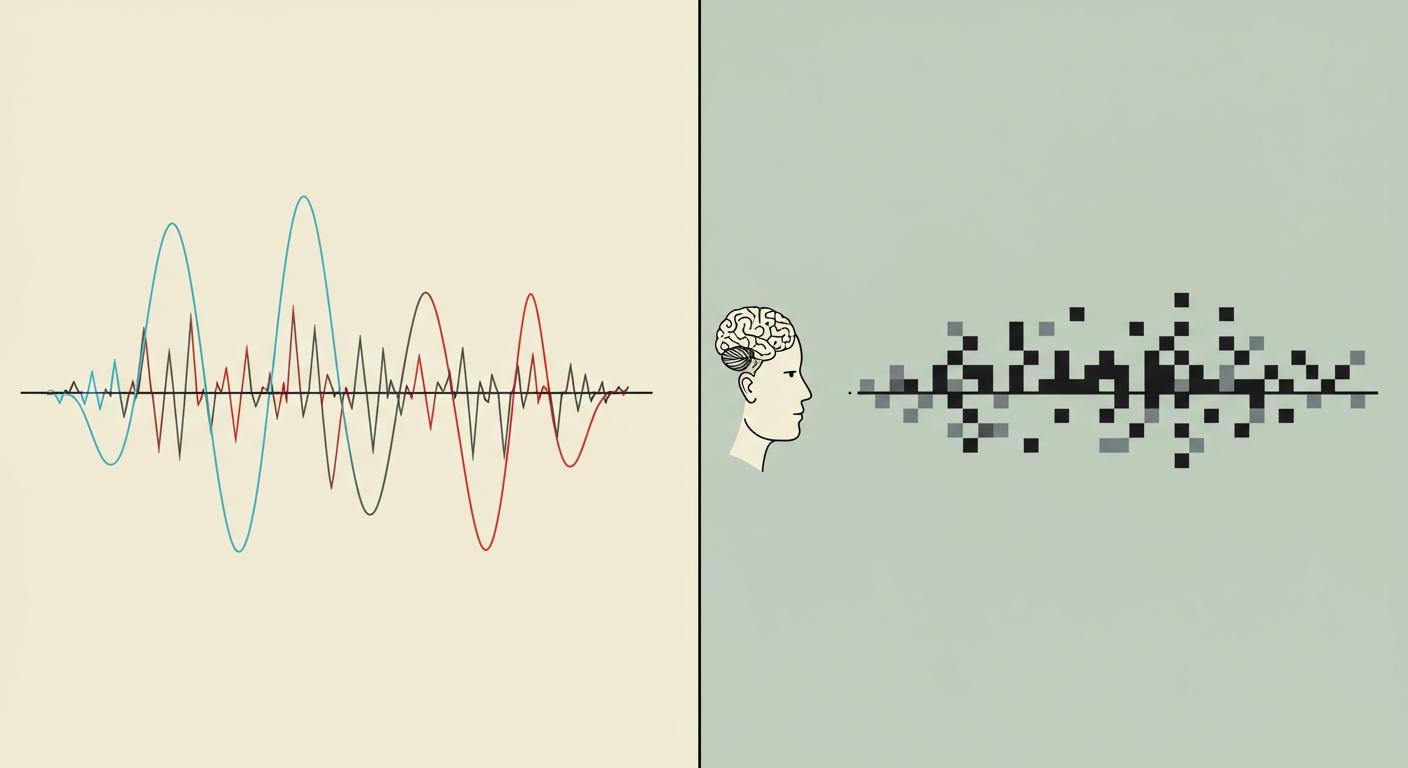
Selecting the right signal processing method depends on project goals for precision and flexibility. Analog signal processing handles a continuous, real-world signal. Digital signal processing works with a discrete, numerical version of that signal. The digital processing field is growing rapidly.
Experts project the global digital signal processors market will expand at a rate of about 7.5% annually.
Understanding what is dsp is key to modern electronics. This digital processing of a signal offers unique advantages.
Key Takeaways
- Analog signal processing works with continuous, real-world signals. It is fast and good for simple tasks like audio amplification.
- Digital signal processing uses numbers to work with signals. It offers high precision and flexibility, making it good for complex tasks.
- Digital signals are strong against noise and errors. Analog signals can easily get distorted.
- A DSP chip is a special computer chip. It helps digital signal processing happen very quickly.
- Hybrid systems combine both analog and digital methods. They use the best parts of each to solve complex problems.
Analog Signal Processing Explained
Analog signal processing is a method that works directly with real-world signals. This type of analog processing handles information in its original, continuous form. Understanding this analog processing approach is the first step in choosing the right method for a project.
Continuous Signal Fundamentals
An analog signal is a continuous wave. It represents physical things like sound or temperature. These signals have a defined value at every single moment in time. This allows the signal to show smooth, unbroken changes. The core characteristics of an analog signal determine the information it carries.
- Amplitude: This is the height of the signal wave. It shows the signal's strength or intensity.
- Frequency: This measures how often the signal repeats. It determines the pitch of a sound signal.
- Phase: This marks the starting point of the signal's cycle.
Engineers can represent a simple analog signal with a mathematical formula. The analog processing uses this information.
y(t) = A sin(2πft + φ)
Here, A is the amplitude, f is the frequency, and φ is the phase of the signal. This analog processing is fundamental.
Strengths and Use Cases
Analog signal processing offers a key advantage: speed. The analog processing happens in real-time. There is no delay from converting a signal to a digital format. This makes analog processing perfect for simple, high-fidelity tasks. Audio amplification is a classic example. The analog processing strengthens the audio signal without changing its basic nature. Other common analog processing techniques include filtering to remove unwanted noise from a signal and modulation to encode information onto a carrier signal for transmission. This analog processing is very efficient.
Limitations and Drawbacks
Despite its speed, analog signal processing has significant drawbacks. Analog circuits are very sensitive to noise. Sources like thermal noise can easily distort a signal. This distortion degrades the quality of the signal. Another major issue is component drift. Temperature changes and the aging of parts can alter a circuit's performance. This drift reduces the precision of the analog processing over time. A signal may lose its accuracy, making this type of processing unreliable for high-precision applications. The analog processing of a signal requires careful design to manage these issues.
An Introduction to Digital Signal Processing
Digital signal processing is a powerful method that uses mathematical algorithms to manipulate a signal. This digital processing approach offers precision and flexibility that analog methods cannot match. Understanding what is dsp is essential for modern electronics. The digital processing of a signal unlocks many advanced capabilities.
What is DSP?
What is dsp? It is the processing of a signal that has been converted into a digital format. This conversion from a continuous analog signal to a series of numbers happens through analog to digital converters. The process involves three key steps.
- Sampling: The system takes snapshots of the analog signal at a regular frequency. The Nyquist theorem states this sampling rate must be at least twice the signal's highest frequency to capture all its information accurately.
- Quantizing: Each sample's value is mapped to a predefined level. This step introduces a small, unavoidable rounding error called quantization error.
- Encoding: The quantized value is converted into a binary number (a series of 1s and 0s). This digital signal is now ready for digital processing.
This fundamental conversion is the first step in any digital signal processing workflow. The digital processing then begins.
The Power of Digital Processing
The true strength of digital signal processing lies in its software-based flexibility and robustness. Once a signal is digital, it is immune to the noise and component drift that affect analog circuits.
Note: Digital systems can use error-correction algorithms, like checksums, to detect and fix errors that occur during transmission, ensuring the signal remains intact.
This digital processing allows for incredibly complex operations. Engineers can apply advanced filtering with high precision. They can also perform tasks like data compression. For example, the digital image processing algorithms in JPEG and the audio processing in MP3 files use a technique called the Discrete Cosine Transform (DCT). This digital processing removes redundant data, making files smaller with minimal loss of quality. What is dsp enables these powerful functions.
The Role of the DSP Chip
While a general-purpose computer can perform digital signal processing, specialized hardware called a Digital Signal Processor (DSP) chip does it much better. A DSP is a microprocessor designed specifically for the math-intensive tasks of digital processing.
A key feature of a DSP is its Multiply-Accumulate (MAC) unit. This hardware allows the DSP to perform the millions of calculations needed for processing a signal very quickly. This makes a DSP ideal for real-time applications. Companies like Texas Instruments and Analog Devices, Inc. are leading manufacturers of these powerful chips. A DSP handles the heavy lifting of digital processing, from initial processing to preparing the signal for digital to analog converters. What is dsp without the hardware to run it? The DSP is the engine of digital signal processing.
Key Differences: A Side-by-Side Look
Understanding the key differences between analog and digital methods is crucial for any project. The choice impacts everything from signal integrity to system cost. This section breaks down the key differences to help engineers make an informed decision. The processing of a signal changes completely depending on the chosen method.
Signal Representation
The most basic difference lies in how each method represents a signal. An analog signal is a continuous wave. It mirrors the real-world information it carries without any breaks. A digital signal is a series of discrete numbers. It represents snapshots of the original signal taken at specific moments.
This creates visual key differences. On an oscilloscope, noise on an analog signal might appear as 'fuzziness' around the main waveform. A digital oscilloscope, however, periodically samples the signal. This can sometimes create confusing 'aliases' if the sampling rate is not high enough. Modern digital scopes, or DSOs, excel at showing rare events. They can display a very dim or infrequent signal clearly, sometimes using color to highlight it. This makes digital tools powerful for troubleshooting a complex signal.
Precision vs. Fidelity
Precision and fidelity are often in opposition. Analog processing offers high fidelity in certain scenarios. A continuous analog chain, like a vinyl record player, keeps the signal in its original form from start to finish. This process minimizes information loss. Some listeners feel this method retains more of the original sound's nuances.
Digital signal processing, on the other hand, excels in precision. The precision of a digital signal depends on its bit depth. Bit depth is the number of bits used for each sample.
- A higher bit depth allows for a wider dynamic range. This is the difference between the loudest and quietest sounds a system can handle.
- For example, a 16-bit digital signal offers about 96 dB of dynamic range. A 24-bit signal allows for a theoretical 144 dB.
- This precision makes digital processing ideal for applications where exact values are critical. The DSP can handle this precise digital signal.
This is one of the most important key differences between the two processing methods. A DSP relies on this precision for its calculations.
Flexibility and Complexity
Flexibility is a major advantage of digital signal processing. A system using a DSP chip can be completely reprogrammed with software. An engineer can change a filter's function without touching the hardware. For example, a DSP can convert a low-pass filter into a high-pass filter through a software technique called spectral inversion. This involves changing the sign of values in the filter's code. This level of adaptability is impossible with analog circuits, which require physical component changes. The DSP makes this digital processing very flexible.
However, this flexibility comes with its own complexity and costs. The following table outlines some of these trade-offs.
| Feature | Analog Filter | Digital Filter (DSP) |
|---|---|---|
| Cost (Simple Tasks) | More cost-effective | Less cost-effective |
| Power Consumption | Substantially less | Substantially more |
| Latency | Often negligible | Higher due to conversion |
| Implementation | Can take up more space | Easier on a PCB |
For tasks with a modest dynamic range (under 60dB), analog processing is often more power-efficient than an equivalent digital processing system. A DSP and its supporting circuits consume more power.
This shows that for simple, dedicated tasks, analog processing can be a better choice. For complex or adaptable systems, the power of digital signal processing and a DSP is unmatched. The digital processing performed by a DSP is powerful.
Noise and Error Handling
Digital signals are far more resistant to noise than analog signals. An analog signal degrades easily. Any unwanted noise adds to the signal and distorts it permanently. This distortion gets worse over long distances.
A digital signal consists of discrete levels (1s and 0s). Noise must be very strong to change a 1 to a 0, or vice versa. This makes the digital signal highly immune to common interference. This is a core strength of digital signal processing.
Note: Digital systems use powerful error-correction techniques to ensure data integrity. A DSP can run these algorithms during processing.
- Parity Bits: A simple method that adds an extra bit to check if the data is correct.
- Checksums: A process where a DSP computes a value for a block of data. If the value changes, the system knows an error occurred.
- Error Correction Codes (ECC): Advanced methods used by a DSP that can automatically detect and fix single-bit errors during processing.
This robust error handling makes digital processing extremely reliable for storing and transmitting information. A DSP ensures the final signal is accurate.
Hybrid Systems: The Best of Both
Engineers do not always have to choose one method over the other. Hybrid systems combine analog and digital processing. This approach creates powerful and efficient solutions for complex problems. A dsp is a key part of these modern systems.
Why Combine Methods?
Combining methods leverages the unique strengths of both worlds. Analog circuits are very energy-efficient. They represent continuous, real-world information naturally. Digital circuits provide precision, control, and the flexibility of software. A dsp can perform complex math that is difficult for analog parts.
Hybrid systems use analog components for initial tasks like filtering or amplification. Then, an analog-to-digital converter (ADC) passes the information to a digital processor. The dsp handles the complex work. This integration leads to better overall performance. The dsp provides the system's intelligence.
Hybrid processing models significantly enhance performance in machine learning and real-time processing. The combination of a dsp with analog parts is very effective.
Real-World Hybrid Examples
Many modern technologies use a hybrid design. A software-defined radio (SDR) is a perfect example. It shows how the two methods work together. A dsp is central to its operation.
- Analog parts capture the radio signal. An RF tuner selects the right frequency. An ADC then converts this signal to a digital format.
- The digital part takes over. A digital down-converter processes the data. A dsp then decodes the information. A computer runs software to control the entire dsp-driven process.
Other advanced systems also rely on this combined approach. A dsp is crucial in these fields.
- Massive MIMO systems for 5G communication use hybrid processing. This design reduces power consumption in complex wireless environments. The dsp manages the digital calculations.
- VLSI neural processing elements use a hybrid model. This allows for nanosecond-speed computation, enabling real-time solutions for difficult problems. The dsp is a core component.
These examples show the power of using a dsp alongside analog hardware.
Choosing the right signal processing method is critical. Analog processing suits real-time tasks needing simplicity. The processing is fast. Digital signal processing offers precision for complex jobs. This digital processing allows for advanced algorithms. The trade-off is often analog speed versus digital precision. The digital signal processing provides flexibility. This processing is powerful.
Readers can use these key differences for their project evaluation. This helps them select the best processing method, whether it is analog processing or digital signal processing. The final processing choice depends on project needs.
FAQ
What is the main difference between analog and digital signals?
An analog signal is a continuous wave that represents real-world information. A digital signal is a series of numbers. It represents snapshots of the original analog signal. This makes the two types fundamentally different.
Why is digital processing better for computers?
Computers understand numbers. Digital signals are already in a numerical format. This makes them easy for computers to process. Digital signals also resist noise better than analog signals, which keeps the information accurate.
Is analog processing faster than digital?
Yes, analog processing is often faster. It works on a signal directly. Digital processing requires an extra step to convert the signal into numbers. This conversion adds a small but measurable delay.
What does a DSP chip do? 💡
A Digital Signal Processor (DSP) is a special computer chip. It performs the complex math for digital processing very quickly. This speed makes DSPs perfect for real-time jobs in devices like smartphones and car audio systems.