Analog vs Digital Systems The Ultimate 2025 Guide
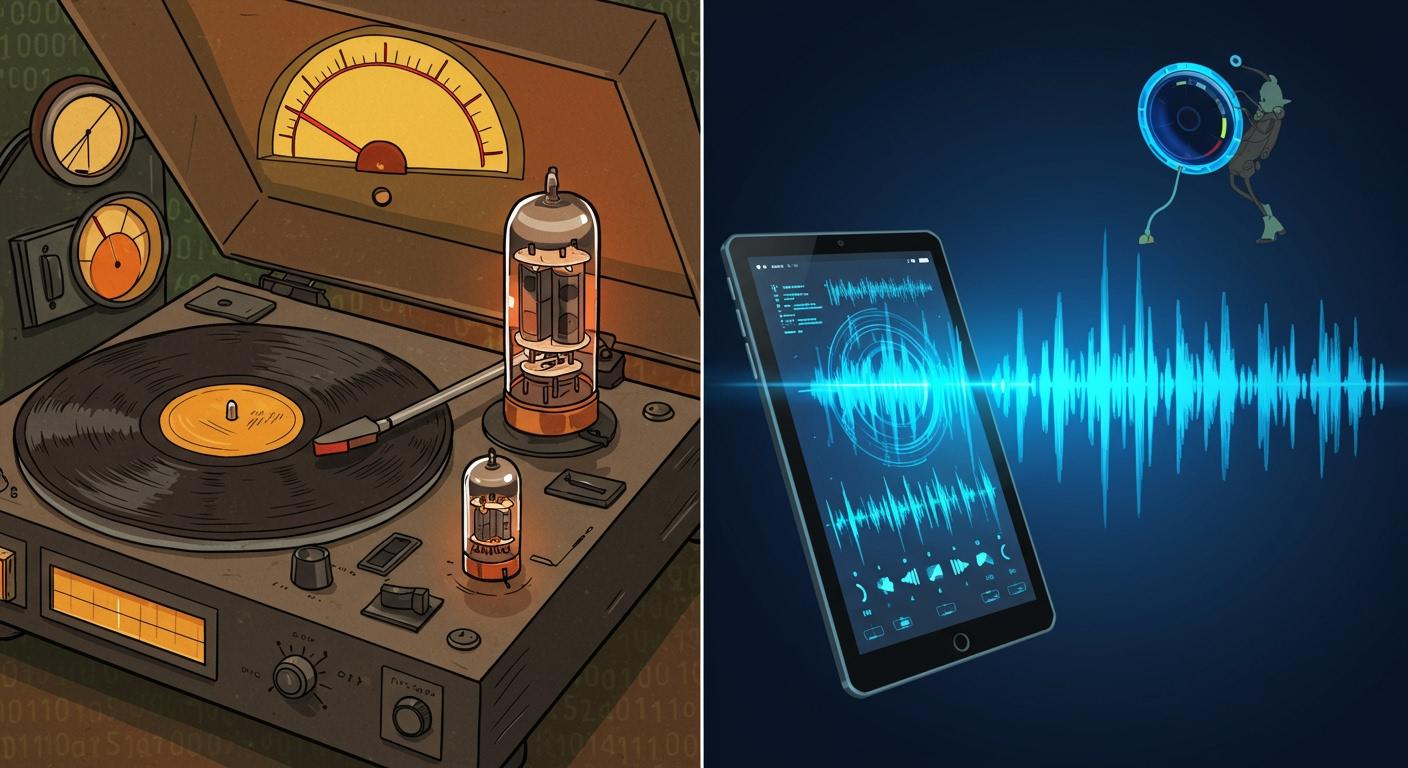
Analog control systems offer high resolution. They create faithful representations of real-world signals. However, these analog signals show a high susceptibility to noise, which can degrade the signals over distance. Digital control systems provide a solution with superior noise immunity. Their digital signals allow for perfect data processing and storage, a key feature as global data volumes are set to exceed 200 zettabytes by 2025.
The core issue in analog vs digital data is that digital systems create approximations. This can introduce small errors. Still, the digital signal processor market is projected to grow over 7% annually, showing the power of these digital systems.
Key Takeaways
- Analog systems capture real-world signals with high detail. They are good for tasks needing exact copies of information.
- Digital systems are strong against noise. They can store and send data without losing quality.
- Analog systems are simple for basic tasks. Digital systems offer more flexibility and processing power for complex jobs.
- Digital systems can have small errors when they change analog signals into numbers. This is called quantization error.
- The best system depends on the task. Hybrid systems combine both analog and digital parts for better results.
ANALOG VS DIGITAL DATA: A FUNDAMENTAL LOOK
The core difference in analog vs digital data is how each system represents information. One captures a perfect copy, while the other creates a highly accurate approximation. This distinction in analog vs digital data defines how signals are handled.
THE CONTINUOUS NATURE OF ANALOG
Analog signals represent information as a continuous wave, much like the physical phenomena they often measure. Imagine a smooth ramp. A person can stand at any point along its surface. This is the nature of an analog system; it has infinite possible values within its range. These types of signals are common in the natural world.
- Human Voice: Sound waves from speech or music create continuous voltage variations in a microphone.
- Position Data: Turning a potentiometer knob smoothly alters resistance, providing real-time feedback signals for position.
- Classic Media: Vinyl records use physical grooves to create continuous variations, and older CRT televisions relied on these kinds of signals to produce images.
THE DISCRETE NATURE OF DIGITAL
Digital signals, in contrast, represent information in discrete steps. Think of a set of stairs instead of a ramp. A person can only stand on one specific step, not in between. This is how digital systems work. They convert continuous analog signals into a finite series of on-or-off electrical pulses, represented as 1s and 0s. This conversion is key to understanding analog vs digital data.
An Analog-to-Digital Converter (ADC) takes thousands of snapshots, or samples, of an analog signal every second. It measures the voltage at each point and assigns it a binary number. This process turns a smooth wave into a series of digital steps, creating digital signals.
This method allows a digital system to create digital signals that are easy to store and process. While each step is an approximation, taking many samples per second creates high-fidelity digital signals. The resulting digital data is a robust representation of the original source. The power of digital technology lies in its ability to perfectly replicate these digital signals without degradation.
ADVANTAGES OF ANALOG CONTROL
The primary advantages of analog control stem from its direct, continuous nature. Analog control systems offer a unique set of benefits for specific applications where fidelity is paramount. These systems excel at capturing the nuance of the physical world without approximation.
HIGH RESOLUTION AND DETAIL
Analog systems possess theoretically infinite resolution. An analog signal is a continuous wave, not a series of steps. This means it can represent any value within its range. This capability allows for extremely fine-grained control and measurement. For tasks requiring high precision and accuracy, this feature is critical. The smooth nature of the signals ensures that no detail is lost between measurement points. This level of precision makes these systems ideal for sensitive scientific instruments and high-performance audio equipment. The systems capture every subtle change in the input signals.
FAITHFUL REAL-WORLD REPRESENTATION
Analog control systems create a true copy of real-world phenomena. They translate physical properties like sound, temperature, or pressure into electrical signals directly. This one-to-one mapping preserves the original signal's character. In high-fidelity audio, for example, this faithful reproduction is highly valued. Analog audio offers an unparalleled warmth and a richer sensory experience.
- Analog circuits introduce natural saturation and harmonic distortion. Many listeners find this adds a desirable character and color to the sound.
- These systems also handle sudden transient peaks in audio signals gracefully, contributing to a more natural sound.
This precision makes analog the preferred choice for applications where capturing the true essence of a signal is more important than processing it.
SIMPLER BASIC CIRCUITRY
For straightforward tasks, an analog circuit can be much simpler than its digital counterpart. Basic analog systems often require fewer components. A simple operational amplifier, for instance, can perform mathematical functions like addition or integration with just a few resistors and capacitors. This simplicity can lead to lower costs and smaller footprints for basic control applications. These simpler systems can also offer faster response times because they do not need to convert signals or run complex algorithms. This makes analog a practical choice for simple, dedicated functions.
DISADVANTAGES OF ANALOG CONTROL
While analog control systems offer high fidelity, they also have significant drawbacks. The primary disadvantages of analog control relate to noise, signal integrity, and processing limitations. These issues make them less suitable for many modern applications.
HIGH SUSCEPTIBILITY TO NOISE
Analog systems are extremely vulnerable to noise. Since analog signals are continuous, any unwanted electrical interference adds directly to the original signal. The systems cannot easily distinguish between the intended information and the noise. This makes it very difficult to remove distortion once it occurs. Common sources of this noise include:
- External Interference: Electromagnetic fields from power lines and household appliances can corrupt signals.
- Internal Component Noise: All electronic parts generate some level of noise. This includes thermal noise from resistors and shot noise from transistors.
- Poor Hardware: Low-quality cables or older equipment can introduce hum and buzz.
These unwanted signals degrade the quality and accuracy of the information being transmitted.
SIGNAL DEGRADATION AND LOSS
Analog signals lose strength as they travel over distance. This process is called attenuation. The longer the cable, the weaker the signal becomes. For example, an analog television signal can lose a significant portion of its power over a standard coaxial cable. A loss of just 3.5 decibels (dB) means the signal is only half its original strength.
| Signal Type | Distance | Cable Type | Approx. Signal Loss |
|---|---|---|---|
| Analog TV (VHF) | 100 feet | RG6 Quad Shield | 1.5 dB to 3.1 dB |
| Satellite TV | 100 feet | RG6 Quad Shield | ~10 dB |
This signal loss is a major problem for analog control systems that need to transmit information over long distances. Furthermore, components in analog systems can change over time, leading to drift and calibration issues that require regular maintenance.
DIFFICULT DATA PROCESSING
Processing and manipulating analog data is complex. Analog systems have limited flexibility because their hardware is designed for specific tasks. Changing the function of an analog circuit often requires physically redesigning and replacing components. Tasks like storing, copying, or encrypting analog information are also inefficient. Each copy of an analog recording introduces more noise, degrading its quality. This makes digital systems a far better choice for applications that require complex data manipulation, storage, and secure transmission.
ADVANTAGES OF DIGITAL CONTROL
The advantages of digital control are rooted in the robust and flexible nature of digital signals. Digital control systems convert information into a format that is easy to manage, transmit, and protect. These digital systems offer significant benefits over their analog counterparts in many modern applications.
SUPERIOR NOISE IMMUNITY
Digital systems show excellent resistance to noise. Digital signals use discrete values, typically represented as 1s (on) and 0s (off). Small amounts of electrical noise are not enough to change a 1 to a 0. The system can easily tell the difference between the intended signals and unwanted interference. This inherent noise immunity ensures high reliability. The digital signals remain clean and accurate, even in noisy environments. This makes digital technology perfect for clear communication and precise control.
LOSSLESS DATA TRANSMISSION
Digital signals enable perfect copying and transmission. Unlike analog signals that degrade over distance, digital signals can be regenerated flawlessly. Communication engineers use lossless encoding to ensure no information is lost during data transmission.
Techniques like channel encoding, which can use error-correcting Hamming codes, allow systems to detect and fix errors. This process ensures that the received digital signals are identical to the original signals, preserving data integrity over any distance.
FLEXIBLE HARDWARE AND PROCESSING
Digital hardware offers incredible flexibility. Devices like Field-Programmable Gate Arrays (FPGAs) are a prime example. An FPGA is a reprogrammable chip. Engineers can change its function by simply writing new code in a Hardware Description Language (HDL). This allows a single piece of hardware to perform many different digital signal processing tasks. This adaptability means digital systems can be updated or reconfigured without needing a complete physical redesign, saving time and resources.
EFFICIENT AND SECURE STORAGE
Digital information is easy to store, manage, and secure. Large amounts of digital data can be compressed and stored on small devices. More importantly, digital data can be encrypted to protect it from unauthorized access.
- Advanced Encryption Standard (AES): A common algorithm used to secure files and communications.
- RSA: An algorithm often used to protect data sent over the internet.
These encryption methods make digital storage a secure choice for everything from personal files to sensitive corporate data. The ability to secure information is a key feature of modern digital systems.
DISADVANTAGES OF DIGITAL CONTROL
Digital technology is powerful, but it has limitations. The primary disadvantages of digital control arise from the process of converting continuous reality into discrete numbers. These challenges affect precision, data transmission, and system design.
QUANTIZATION AND SAMPLING ERRORS
Digital systems approximate real-world signals. This approximation can create errors. An Analog-to-Digital Converter (ADC) measures an analog signal at many points and assigns each point a number. The difference between the actual analog value and the rounded digital value is called quantization error. Fewer bits for each sample lead to larger errors. This affects the precision of the final digital signals. For example, in digital audio:
- 24-bit audio offers a smoother, richer sound with more detail, which is vital for professional production.
- 16-bit audio, like on a CD, is often good enough for listening, as its noise can be below what humans can hear.
While digital systems can achieve high precision, they are always an approximation of the original signals.
HIGHER BANDWIDTH NEEDS
High-quality digital signals contain a vast amount of data. Transmitting these detailed digital signals requires significant bandwidth. Bandwidth is the maximum rate of data transfer across a network. Uncompressed digital video is a clear example. A high-definition analog signal uses far less bandwidth than its digital counterpart. The data rates for uncompressed 4K digital video show how demanding these systems can be.
| SDI Standard | Data Rate (Gb/s) | Video Format |
|---|---|---|
| 6G-SDI | 5.94 | 4K UHD (2160p @ 30 fps) |
| 12G-SDI | 11.88 | 4K UHD (2160p @ 60 fps) |
These large digital signals need more capacity to travel, making bandwidth a major consideration for digital systems.
SYSTEM COMPLEXITY FOR CONVERSION
Digital control systems require specialized components to interact with the analog world. These systems need an ADC to read analog signals and a Digital-to-Analog Converter (DAC) to output them. This conversion hardware adds complexity and cost. The design of these converters is not simple. There are many types of ADCs, each with its own internal structure and function.
- Successive Approximation ADC: Uses a binary search method to find the input voltage.
- Delta-sigma ADC: Employs a feedback loop to correct errors and shape noise.
- Pipelined ADC: Performs conversion in multiple stages for high speed.
This necessary hardware makes digital control systems more complex than simple analog systems for basic tasks. The digital signals depend on these intricate conversion processes.
APPLICATION SHOWDOWN: CHOOSING THE RIGHT SYSTEM
Choosing between analog and digital technology depends entirely on the job. There is no single "best" system. One excels at capturing reality with perfect detail, while the other excels at processing and sharing that reality without error. This showdown breaks down which system wins in key categories, from signal quality to overall cost, to help guide decisions in modern automation and design.
SIGNAL FIDELITY
Winner: Analog
Analog systems win the prize for signal fidelity. They capture information as a continuous wave, creating a true and direct representation of a physical event. This process offers theoretically infinite resolution, preserving every subtle detail without the approximation errors found in digital conversion. This high level of precision is essential for certain high-performance tasks.
In professional audio, for example, engineers often use analog tape during the final mix. Analog tape adds a unique character that digital tools struggle to replicate. It introduces a non-linear frequency response that creates a 'warm' sound, smooths out sharp transients, and generates pleasant harmonic saturation. These qualities provide an aesthetic richness, making analog control systems the top choice for high-end audio and sensitive scientific instruments where capturing the purest form of a signal is the main goal. The lower latency of direct analog processing also contributes to its superior performance in real-time audio monitoring.
NOISE IMMUNITY
Winner: Digital
Digital systems are the clear winner for noise immunity. They convert information into a series of 1s and 0s. A significant amount of electrical noise is required to change a 1 to a 0, so the system easily ignores minor interference. This inherent reliability is a massive advantage in nearly all modern applications.
Clean data transmission is critical for everything from phone calls to industrial automation. Digital signals can be transmitted over vast distances and regenerated perfectly, ensuring the message received is identical to the message sent. This high level of reliability is fundamental to the performance of global communication networks and complex manufacturing processes.
DATA STORAGE
Winner: Digital
Digital technology dominates data storage. Information stored in a digital format can be copied millions of time with zero loss in quality. An MP3 file sounds the same after one copy or one million copies. In contrast, each copy of an analog recording, like a cassette tape, introduces more noise and degrades the original.
Furthermore, digital data is incredibly efficient to manage.
- Compression: Large files can be made smaller for easier storage and faster transfer.
- Encryption: Data can be secured with powerful algorithms to prevent unauthorized access.
- Organization: Digital files can be easily searched, sorted, and managed in large databases.
This makes digital storage the only practical choice for computing, archiving, and any application that requires long-term, secure data management, including logging performance data in manufacturing automation.
PROCESSING AND FLEXIBILITY
Winner: Digital
Digital systems offer unmatched processing power and flexibility. Because digital information is just a series of numbers, computers can manipulate it in limitless ways. This capability is driven by digital signal processing (DSP), which has revolutionized many fields.
- Night Mode: Phones combine multiple short-exposure images to create a single, bright, and clear photo in low light, reducing noise without a tripod.
- Image Merging: The "shaky hand" technique uses tiny, natural movements to capture slightly different frames. The phone then merges these frames to create a higher-resolution image with better color.
This flexibility extends to industrial automation, where a single programmable controller can be updated with new software to change a manufacturing line's function. This adaptability is a core strength of digital technology, enabling constant improvement and innovation.
COST AND COMPLEXITY
Winner: It Varies
The best choice for cost and complexity depends on the scale of the task.
For simple, dedicated functions, analog control systems are often simpler and cheaper. A basic circuit to control a fan's speed based on temperature can be built with just a few analog components. These systems can also provide lower latency, which is critical for immediate response in some applications in automation manufacturing.
However, for complex tasks, digital control systems are more cost-effective at scale. While the initial design requires more complex components like converters, the hardware is highly flexible. Mass-produced processors and programmable chips reduce the cost of each unit significantly. This makes digital the standard for consumer electronics, computing, and large-scale automation in manufacturing. The ability to update systems with software rather than replacing hardware provides enormous long-term value and superior performance in complex manufacturing environments. The slight processing latency is often an acceptable trade-off for this flexibility. The choice between systems ultimately balances the need for precision, speed, and adaptability in applications in automation manufacturing.
No single system is universally superior. The choice between analog control systems and digital control systems depends on the specific goals of an automation task. The debate over analog vs digital data reveals their distinct strengths. One captures reality with perfect fidelity, while the other processes it flawlessly. The future of automation belongs to powerful hybrid systems. These systems combine both technologies for advanced automation.
Modern robotics and medical devices already use this approach. They merge analog sensors with digital processors. This trend will accelerate with AI and IoT, driving innovation in industrial automation.
FAQ
### Is analog or digital better?
Neither system is universally better. Analog systems capture reality with high fidelity. Digital systems process, store, and transmit data flawlessly. The best choice always depends on the application's specific needs for detail, noise resistance, and data handling.
### Why is digital audio not a perfect copy?
Digital systems create an approximation of sound. They take thousands of samples of an analog wave and convert them into numbers. This process introduces tiny, often unnoticeable, differences called quantization errors. The result is a very close copy, not a perfect one.
### What is a hybrid system? 💡
A hybrid system uses both analog and digital components. It might use an analog sensor to measure temperature and a digital processor to analyze that data. This method combines the strengths of both technologies to achieve the best performance in modern devices.
### Can digital signals ever be lost?
Digital signals are extremely reliable. They use special error-correcting codes that can detect and fix problems during transmission. This process ensures the data that arrives is identical to the data that was sent, preventing information loss over long distances.