What Sets AC to DC Converters Apart in the World of Modern Electronics
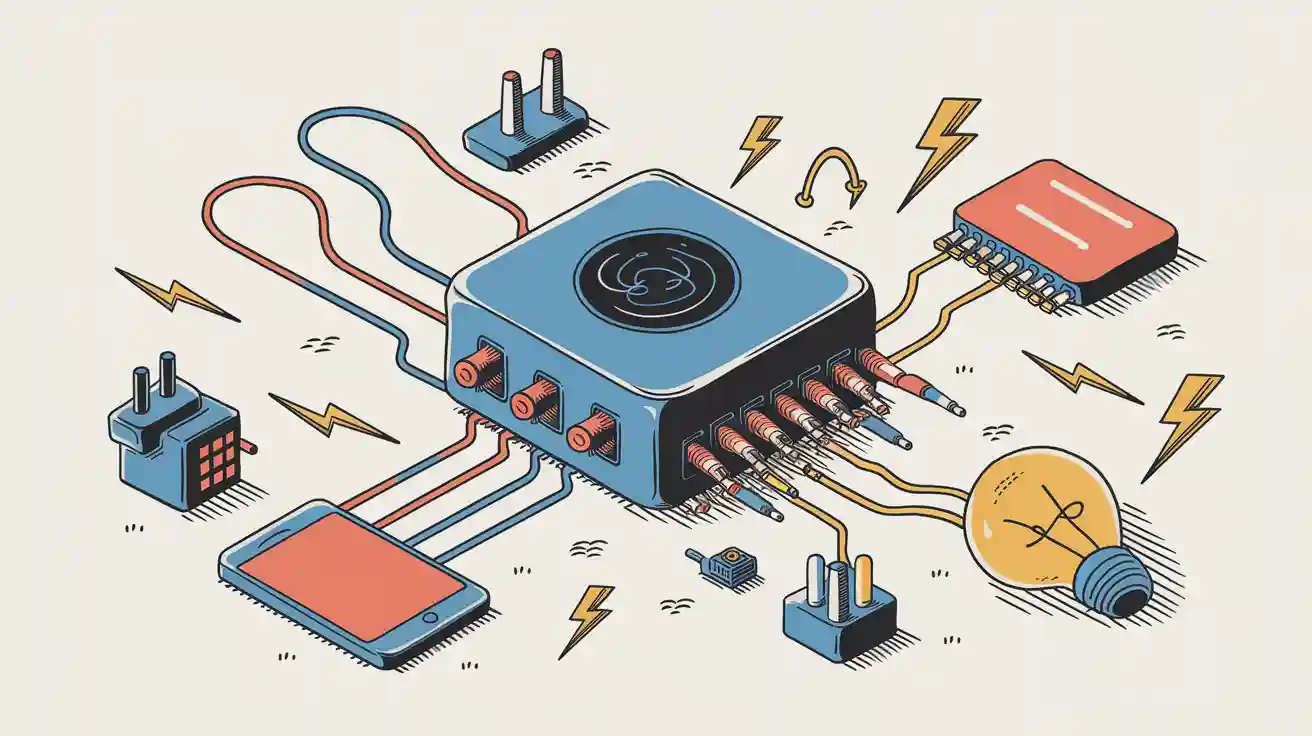
People depend on alternating current to direct current converters every day, often without realizing it. When someone charges a phone or a laptop, the power adapter inside the charger works as an alternating current to direct current converter. This device takes high-voltage ac from the wall, changes it to the safe dc needed by modern electronics, and protects devices from voltage swings. The process involves alternating to direct currents, showing how essential these converters are in daily life. What sets an ac to dc converter apart in the world of electronics?
Key Takeaways
AC to DC converters change high-voltage alternating current from wall outlets into safe, stable direct current needed by most electronic devices.
These converters protect devices by smoothing voltage swings and keeping the power steady, which helps electronics work safely and last longer.
Modern AC to DC converters improve energy efficiency, lowering electricity costs and reducing environmental impact.
They play a vital role in many areas, from charging phones and powering home appliances to supporting industrial machines and renewable energy systems.
Advanced designs in AC to DC converters ensure reliable, safe power for sensitive equipment like medical devices and electric vehicles.
Role of AC to DC Converter
Powering Electronics
An alternating current to direct current converter plays a vital role in the world of power electronics. Most electronic devices, such as smartphones, laptops, and televisions, need direct current to operate. However, homes and offices receive alternating current from the power grid. The ac to dc converter bridges this gap by transforming ac into dc power supply that matches the needs of these devices.
AC to dc converters change the high-voltage ac from wall outlets into the lower-voltage dc required by electronic devices.
Transformers inside the converter adjust the ac voltage to a safe level.
Bridge rectifiers allow current to flow in only one direction, turning ac into a pulsating dc.
Capacitors smooth out the pulsating dc, reducing voltage swings and providing a more stable output.
Voltage regulators keep the dc output steady, even if the input voltage changes.
Without an alternating current to direct current converter, most modern devices would not function or charge safely. For example, when charging a battery, the converter adjusts its output to the correct voltage and uses resistors to limit the charging current. This careful control protects both the device and the battery, making the converter essential for safe and efficient battery charging in consumer electronics.
The ac-dc converter also improves energy efficiency by reducing power waste during conversion. This efficiency helps lower electricity bills and supports the environment by using less energy.
Stable DC Output
Modern digital systems need clean and stable dc power to work correctly. Sensitive electronics, such as computers and medical equipment, can malfunction if the power supply is unstable or noisy. Ac-dc converters provide this stable dc voltage by using advanced components and smart design.
Step-down transformers, diodes, and passive filters (like inductors and capacitors) work together to create a steady dc power supply.
Voltage regulators ensure that the output stays at the right level, even when the input ac voltage changes.
Some ac-dc converters use advanced semiconductor switches to control the output with high precision, reducing unwanted electrical noise.
A stable dc output protects devices from damage and ensures reliable performance. In power electronics, this stability is critical for both safety and efficiency. High-quality ac-dc converters reduce total harmonic distortion and improve power quality, which is especially important for digital systems that require clean power for accurate operation.
Many experts recommend using pure sine wave ac-dc converters for sensitive equipment. These converters produce smooth, continuous waveforms that match the needs of advanced electronics and reduce the risk of errors or failures.
The role of the ac-dc converter goes beyond simple power conversion. It acts as the backbone of modern electronics, enabling safe operation, efficient charging, and long-term reliability for a wide range of devices.
How AC-DC Converters Work
Conversion Process
An ac-dc converter changes alternating current into direct current through a series of steps. Each step ensures that electronic devices receive the correct type of power. The process begins with the ac input from a wall outlet. The power conversion unit uses a transformer to lower the ac voltage to a safer level for devices.
The transformer steps down the ac voltage.
A bridge rectifier, made of four diodes, converts the ac into pulsating dc. This rectifier flips the negative half of the ac waveform, allowing current to flow in only one direction.
Capacitors perform smoothing by storing and releasing energy. This action reduces voltage ripple and creates a more stable dc output.
A voltage regulator then keeps the dc voltage at a fixed, safe level for electronics.
This conversion process ensures that the power conversion unit delivers clean and reliable power. The use of a bridge rectifier and smoothing capacitors is critical for reducing noise and protecting sensitive circuits.
Tip: The quality of smoothing affects how well the ac-dc converter protects devices from voltage swings.
Key Components
Several main parts work together inside an ac-dc converter to achieve efficient power conversion:
Transformer: Adjusts the ac voltage up or down to match device needs. It also helps with global compatibility by handling different voltage standards.
Rectifier: Converts ac to dc. The bridge rectifier is the most common type, using four diodes in a diamond shape for full-wave rectification.
Filter: Uses capacitors and sometimes inductors for smoothing. This filter reduces voltage ripple after rectification.
Voltage regulator: Maintains a steady dc output, even if the input voltage changes.
Modern ac-dc converters often include advanced features. Some use solid-state designs that replace traditional rectifiers and filters, making the power conversion unit smaller and more efficient. Others use integrated circuits to combine protection functions, improve reliability, and support high-efficiency power conversion. These advancements help ac-dc converters meet the demands of new technologies and global power standards.
AC/DC Power Converters Benefits
Efficiency
AC/DC power converters help electronic devices use energy wisely. They perform efficient conversion by turning alternating current into direct current with little energy loss. This process lowers electricity bills and supports a cleaner environment. Many modern devices, such as LED lights and computers, work better with direct current. When buildings use DC power from renewable sources like solar panels, they avoid extra energy loss from switching between AC and DC. This setup makes power electronics more efficient and helps reduce waste. Large buildings and factories benefit from these converters because they save more energy and lower greenhouse gas emissions.
Tip: Using high-efficiency AC/DC power converters in homes and industries can make a big difference in energy savings and environmental protection.
Reliability
Reliable power conversion is important for both homes and industries. AC/DC power converters use strong parts like DC-link capacitors to keep working for a long time. Engineers check these parts for how long they last and how often they might fail. They use special numbers, such as Mean Time Between Failures (MTBF) and Availability, to measure reliability.
Metric | Description | Formula/Definition |
|---|---|---|
MTBF | Time between failures | MTBF = Total operational time / Number of failures |
Failure Rate | How often failures happen | Failure Rate = 1 / MTBF |
Availability | How often the system works as needed | Availability = Uptime / (Uptime + Downtime) |
These converters can also handle different power needs. They use switching technology to adjust voltage for many devices at once. This flexibility helps both consumer gadgets and big machines in factories.
Safety
Safety matters when using electricity. AC/DC power converters follow strict rules to keep people and devices safe. Groups like the International Electrotechnical Commission (IEC) and the National Fire Protection Association (NFPA) set these rules. The converters use insulation and grounding to stop electric shocks and fires. They also meet standards for low voltage and protect against short circuits or lightning. Some designs use extra insulation or special wiring to make sure the system stays safe even if something goes wrong. These safety steps help protect homes, workplaces, and the environment.
AC-DC Converter Applications
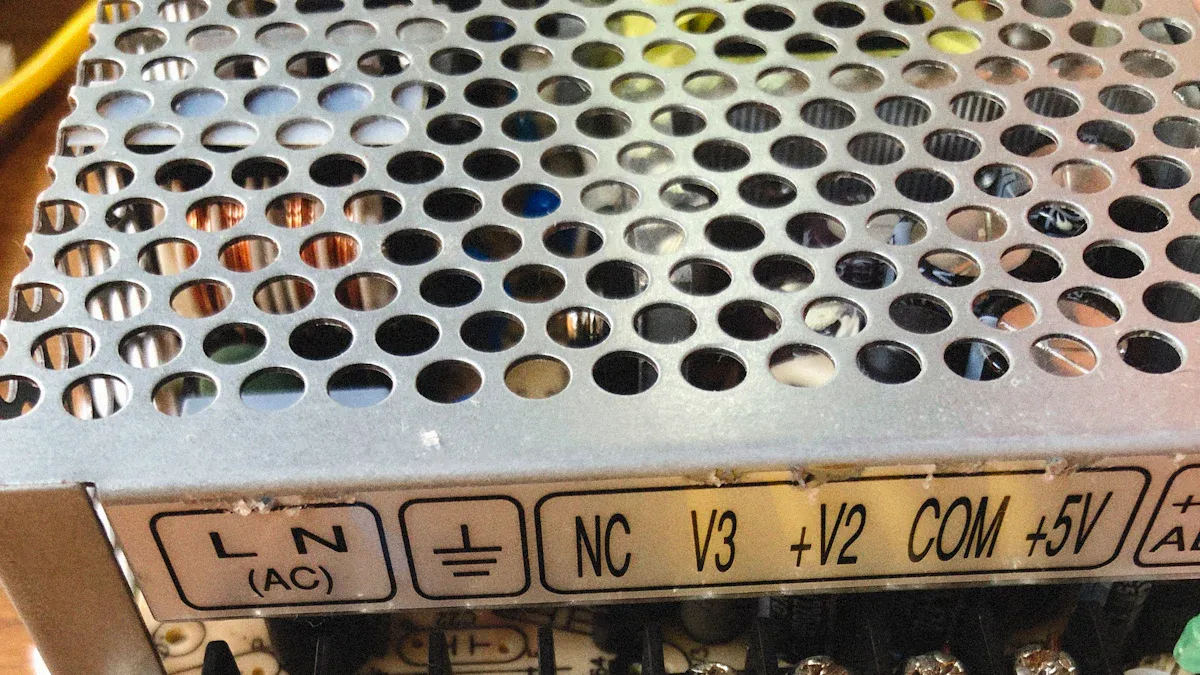
Consumer Devices
Many people use ac/dc adapters every day without noticing. These adapters help electronic devices work safely and efficiently. Common examples include:
Smartwatches
Televisions and radios
Refrigerators, washing machines, and microwaves
Electric cookers and modern lighting systems
Ac/dc adapters convert high-voltage AC from wall outlets into the low-voltage DC needed for battery charging and device operation. Home appliances use these adapters to power control systems and motors. Audio and video equipment rely on stable DC voltage for clear sound and picture quality. People depend on these adapters for almost every electronic device in their homes.
Industry and Energy
Factories and energy systems need reliable power for machines and controls. Different types of ac/dc adapters and power supplies support these needs. The table below shows how each type helps in industry:
AC-DC Converter Type | Industrial Application/Feature |
|---|---|
DIN Rail Power Supplies | Used in control panels; quick installation; stable voltage; works in noisy environments |
Enclosed Power Supplies | Rugged use; external shielding; reliable delivery; good thermal management |
Power Modules | Easy to add in modular systems; compact; wide input range; high efficiency |
Configurable AC-DC | Flexible outputs; modular design for complex needs |
Open Frame AC-DC | Fits in small spaces; manages airflow; efficient delivery |
PCB Mount AC-DC Converter | Mounts directly on circuit boards; saves space; less wiring |
Robotics, transport, and manufacturing all use ac/dc adapters for safe and steady power. Energy sectors like solar and hydrogen also depend on these converters for smooth operation.
Emerging Tech
New technologies need advanced ac/dc adapters to keep up with changing demands. Electric vehicles (EVs) use these converters to charge batteries from the grid. The converters also help with fast charging and allow energy to flow back to the grid, which supports energy management. Renewable energy systems, such as solar panels, use multiport ac/dc adapters to connect with storage and charging stations. These adapters help get the most energy from solar panels and improve power quality.
AC to DC converters play a key role in electric vehicles by supporting fast charging, battery health, and even regenerative braking. They also help connect renewable energy sources to the grid, making energy use smarter and more efficient.
The demand for ac/dc adapters keeps growing. The global market for these converters reached $12 billion in 2023 and is expected to grow to $20 billion by 2032. This growth comes from consumer electronics, industrial automation, automotive, and renewable energy sectors.
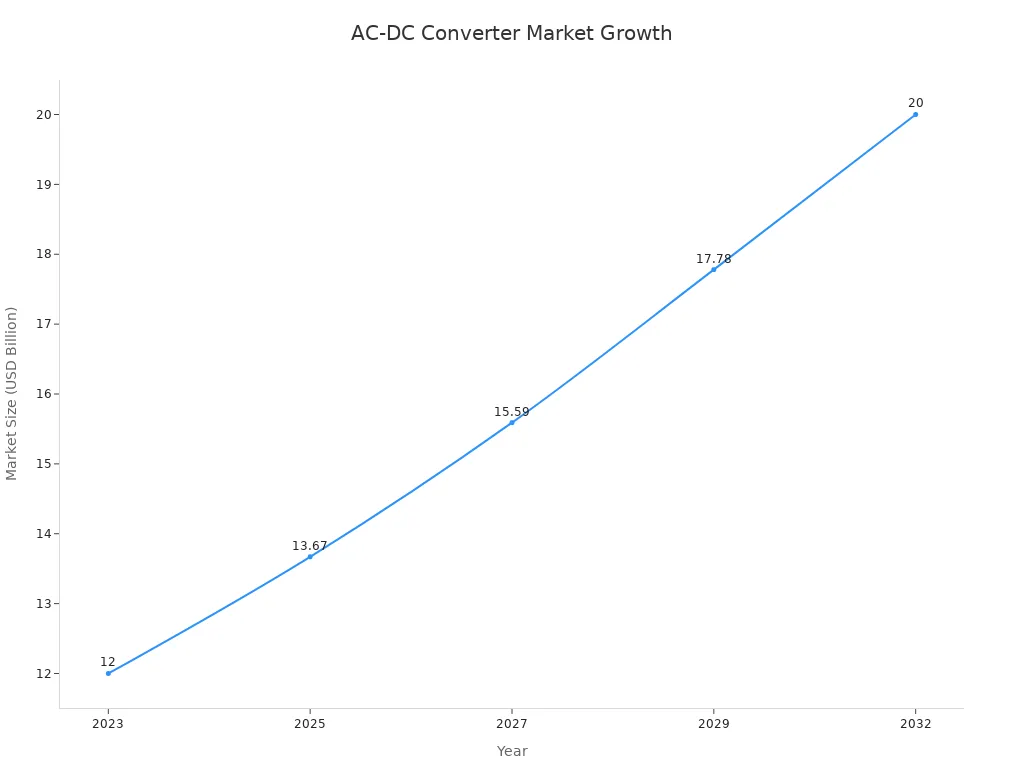
Ac/dc adapters serve as the backbone of modern technology. They support everything from simple home devices to advanced electric vehicles and smart energy systems.
AC-DC converters deliver reliable power and protect electronics from damage. They extend device life by offering features like over-voltage and short-circuit protection, steady DC flow, and reduced heat.
They lower the risk of overheating and electrical faults.
Modern designs improve efficiency and reduce energy waste.
Sector | |
|---|---|
Industry | Stable power for machines and automation |
Energy | Integration with renewables and smart grids |
Transportation | Charging electric vehicles and powering DC motors |
Medical | Reliable supply for sensitive equipment |
As technology advances, AC-DC converters will remain essential for safe, efficient, and sustainable power in every sector.
FAQ
What does an AC to DC converter do?
An AC to DC converter changes alternating current from a wall outlet into direct current. Most electronic devices need direct current to work. This converter makes sure devices get the right type of power.
Why do modern electronics need DC power?
Modern electronics use circuits that run on direct current. DC power gives a steady voltage. This helps devices work safely and prevents damage from power changes.
Can one AC to DC converter work with all devices?
No, each device needs a specific voltage and current. Using the wrong converter can damage the device. Always check the device label for the correct power requirements.
How does an AC to DC converter improve safety?
The converter uses insulation, grounding, and protection circuits. These features stop electric shocks and fires. They also protect devices from short circuits and voltage spikes.
Where can people find AC to DC converters in daily life?
People see these converters in phone chargers, laptop adapters, TVs, and kitchen appliances. Factories and cars also use them for safe and reliable power.