What Sets AC to DC Voltage Converters Apart in Today’s Technology
You rely on ac to dc voltage converters every day without realizing it. These devices make your electronics work safely and efficiently. An ac to dc voltage converter takes the power from your wall outlet and transforms it into a form your devices need. You get benefits like high efficiency, strong safety features, and flexible designs. You see converters in places such as:
- Home appliances and consumer electronics
- Electric vehicles for battery charging
- Renewable energy systems like solar panels
- Data centers and telecom networks
- Industrial automation and healthcare devices
- Lighting and audio/video equipment
- Uninterruptible power supplies
These features help your devices perform better and keep them protected.
Key Takeaways
- AC to DC voltage converters change power from wall outlets into safe, steady direct current that your devices need to work properly.
- These converters offer high efficiency, saving energy and reducing heat, which helps your devices last longer and lowers electricity costs.
- Universal input and compact design let you use converters worldwide and carry your devices easily without extra adapters.
- Regulated output and built-in safety features protect your electronics from voltage spikes and power surges, ensuring stable and reliable operation.
- Choosing the right converter means matching voltage, current, size, and safety needs while considering environmental conditions to avoid common issues like overheating and ripple.
AC vs. DC Power
AC and DC Basics
You use two main types of electrical power: alternating current (AC) and direct current (DC). AC changes direction many times each second. DC flows in only one direction. You see AC in your wall outlets at home. DC powers your phone, laptop, and other electronics.
AC became the standard for power distribution because you can easily change its voltage using transformers. This makes it efficient for sending electricity over long distances. DC, on the other hand, gives you a steady voltage and current. Modern technology uses DC for electronics, renewable energy, and battery systems.
Here is a table that shows the main differences between AC and DC power:
| Characteristic | AC Power | DC Power |
|---|---|---|
| Current Flow | Alternates direction | Constant, one-way flow |
| Voltage | Changes polarity and magnitude | Stays the same |
| Transmission | Efficient for long distances | Lower losses with HVDC over very long distances |
| Voltage Conversion | Simple with transformers | Needs electronic converters |
| Applications | Homes, businesses, industries | Electronics, batteries, solar panels |
Why Convert AC Voltage to DC Voltage
You need to convert ac voltage to dc voltage for most modern devices. AC comes from the power grid, but your electronics need DC to work. The process of rectification changes AC into DC. Rectification uses special circuits to make sure the current flows in only one direction.
- You get stable and consistent voltage for your devices.
- Rectification protects sensitive parts like semiconductors and integrated circuits.
- You can regulate DC voltage easily for precise control.
- Batteries and portable devices need direct current for charging and operation.
- AC to DC conversion improves energy efficiency and reduces power loss.
- You stay safe because DC systems often use lower voltages.
When you convert ac voltage to dc voltage, you make your devices compatible with the power supply. Rectification also reduces electrical noise, which helps communication systems work better. You see ac to dc conversion in battery charging, renewable energy, and uninterruptible power supplies. Direct current supports the safe and efficient operation of your electronics every day.
AC to DC Voltage Converter Features
Efficiency and Energy Savings
You want your devices to use less power and last longer. The ac to dc voltage converter helps you reach this goal by offering high efficiency. When you use an ac dc power supply, you reduce wasted energy and lower your electricity bills. These converters work by turning AC from your wall into the VDC output power supply your electronics need. This process cuts down on heat loss and improves performance.
Here is a table that shows how efficiency gains appear in real-world systems:
| Aspect | Evidence Summary |
|---|---|
| Efficiency Gains | DC systems at 220 V and 380 V show 4% and 10% higher efficiency than 220 V AC systems in homes with solar integration. |
| Conversion Stage Reduction | Supplying DC directly improves overall system efficiency by about 1%. |
| Modern Load Characteristics | Devices like LED lighting and air-conditioning need DC, so direct supply reduces losses. |
| Power Electronics Role | New rectifiers and converters make voltage changes more efficient. |
| Renewable Energy Integration | Solar PV produces DC, which matches well with VDC output power supply needs. |
| Overall Impact | Removing extra conversion steps saves energy in large-scale electronic systems. |
You see these benefits in many applications, such as smart homes, data centers, and renewable energy systems. The ac to dc voltage converter also helps you avoid extra conversion stages, which means less energy loss and better performance for your devices. You get more reliable vdc output power supply, which supports sensitive electronics and IoT devices. This high efficiency also means less heat, so your ac dc wall adaptors stay cool and safe.
Universal Input and Compact Design
You travel or work in different countries, and you want your devices to work everywhere. The ac to dc voltage converter with universal input lets you plug into outlets from 100V to 250V. This feature means your ac dc power supply works in North America, Europe, and Asia without any problems. You do not need to buy new ac dc wall adaptors for each region. This universal input also protects your devices from voltage changes and keeps them running smoothly.
The compact design of modern ac to dc converters brings even more advantages:
- You get smaller and lighter devices, which makes your gadgets easy to carry.
- The ac dc wall adaptors fit into tight spaces and do not add extra weight.
- High efficiency stays strong even in small packages, so your vdc output power supply remains reliable.
- You enjoy longer battery life and less heat, which protects your electronics.
- The design supports eco-friendly goals by using fewer materials and saving energy.
- You can use your ac dc power supply in many applications, from medical tools to smart home devices.
These features help manufacturers create portable, energy-saving products. You benefit from devices that last longer and perform better in any environment.
Regulated Output and Safety
You need a stable vdc output power supply for your sensitive electronics. The ac to dc voltage converter gives you regulated output, which means your devices get the right voltage every time. This regulation protects against voltage spikes and ripple, which can damage circuits or cause errors. You see this in ac dc wall adaptors for laptops, phones, and medical equipment.
Safety is another key feature. The ac dc power supply includes built-in protections like overcurrent, overvoltage, and short-circuit guards. These keep your devices safe from power surges and faults. The converter also reduces ripple, which helps your electronics run smoothly and extends their lifespan.
Reducing electromagnetic interference (EMI) is important in sensitive environments. The ac to dc converter uses special layouts and filters to block high-frequency noise. You get less ripple and cleaner power, which is vital for applications in hospitals, labs, and industrial controls. EMI reduction also means your vdc output power supply does not interfere with other equipment.
You can see how these features support a wide range of applications:
- Consumer electronics need stable vdc and low ripple for best performance.
- IoT devices rely on compact, efficient ac dc wall adaptors for reliable operation.
- Industrial systems use regulated vdc output power supply to protect sensors and controllers.
- Medical devices require low ripple and strong safety features to ensure patient safety.
Tip: Always choose an ac dc power supply with regulated output and built-in safety features for your most important devices.
The combination of high efficiency, universal input, compact size, regulated output, low standby power, and EMI reduction sets the ac to dc voltage converter apart. You get better performance, longer device life, and safer operation in all your applications.
Types of AC DC Power Supply
Linear and Switching
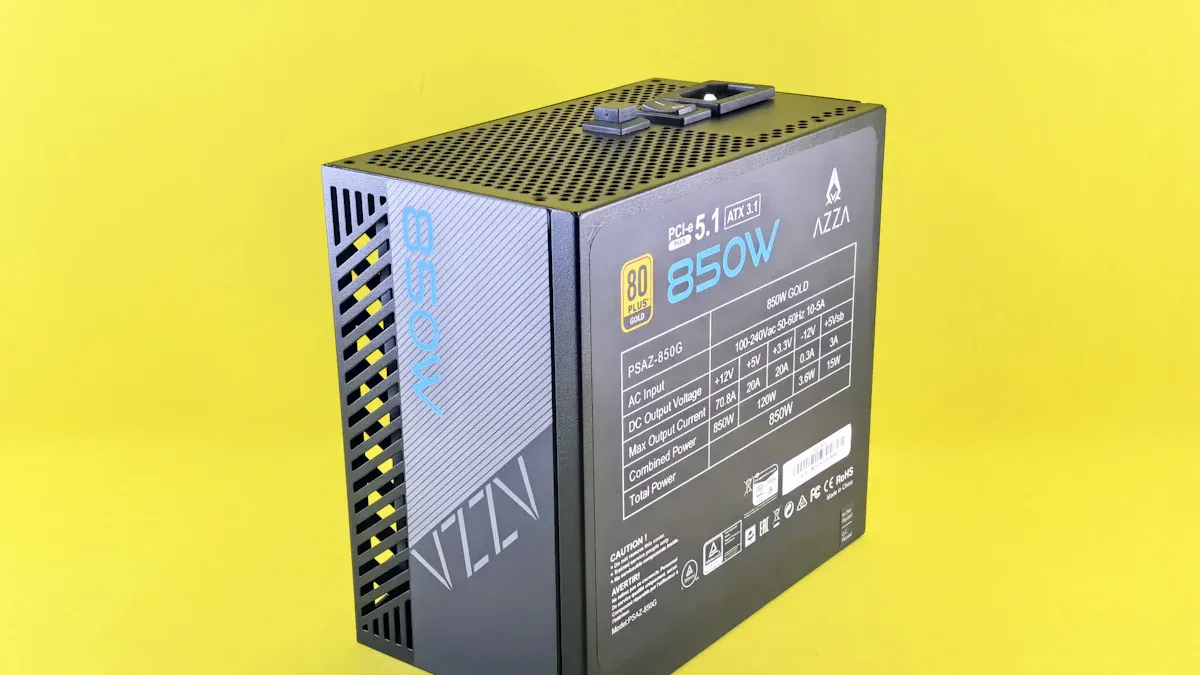
You will find two main types of ac dc power supplies: linear and switching. Each type has unique features that make it better for certain uses. When you choose a supply, you should look at efficiency, size, noise, and cost.
Here is a table that shows the main differences between these two types:
| Performance Aspect | Linear Power Supplies | Switching Power Supplies |
|---|---|---|
| Efficiency | Lower efficiency; dissipates excess energy as heat | Higher efficiency (80-90%+); more energy-efficient |
| Size and Weight | Larger and heavier due to bulky transformers and heat sinks | Smaller and lighter with compact high-frequency components |
| Noise and Ripple | Very low noise and ripple; clean and stable output | Higher noise and ripple due to high-frequency switching |
| Heat Dissipation | Generates significant heat; requires large heat sinks | Generates less heat; reduced cooling needs |
| Cost | Generally more expensive due to larger components and cooling | Typically less expensive and more cost-effective |
You will see linear supplies in places where you need very clean and stable power. These types work well for audio equipment, laboratory instruments, and medical devices. You get low noise and ripple, which helps protect sensitive circuits.
Switching ac dc power supply types are common in computers, laptops, and industrial equipment. You get high efficiency and a smaller, lighter supply. These types of ac to dc converters also cost less and use less energy. You will find them in telecommunications and network devices, where stable power and energy savings matter.
Tip: If you need a supply for high-fidelity audio or medical tools, choose a linear type. For most modern electronics, a switching type gives you better efficiency and size.
Dual Modes and Specialized Uses
Some types of ac dc power supplies offer dual modes or special features for advanced needs. You will find these types in industrial control systems and analog signal processing. In factories, a dual mode supply gives you a low-noise 5V output for digital controls, like microcontrollers, and a higher voltage for motors or switches. This setup helps you run both sensitive and high-power parts from one supply.
In analog circuits, you need dual supplies with equal positive and negative voltages. These types keep your signal clean and accurate, which is important for amplifiers and converters. You get better performance than using a single supply with a virtual ground, especially when you need more power or higher efficiency.
You will see these specialized types in places where you must protect waveform quality or run both digital and analog parts together. Choosing the right types of ac dc power supplies helps you match your supply to your device’s needs.
Benefits of AC DC Power Supplies
Device Protection and Stability
You want your devices to last longer and work safely. The benefits of ac dc power supplies start with strong protection and stable operation. Surge protection devices inside the supply absorb or divert extra voltage from lightning, switching, or grid faults. This keeps your electronics safe from damage, data loss, or even fire. You see these advantages in sensitive applications like telecommunications, battery energy storage, and electric vehicle charging. Surge protection helps your vdc output power supply deliver reliable vdc for every device.
High-quality ac dc power supply designs also prevent common failure modes. You get fanless operation, which removes the most frequent cause of supply failure. Efficient designs reduce heat, so fans are not needed. This increases reliability by about 25%. Good supplies use high-quality capacitors, strong MOSFETs, and careful layouts to avoid overheating and noise. Sealed designs block moisture and dust, while built-in surge protection keeps your devices running smoothly.
Here is a table that shows how different supply types protect your devices:
| Aspect | Linear AC/DC Power Supply | Switching AC/DC Power Supply |
|---|---|---|
| Size & Weight | Requires large transformers, resulting in bigger and heavier units | Uses high-frequency operation allowing much smaller transformers, reducing size and weight |
| Efficiency | Efficiency can be lower due to transformer losses, especially in regulated supplies | Higher efficiency due to low switching losses in transistors, suitable for high-power applications |
| Noise | Can have very low noise in regulated supplies, ideal for sensitive applications like medical devices | Generates switching noise that requires filtering but can be managed effectively |
| Complexity | Simpler circuit design with fewer components | More complex due to added filters and control circuitry needed to manage noise and regulation |
You see these benefits every time you use ac dc wall adaptors for your phone, laptop, or medical equipment. Stable vdc output power supply means fewer errors and longer device life.
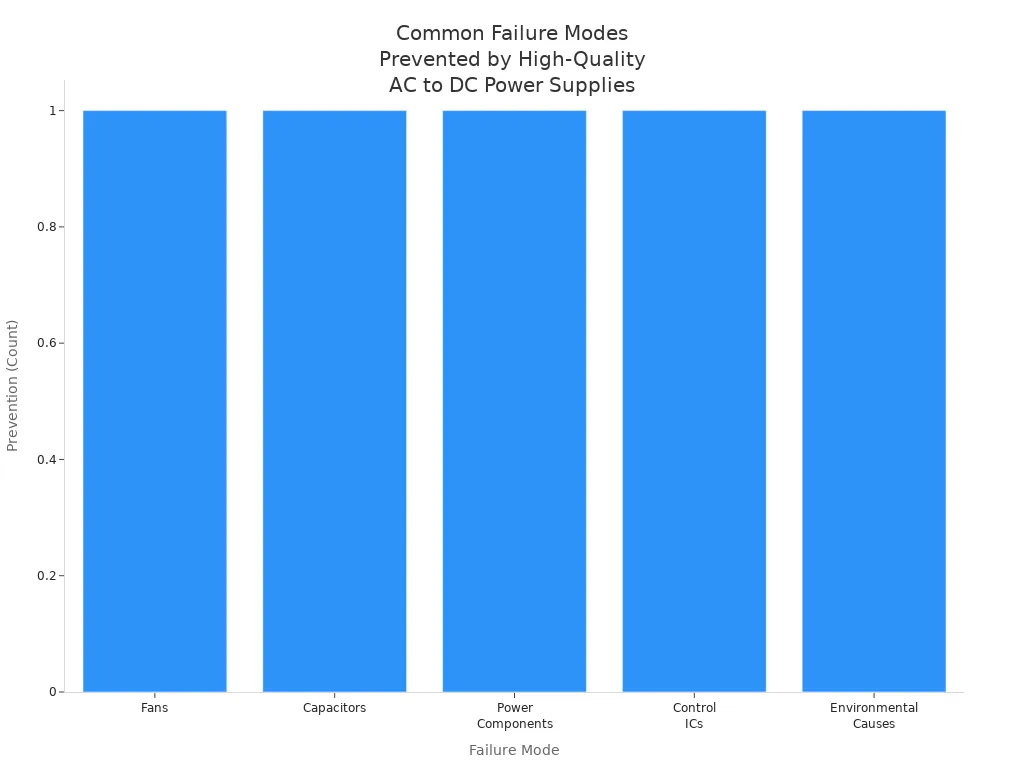
Common failure modes can damage your supply and devices. High-quality ac dc power supplies prevent these problems:
- Fans wear out and cause most failures. Fanless designs improve reliability.
- Capacitors can leak or swell. Good supplies use strong capacitors and keep them cool.
- Power components like MOSFETs and diodes can overheat. Careful design and cooling prevent this.
- Control ICs may fail from noise or poor layout. Proper testing and layout keep operation stable.
- Moisture and surges can damage parts. Sealed designs and surge protection block these threats.
Cost and Energy Savings
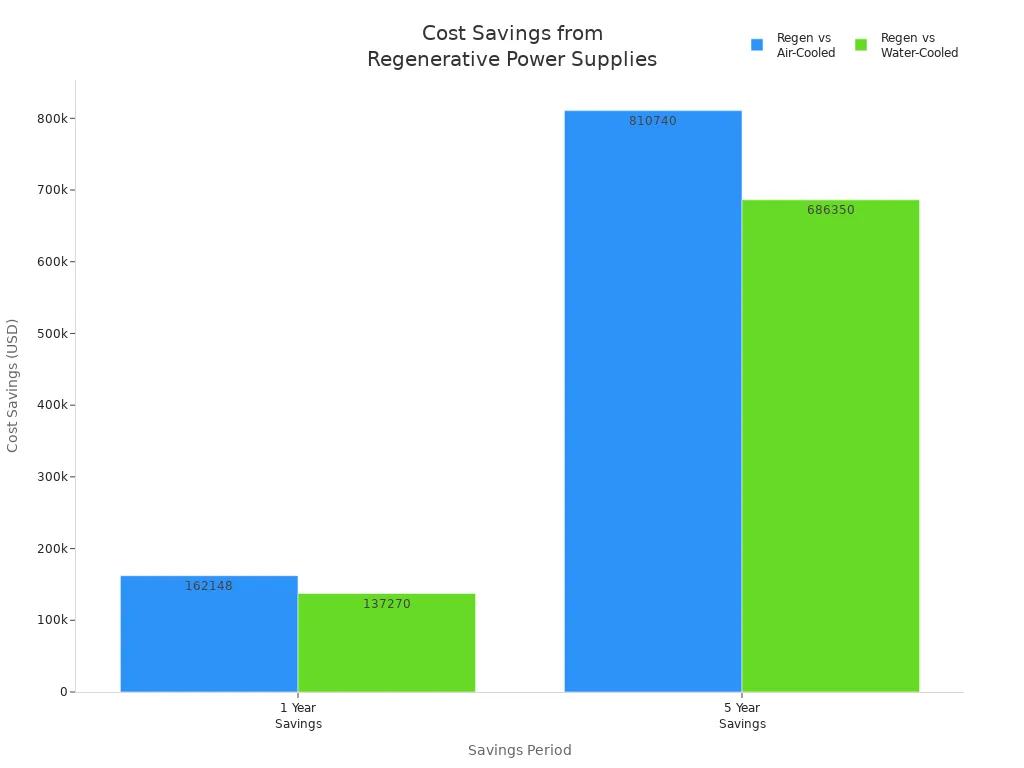
You want to save money and energy. The benefits of ac dc power supplies include lower electricity bills and less wasted power. Efficient designs use less energy and produce less heat. In industrial settings, using regenerative ac dc power supply systems can save over $160,000 per 100 kW load every year compared to traditional systems. You see these savings grow to more than $800,000 over five years.
| Load Type | Air Cooled Regenerative | Air Cooled Traditional | Water Cooled Traditional |
|---|---|---|---|
| Power at Load (kW) | 100 | 100 | N/A |
| Power Regenerated (kW) | 92 | 0 | N/A |
| Total Waste Heat (kW) | 19.1 | 111.1 | N/A |
| Chiller Power Required (kW) | 6.5 | 37.9 | 18.95 |
| Total Power Consumed (kW) | 25.6 | 149 | 130.05 |
| Annual Electricity Cost ($0.15/kWh) | $33,638 | $195,786 | $170,908 |
| Cost Savings per 100 kW Load | Regeneration vs Air-Cooled | Regeneration vs Water-Cooled |
|---|---|---|
| 1 Year Savings | $162,148 | $137,270 |
| 5 Year Savings | $810,740 | $686,350 |
You also see energy savings at home. Switching your air conditioning units to DC power can save 7% to 16% of site energy. These benefits add up when you use efficient ac dc wall adaptors and vdc output power supply for your electronics.
Renewable energy systems use ac dc power supply to manage power from solar panels and batteries. AC/DC bidirectional supplies control charging and discharging, reduce energy waste, and improve system efficiency. You get more reliable vdc and better energy recovery. DC-powered devices like LED lighting and HVAC equipment use less energy, and DC distribution avoids conversion losses. This means your solar PV system works better and saves more energy.
Tip: Choose energy-efficient ac dc power supplies for your home and business to lower costs and support renewable energy.
Flexibility in Applications
You need supplies that work in many places. The benefits of ac dc power supplies include flexibility for different applications. You see ac dc wall adaptors in consumer electronics, battery charging, lighting, electric vehicles, and industrial systems. Each supply delivers the right vdc for your device.
Here is a table that shows flexible application areas:
| Application Area | Examples of Devices/Systems | Key Features/Benefits |
|---|---|---|
| Consumer Electronics | Laptops, mobile phones, external hard drives, gaming consoles | Compact travel adapters, adjustable output voltages, interchangeable plugs for global compatibility |
| Home Automation & Smart Devices | Smart thermostats, Wi-Fi extenders, LED strip lighting | Energy-efficient designs, compliance with energy standards, low standby power consumption |
| Industrial Equipment | Controllers, automation systems, HVAC systems, control panels | Robust design, high wattage output, precise voltage regulation, agency approvals for safety and compliance |
| Medical Equipment | Medical devices, test equipment | Reliable, regulated DC output, adaptable voltage and current settings |
| Security & Surveillance | Security cameras, access control, alarm systems | Junction boxes for hard-wiring, surge protection, long-term reliable power delivery |
| Backup & Battery Systems | Battery backup, UPS systems | Level VI efficiency standards, reduced power consumption, protection against voltage fluctuations |
You see ac dc power supply in electric vehicle charging infrastructure. Level 1 and Level 2 chargers use AC from homes and buildings for slow, safe charging. Level 3 DC fast chargers use direct current for rapid charging, reaching 80% battery in about 30 minutes. This mix of AC and DC charging supports every EV user.
AC to DC power supplies also support renewable energy systems. They manage power flow between solar panels, batteries, and devices. You get efficient vdc output power supply for LED lighting, HVAC, and smart home devices. These applications of ac dc power supplies show how flexible and adaptable they are.
Note: The advantages of ac dc power supplies include global compatibility, energy savings, and reliable vdc for every application.
You benefit from the flexibility, efficiency, and protection that ac dc power supply brings to your devices. The benefits of ac dc power supplies help you save money, protect your electronics, and support new technologies in every application.
AC to DC Conversion Challenges
Selection Factors
When you choose an AC to DC converter, you face many important decisions. You must match the supply to your specific application. Start by understanding what your equipment needs. Some applications require higher voltages or more current. You should check the vdc and amperage requirements before you select a model.
You also need to think about the size of the supply. Industrial environments often have limited space. Make sure the supply fits where you plan to install it. Look for high efficiency to save energy and reduce heat. Always check the warranty to protect your investment. Safety and reliability matter most, especially for sensitive or medical-grade equipment. You can ask experts for advice and test the supply before using it in your applications.
Environmental conditions affect your choice. Use this table to see how different factors impact your decision:
| Environmental Condition | Impact on AC to DC Converter Selection |
|---|---|
| Operating Temperature Range | Choose supplies that work well in your temperature range. Extreme heat or cold can lower performance. |
| Dust, Dirt, Foreign Objects | Pick supplies with protective cases or coatings to keep out contaminants. |
| Thermal Derating | High temperatures may lower output power. You might need extra cooling. |
| Packaging and Mounting Style | Select the right mounting type for your space and risk of contamination. |
| Safety Certifications | Make sure the supply meets safety standards for your environment. |
You must also consider the types of power used in your applications. AC power works best for heavy machinery, while DC power and vdc are better for electronics and precision devices. Some types of supply help with renewable energy integration, like solar panels, which need rectification to convert DC to AC or vice versa.
Common Issues and Solutions
You may face several challenges with ac to dc conversion. Overheating is a common problem. If your supply gets too hot, it can cause unstable output voltage or even damage the device. To solve this, make sure the heat sink works well and the supply has good ventilation. Lower the load if needed to keep the supply cool. High-efficiency types of supply also help reduce heat.
Ripple in the vdc output can harm sensitive electronics. Too much ripple causes errors or shortens device life. You can fix this by choosing supplies with strong rectification and good filtering. Some types of supply use special designs to keep ripple low.
Other issues include noise, poor performance, or supply failure. You can prevent these by picking the right types for your applications and checking the supply’s ratings. Always test the supply in real-world conditions to make sure it meets your needs. Reliable supply performance ensures your vdc stays stable and your applications run smoothly.
Tip: Regularly inspect your supply for dust or dirt, and keep the area clean to avoid problems with performance and ripple.
You see AC to DC voltage converters powering your devices with high efficiency, safety, and flexibility. When you choose a converter, focus on these factors:
- Power factor correction
- Low total harmonic distortion
- High efficiency
- Proper isolation
- Right power rating
- Compliance with standards
The market for these converters is growing fast, with new technology like electric vehicles and smart grids increasing demand.
| Year | Market Value (USD Billion) |
|---|---|
| 2025 | 1.90 |
| 2030 | 2.69 |
You will find smarter, smaller, and more reliable converters supporting future innovations in IoT, renewable energy, and digital control.
FAQ
What devices use AC to DC voltage converters?
You find AC to DC voltage converters in phones, laptops, TVs, LED lights, and battery chargers. Many home appliances and industrial machines also use them. These converters help your devices run safely and efficiently.
How do I choose the right AC to DC converter?
You should check your device’s voltage and current needs. Look for converters with the correct output and safety features. Make sure the converter fits your space and works in your country’s voltage range.
Why does my converter get hot during use?
Converters change AC to DC power, which creates heat. High efficiency reduces heat, but some warmth is normal. If your converter feels too hot, check for proper ventilation and avoid overloading it.
Can I use one converter for multiple devices?
You can use one converter for several devices if the total current stays within the converter’s limit. Always check the voltage and current ratings. Using the wrong converter may damage your devices.