A76 Battery Explained for Everyday Electronics

You often find the A76 battery inside small electronic devices you use every day. This 1.5V alkaline button cell, also known as LR44 or AG13, powers many gadgets. You might spot it in calculators, watches, and even small medical devices. The A76 battery uses zinc manganese chemistry and matches the size and shape of the LR44, making it easy to swap between them. Many electronic products rely on the A76 for steady power in a compact form.
Key Takeaways
The A76 battery is a small, 1.5V alkaline button cell that powers many everyday devices like watches, calculators, and medical tools.
It offers a steady voltage and moderate capacity, making it reliable for low- and moderate-drain electronics but less ideal for high-drain devices.
A76 batteries have a long shelf life of up to 7 years when stored properly in a cool, dry place, and they resist leaks and corrosion well.
You can often replace A76 batteries with LR44 or AG13 types, but silver oxide batteries like the 357 provide better performance for high-drain or precision devices.
Handle and store A76 batteries carefully by keeping them dry, matching the correct size and chemistry, and recycling used batteries to protect your devices and the environment.
A76 Battery Features
Voltage & Chemistry
When you look at an A76 battery, you see a small power source with a big job. This 1.5 volt alkaline battery uses zinc and manganese dioxide as its main chemicals. You often find this type of chemistry in batteries made by top brands like Energizer, Duracell, Panasonic, and Rayovac. The A76 battery belongs to the family of button cell batteries, which means it is compact and round. You can use it in many electronic devices because it gives steady energy for basic functions. The chemistry inside the A76 helps it deliver a stable voltage, which is important for devices like watches, calculators, and medical tools. The A76, LR44, and AG13 batteries all share the same size and voltage, but you should always check the chemical composition and voltage stability for your device.
Tip: The A76 battery’s alkaline chemistry makes it reliable for both low-drain and high-drain electronics.
Size & Capacity
You might wonder how such a small battery can power so many devices. The A76 measures just 11.6 mm in diameter and 5.4 mm in height. Its typical capacity is about 150 mAh, which means it can deliver a steady flow of power over time. Here is a quick look at the standard specifications:
Specification | Value |
|---|---|
Diameter | 11.6 mm (0.46 inches) |
Height | 5.4 mm (0.21 inches) |
Typical Capacity | 150 mAh |
Voltage | 1.5 V |
Battery Type | Coin-type Alkaline Manganese Dioxide |
When you compare the A76 to other button cells, you see that it offers a moderate capacity. It holds more energy than a standard LR44 battery, but less than a silver-oxide 357 or a zinc-air ZA675. This makes the A76 a good choice for devices that need reliable power but do not require the highest capacity.
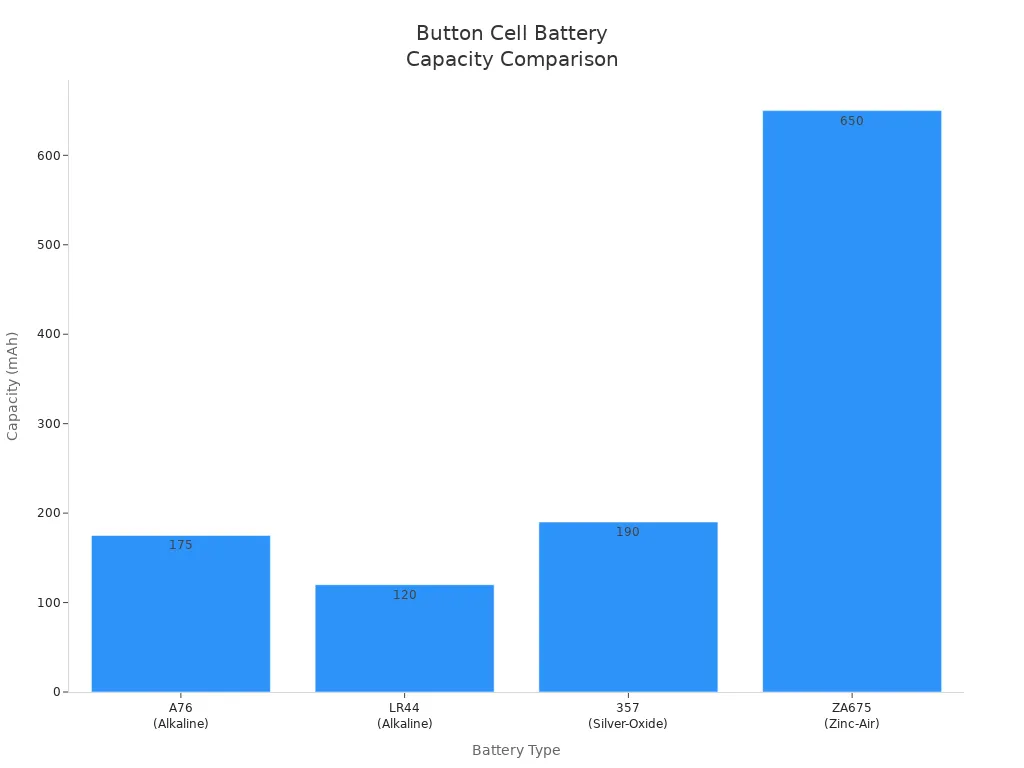
You can see from the chart that the A76 battery stands out among alkaline options, giving you more power than the LR44. However, if your electronic device needs even longer life, you might look at silver-oxide or zinc-air batteries.
Shelf Life & Durability
You want your batteries to last, even if you store them for a long time. The 76a battery can keep its charge for up to 7 years when you store it in a cool, dry place. Brands like Duracell and Energizer report that their 76a batteries hold power for 5 to 7 years under proper storage conditions. This long shelf life means you can buy A76 batteries in bulk and use them as needed without worrying about them losing power.
Several features make the A76 battery durable and resistant to leaks:
Advanced alkaline technology gives a stable 1.5-volt output and high energy density.
The battery works well in both high-drain and low-drain devices, so you can use it in many electronics.
Strong construction and quality control help prevent leaks, corrosion, and overheating.
The 76a battery keeps working even in extreme temperatures, which adds to its durability.
Its long shelf life shows strong chemical stability, so you can trust it to last.
You can rely on the A76 battery for steady performance in your electronic devices. Its design helps prevent leaks, so your gadgets stay safe and work well. Whether you use it in a watch, a medical device, or a toy, the A76 gives you the energy for basic functions and more.
A76 Battery Applications
The a76 battery powers a wide range of applications in your daily life. You find it in many electronic devices, from simple toys to advanced medical equipment. Its small size and steady voltage make it a popular choice for both low-drain and pulse-demanding devices. Let’s look at the primary applications for this battery.
Everyday Devices
You use the a76 battery in many common applications around your home and office. These batteries keep your electronic devices running smoothly and reliably. Here is a table showing some of the most frequent uses:
Device Type | Usage Context and Notes |
|---|---|
Watches | Powering quartz watches for accurate timekeeping and long shelf life. |
Calculators | Replacement calculator batteries for consistent performance. |
Key Fobs | Used in remote controls and keyless entry systems for steady power. |
Digital Thermometers | Provide accuracy and longevity in compact medical devices. |
Glucose Meters | Reliable power source for medical devices that monitor blood sugar. |
Small Electronics | Used in timers, digital notepads, and other precision electronic devices. |
Toys and Entertainment | Found in small electronic toys, interactive plush toys, and laser pointers. |
Photography and Audio | Used in compact cameras, flashes, and voice recorders for steady output. |
Remote Controls | Power TV and audio system remotes for stable, long-lasting use. |
You often see the a76 battery in watches, calculators, and small electronic toys. These devices need a compact power source that fits easily and delivers reliable energy. When you replace batteries in these gadgets, always check the device manual or battery compartment. This helps you match the battery type, voltage, and size for the best performance.
Tip: Always use the correct battery size and chemistry for your electronic devices. A proper fit prevents poor connectivity and keeps your gadgets working well.
Medical & Specialty Uses
The a76 battery also plays a key role in medical devices and specialty electronics. You rely on these batteries for health and safety. Here are some important uses:
Hearing aids: The a76 battery serves as a power source for hearing amplification devices. It provides steady voltage for clear sound.
Glucose meters and blood pressure monitors: These compact medical devices need reliable, long-lasting power.
Digital thermometers: Accurate readings depend on a stable battery.
Security equipment: Car alarms, GPS trackers, and home security sensors use the a76 for dependable operation.
Specialized industrial tools: Digital calipers, micrometers, and assistive listening devices require precision and reliability.
Manufacturers design the a76 battery to meet strict performance requirements. You get a guaranteed shelf life of up to 5 years and protection against defects. If you use the battery in medical devices, always choose a reputable brand. This ensures safety and reduces the risk of leaks or voltage drops.
High-Drain Applications
Some electronic devices need bursts of power or steady output under heavy use. These high-drain applications include digital watches with backlights, laser pointers, and certain medical instruments. The a76 battery can handle many of these needs, but you should know its limits.
Laboratory tests show that silver oxide batteries, like the 357 or SR44, outperform alkaline a76 batteries in high-drain and precision devices. Silver oxide batteries keep a stable voltage and last longer, which is important for devices that need consistent power. The a76 battery works well in general consumer electronics and toys, but it may not provide the best performance in demanding situations.
Feature | A76 (Alkaline) | Silver Oxide (e.g., 357/303) |
|---|---|---|
Voltage Stability | Gradually decreases over time | Remains stable until nearly depleted |
Typical Capacity | 110 - 130 mAh | 150 - 200 mAh |
Best For | Low-drain devices | High-drain, pulse-demanding precision devices |
Lifespan | Shorter | Longer-lasting |
Leakage Resistance | Moderate | Higher |
Cost | Lower | Higher |
Note: For high-drain or pulse-demanding devices, check your device manual. Silver oxide batteries may offer better performance and longer life than the a76 battery.
You can trust the a76 battery for most everyday and medical devices. For high-drain applications, consider your options and choose the battery that matches your device’s needs. This helps you get the best performance and reliability from your electronic devices.
A76 Battery vs Similar Batteries
LR44, AG13, 357 Comparison
You might notice that the a76, lr44, ag13, and 357 batteries look almost identical. They all belong to the button cell battery family and share similar sizes. However, they have important differences in chemistry, voltage, and capacity. The a76, lr44, and ag13 batteries use alkaline chemistry and provide a nominal voltage of 1.5V. The 357 battery uses silver oxide chemistry and delivers a slightly higher voltage of 1.55V. This small difference can affect how your device works, especially in precision instruments.
Battery Type | Nominal Voltage | Capacity Range (mAh) | Chemistry |
|---|---|---|---|
A76 | 1.5 V | 110 - 150 | Alkaline |
LR44 | 1.5 V | 110 - 150 | Alkaline |
AG13 | 1.5 V | 110 - 150 | Alkaline |
357 | 1.55 V | 150 - 190 | Silver Oxide |
The lr44 battery and ag13 battery work well in low-drain devices like watches and calculators. The 357 battery stands out for its stable voltage and higher capacity, making it a better choice for medical devices and cameras.
Interchangeability
You can often swap an a76 for an lr44, ag13, or 357 in many devices because they share the same size and similar voltage. Most toys, remote controls, and small gadgets accept any of these batteries. However, you should know that the chemistry matters. Alkaline batteries like a76 and ag13 lose voltage steadily as they drain. Silver oxide batteries such as the 357 keep their voltage steady until they are almost empty. This means your device may work longer and more reliably with a 357, especially if it needs stable power.
A76, lr44, and ag13 batteries are interchangeable in most low-drain applications.
The 357 battery fits the same devices but performs better in high-drain or precision electronics.
Alkaline batteries may leak more and have shorter lifespans than silver oxide types.
Always check your device manual for the recommended battery type.
Tip: Use the battery type your device suggests for the best performance and safety.
Choosing the Right Battery
When you choose between an a76, lr44, ag13, or 357, think about your device’s needs. If you use a simple toy or clock, an a76 or lr44 battery will work well and save money. For medical devices, cameras, or anything that needs steady power, pick a 357 battery. Always match the physical size and voltage. Never try to recharge a non-rechargeable button cell battery. Buy batteries from trusted brands and follow the device instructions. This helps you avoid leaks, poor performance, or even damage.
Safe Use & Storage
Handling & Installation
You should always handle A76 batteries with care. Before you install a new battery, check your hands for moisture or dirt. Clean, dry hands help prevent corrosion and keep your device safe. When you insert the battery, make sure the positive and negative ends match the markings inside your device. Never force a battery into place. If it does not fit easily, double-check the size and orientation.
If you remove an old battery, inspect the compartment for any signs of leakage or corrosion. Wipe away any residue with a dry cloth. Avoid using metal tools, as they can cause short circuits. Always keep batteries away from small children and pets to prevent accidental swallowing.
Tip: Turn off your device before replacing the battery. This helps prevent accidental short circuits and keeps your electronics safe.
Storage Tips
Proper storage helps your A76 batteries last longer and work better. Manufacturers recommend these best practices:
Store batteries in their original packaging or a secure container. This prevents contact with metal objects and reduces the risk of short circuits.
Keep batteries in a cool, dry place at room temperature (about 59°F/15°C) and around 50% relative humidity.
Avoid extreme temperatures. Both freezing and high heat can damage the battery and shorten its shelf life.
Never mix old and new batteries or different brands in the same device. This can cause uneven discharge and increase the risk of leakage.
Remove batteries from devices if you do not plan to use them for a while. This prevents unnecessary drain and leakage.
Regularly check your devices for any signs of battery leakage or corrosion.
A76 batteries perform well in a wide temperature range, but you should store them between -40°F and 122°F to keep them safe and reliable. High humidity or moisture can cause corrosion, so always keep batteries dry.
Disposal Guidelines
You should never throw used A76 batteries in the regular trash. Proper disposal protects the environment and keeps your community safe. Follow these steps:
Recycle batteries whenever possible. Many local recycling centers and electronics stores accept used batteries.
Look for certified recycling programs, such as Call2Recycle, or check if your city offers battery collection points.
Always check local rules. Some places require you to recycle all batteries, while others have special drop-off locations.
Do not mix batteries with household waste. Recycling keeps toxic materials out of landfills.
Check the battery label for chemistry type. This helps you sort batteries correctly for recycling.
Environmental Impact | Description |
|---|---|
Soil Contamination | Toxic substances from batteries can leak into soil and harm ecosystems. |
Water Contamination | Chemicals may enter water sources, risking human health and aquatic life. |
Wildlife Harm | Toxic materials threaten animals and disrupt food chains. |
Recycling Program | Details |
|---|---|
Community Drop-off Locations | Many areas offer battery collection at recycling centers. |
Manufacturer Mail-in Programs | Some brands let you mail in used batteries for recycling. |
Environmental Benefits | Recycling reduces pollution and saves natural resources. |
♻️ Recycling your batteries helps protect the planet and keeps your community clean.
You now know the A76 battery offers a compact, leak-resistant design and a long shelf life. You can use it in many devices, from watches to medical tools. To get the best results, follow these tips:
Handle batteries gently and recycle them responsibly.
Always check device compatibility before installing a new battery. Safe handling keeps your electronics working and protects the environment. 😊
FAQ
What devices use A76 batteries?
You find A76 batteries in watches, calculators, key fobs, toys, and medical devices. Many small electronics need this battery for steady power. Always check your device manual to confirm the correct battery type.
Can you replace an A76 battery with an LR44 or AG13?
Yes, you can use LR44 or AG13 batteries in place of an A76. They have the same size and voltage. For best results, always match the battery chemistry your device recommends.
How long does an A76 battery last in a device?
Battery life depends on the device and how often you use it. In a watch, an A76 battery can last up to two years. High-drain devices may use up the battery faster.
Are A76 batteries safe for children’s toys?
A76 batteries are safe when used correctly. Always keep batteries out of reach of young children. Swallowing button batteries can be dangerous. If a child swallows a battery, seek medical help right away.
How should you store unused A76 batteries?
Store unused A76 batteries in a cool, dry place. Keep them in their original packaging. Avoid mixing old and new batteries. This helps prevent leaks and keeps your batteries ready for use.