Choosing Between 21700 and 18650 Batteries for Your Needs
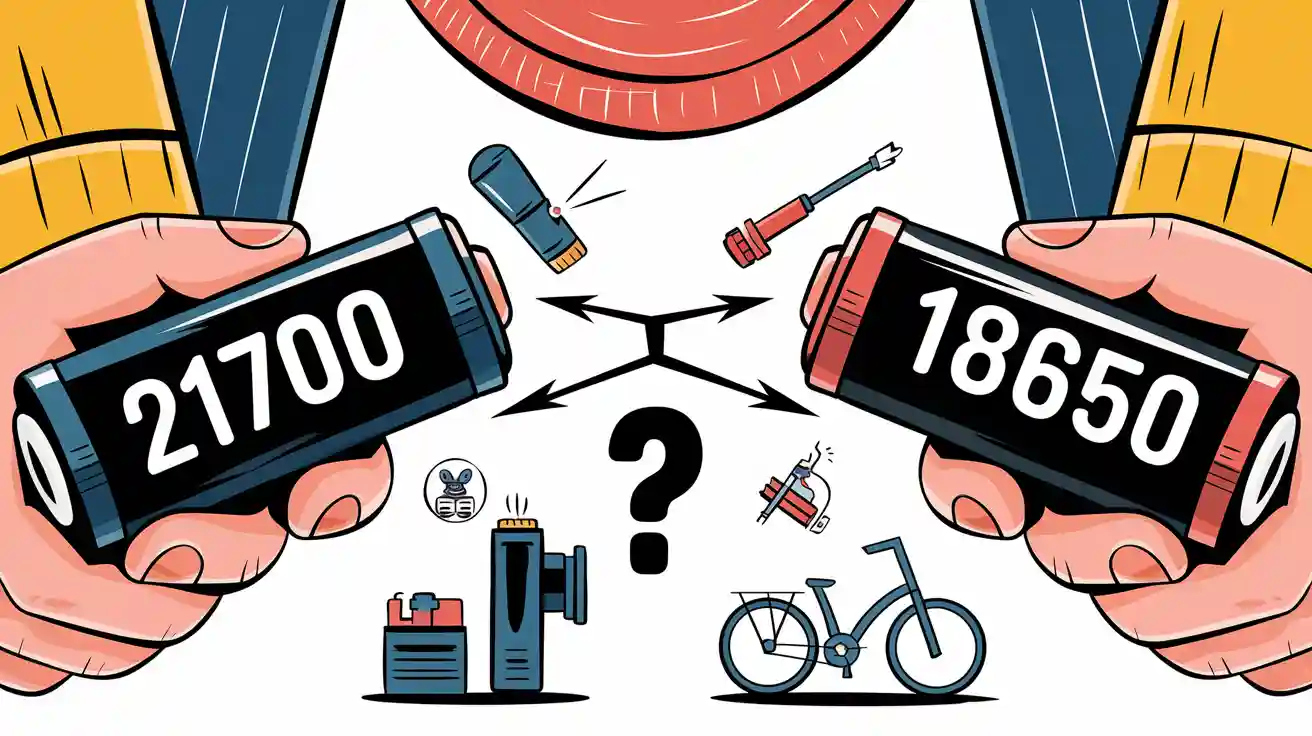
Choosing between a 21700 or 18650 battery depends on your needs. If you want longer battery life and higher energy for power-hungry devices, a 21700 battery often works best. If your device uses less power or only fits a smaller battery, the 18650 remains a reliable choice. You should check your device’s compatibility, think about how long you need your battery to last, and set your budget.
The global market for 18650 and 21700 batteries reached about $12.5 billion in 2023. Experts expect this market to grow to $38.5 billion by 2033 as more people choose batteries with higher energy density and efficiency.
Before you decide, consider how you plan to use your battery. The 21700 vs 18650 question comes down to matching your needs with the right battery.
Key Takeaways
- Choose a 21700 battery for devices needing longer run times and higher energy. It offers capacities from 3000mAh to 5000mAh, making it ideal for power-hungry applications.
- Select a 18650 battery for compact devices or if you want to save money. It fits well in smaller spaces and provides reliable performance with capacities ranging from 1500mAh to 3500mAh.
- Always check your device's compatibility before purchasing a battery. Using the wrong size can damage your device or reduce its performance.
- Consider the battery's discharge rate for high-drain devices. The 21700 battery typically supports higher discharge rates, making it better for tools and electric bikes.
- Evaluate the cost per watt-hour for better value. While 18650 batteries are cheaper upfront, 21700 batteries may offer more energy for your money over time.
21700 vs 18650 Overview
21700 Battery Basics
You often see the 21700 battery in new high-performance devices. This lithium-ion battery uses the 21700 format, which means it measures 21mm in diameter and 70mm in length. The 21700 battery holds more energy than older types. You can expect a typical capacity of 3000mAh, but some reach up to 5000mAh. This extra capacity gives you longer run times for your devices.
| Dimension | Value |
|---|---|
| Diameter | 21mm |
| Length | 70mm |
| Capacity Range | 3000mAh - 5000mAh |
You find the 21700 battery in electric vehicles, power tools, and high-end flashlights. The larger size allows for more lithium-ion material, which means more energy storage. If you need a battery that lasts longer between charges, the 21700 battery stands out as a strong choice.
18650 Battery Basics
The 18650 battery has been a standard in the lithium-ion battery world for many years. It uses the 18650 format, which means it measures 18mm in diameter and 65mm in length. This battery fits well in compact devices. You see it in laptops, flashlights, and many consumer electronics.
| Specification | Value |
|---|---|
| Diameter | 18 mm |
| Length | 65 mm |
| Total Volume | Approximately 16.5 cm³ |
| Capacity Range (mAh) | Description |
|---|---|
| 1500 – 2000 | Low capacity batteries for flashlights, remote controls, etc. |
| 2100 – 2600 | Standard capacity batteries for vape mods, toys, etc. |
| 2700 – 3200 | High capacity batteries for small power tools, trimmers, etc. |
| 3300 – 3500 | Ultra-high capacity batteries for mobile phones, electronic cars, etc. |
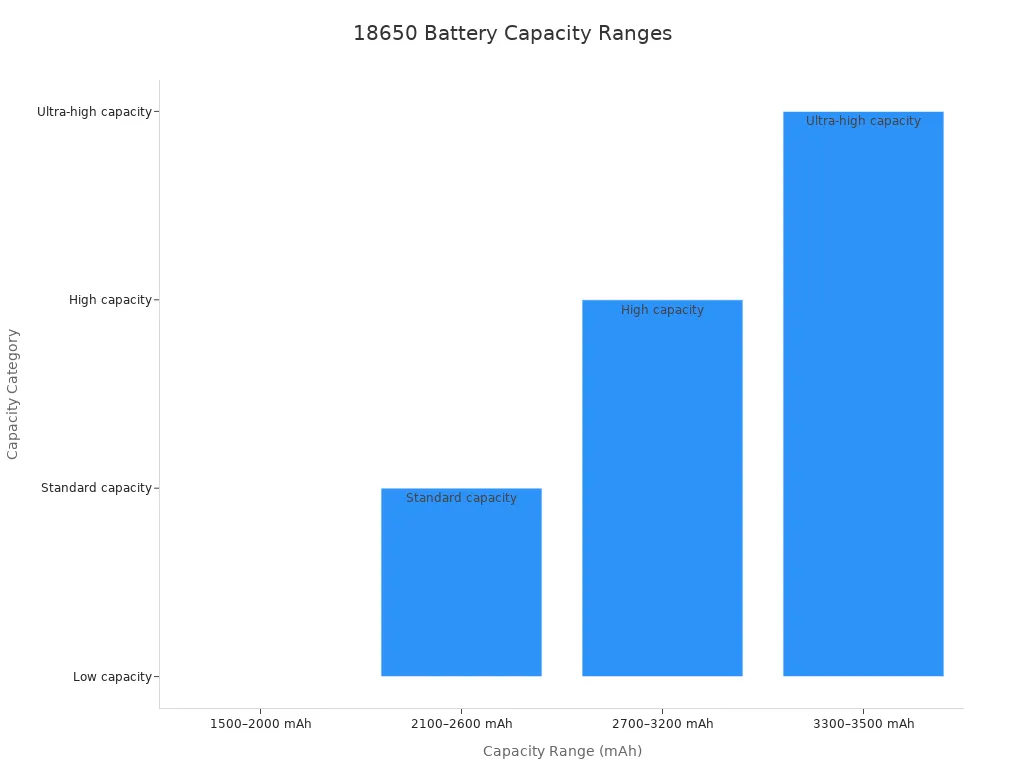
The 18650 battery offers a wide range of capacities, from 1500mAh up to 3500mAh. This flexibility makes it a popular choice for many lithium-ion battery applications. You can rely on the 18650 for steady performance in both low and high-drain devices.
Key Differences
When you compare the 21700 vs 18650, you notice several important differences. The 21700 battery is larger, so it stores more energy. This means you get longer use between charges. The 18650 battery is smaller and fits better in compact devices. Both use lithium-ion technology, but the 21700 format allows for higher capacity and better energy density.
Tip: If your device supports both, the 21700 battery usually gives you more power and longer run time. If you need a battery for a smaller device, the 18650 battery may fit better.
Here is a quick comparison of their main features and uses:
| Feature | 21700 Battery | 18650 Battery |
|---|---|---|
| Diameter | 21mm | 18mm |
| Length | 70mm | 65mm |
| Capacity Range | 3000-5000mAh | 1500-3500mAh |
| Typical Applications | Electric vehicles, power tools, high-end flashlights | Laptops, flashlights, consumer electronics |
| Energy Density | Higher | Standard |
| Device Compatibility | Larger devices | Compact devices |
You see both the 21700 and 18650 batteries in many industries. In electric vehicles, the 21700 battery helps reduce weight and increase energy storage. In consumer electronics, the 18650 battery remains popular because of its size and cost efficiency. Power tools use both types, but the 21700 battery works better for high-load tasks.
The 21700 vs 18650 debate often comes down to your device’s needs. If you want more energy and longer life, the 21700 battery stands out. If you need a battery for a smaller device, the 18650 battery is a reliable choice. Both lithium-ion batteries offer safe, efficient power for many uses.
Size and Compatibility
Battery Dimensions
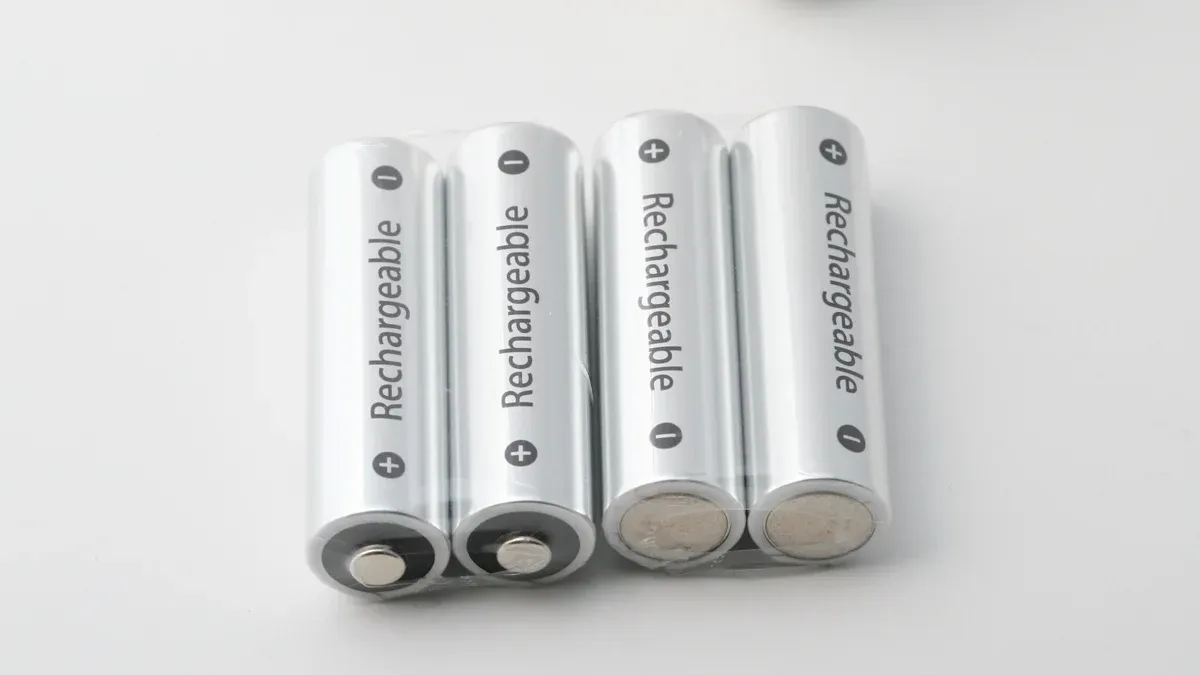
When you look at batteries, size matters. The 18650 battery measures 18mm in diameter and 65mm in length. The 21700 battery is bigger, with a diameter of 21mm and a length of 70mm. This difference in size affects how much energy each battery can store. You can see that the larger battery holds more power, but it may not fit in every device.
Here is a quick comparison:
| Battery Type | Diameter | Length |
|---|---|---|
| 18650 | 18mm | 65mm |
| 21700 | 21mm | 70mm |
You should always check the battery compartment in your device before buying a new battery. Some devices only work with one size. If you try to use a battery that is too big, it will not fit. If you use a battery that is too small, it may move around and lose connection.
Tip: Always measure the space in your device before choosing a battery. This helps you avoid problems and keeps your device working safely.
Device Fit
The battery you choose must match your device. Many laptops, power banks, and portable fans use the 18650 battery. This battery fits well in small spaces and gives steady power. Vape devices and older electric vehicles also use this battery because of its size and reliability.
Newer devices often need more power. The 21700 battery works in high-power cordless tools, e-bikes, and home energy storage systems. New electric vehicles use this battery for longer driving ranges. Some new LED flashlights also use the 21700 battery for brighter light and longer run times.
Here is a table showing which devices use each battery:
| Battery Type | Compatible Devices |
|---|---|
| 18650 | Laptop battery packs, power banks, LED flashlights, portable fans, vape devices, older electric vehicles |
| 21700 | Newer electric vehicles, high-power cordless tools, newer LED flashlights, e-bikes, home energy storage systems |
If you want to upgrade your device, check the battery type first. Using the wrong battery can damage your device or reduce its performance. You should always follow the manufacturer’s instructions for battery replacement.
Capacity and Energy Density
21700 Battery Capacity
When you look at the 21700 battery, you notice its high capacity stands out. Most 21700 batteries offer a capacity between 3000 mAh and 5100 mAh. Some of the highest capacity 21700 battery models even reach over 5000 mAh. You get more power and longer use from each charge. Here are some typical ranges:
- 3000 mAh to 5100 mAh for most 21700 batteries
- The highest capacity 21700 battery can go above 5000 mAh
- This cell capacity is much higher than older battery types
If you need a high capacity battery for demanding devices, the 21700 battery gives you a clear advantage.
18650 Battery Capacity
The 18650 battery has a smaller size, so its capacity is lower. Most 18650 batteries range from 2600 mAh to 3600 mAh. High-performance models can reach up to 3500 mAh or a bit more. Leading brands like Samsung and Panasonic make 18650 batteries that sometimes go above 3600 mAh, but the most stable range is 2600 mAh to 3000 mAh. You still get reliable power, but not as much as with a 21700 battery.
- 2600 mAh to 3600 mAh for most 18650 batteries
- High capacity models reach up to 3500 mAh
- Stable battery capacity sits between 2600 mAh and 3000 mAh
Energy Density Comparison
Energy density tells you how much energy a battery stores for its weight. Both the 21700 battery and the 18650 battery use high energy density technology. Recent studies show that the 18650 battery has an energy density of about 223 Wh/kg, while the 21700 battery has about 218 Wh/kg.
| Battery Type | Energy Density (Wh/kg) |
|---|---|
| 21700 | 218 |
| 18650 | 223 |
A higher battery energy density means you get more power without adding extra weight. In real-world use, the 21700 battery gives you longer runtime and powers more demanding devices. For example, power tools using a 21700 battery can run 50% to 100% longer than those with a 18650 battery. You will notice fewer interruptions and more efficient performance. Devices with high energy density batteries last longer between charges and handle heavy loads better.
Note: If you want the longest runtime and the highest capacity, choose the highest capacity 21700 battery for your device. If you need a compact battery with good performance, the 18650 battery remains a solid choice.
Performance and Lifespan
Discharge Rate
When you look at battery performance, the discharge rate tells you how much current a battery can safely deliver. This matters if you use devices that need a lot of power quickly, like power tools or electric bikes. The 21700 battery often supports higher discharge rates than the 18650 battery. For example, some 21700 models can handle up to 70A, while most 18650 batteries stay below 10A. Here is a table showing the maximum discharge rates for popular models:
| Battery Type | Brand | Model | Maximum Discharge Current |
|---|---|---|---|
| 18650 | Panasonic | NCR18650G | 7.2A |
| 18650 | LG | INR18650-M36 | 5A |
| 18650 | Sanyo | NCR18650GA | 10A |
| 18650 | LG | MJ1 | 10A |
| 18650 | Molicel | M35A | 10A |
| 18650 | Samsung | 35E | 8A |
| 21700 | Panasonic | NCR21700A | 15A |
| 21700 | LG | INR21700-M50LT | 14.4A |
| 21700 | Molicel | P50B | 60A |
| 21700 | EVE | 40PL | 70A |
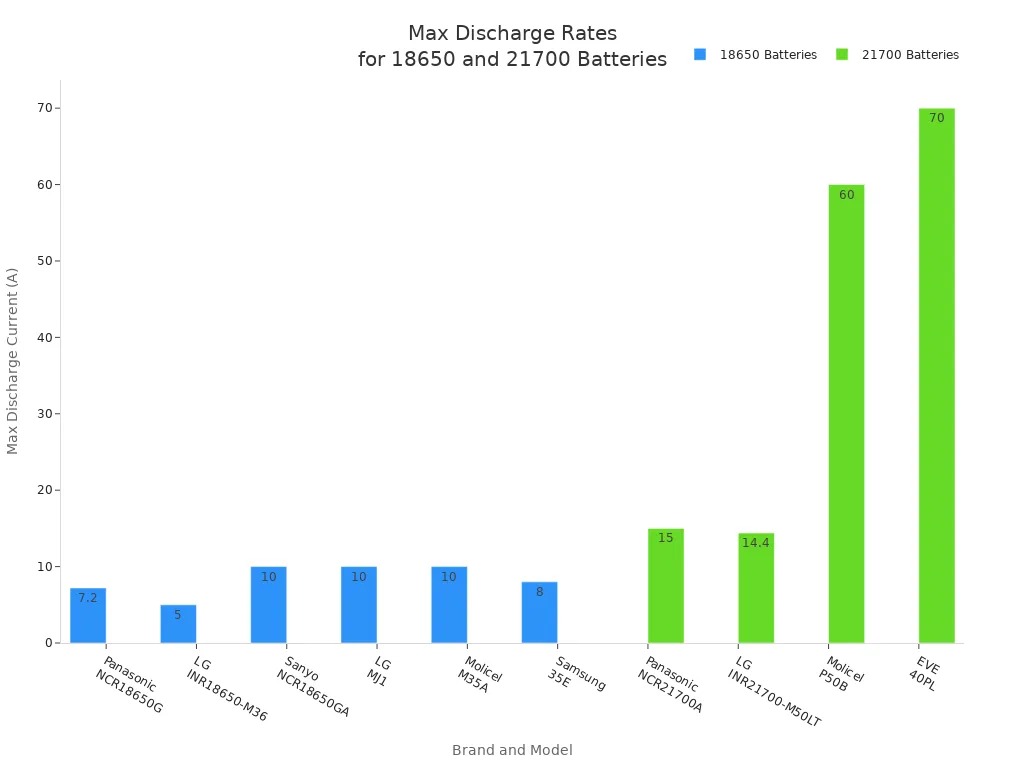
If you want the best performance for high-drain devices, the 21700 battery gives you more power and stability.
Charge Cycles
Charge cycles show how many times you can recharge a battery before it loses capacity. Both 18650 and 21700 batteries offer hundreds of cycles, but the 21700 battery often lasts longer. In lab tests, 18650 batteries with 2500+ mAh or 3000+ mAh can handle many cycles, but 21700 batteries with 4000+ mAh or 4500+ mAh usually last even more cycles. This means you can charge 21700 batteries more times before you notice a drop in performance.
| Battery Type | Capacity Range |
|---|---|
| 18650 | 2500+ mAh, 3000+ mAh |
| 21700 | 4000+ mAh, 4500+ mAh |
If you use your device every day, a battery with more charge cycles will save you money and time.
Longevity
Longevity means how long your battery keeps working well. Many things affect battery life. Aging happens from the first use to the end of the battery’s life. At first, the battery loses capacity slowly. After about a 10% drop, the loss speeds up. Charging habits, temperature, and how you use your device all change how long your battery lasts. The growth of the solid electrolyte interphase (SEI) layer causes early aging. Later, defects in the battery’s electrodes from stress make the battery age faster.
| Factor Influencing Longevity | Description |
|---|---|
| Aging Mechanisms | Changes from start to end of battery life. |
| Performance Degradation | Capacity loss speeds up after 10% drop. |
| Charging Protocols | Charging style affects battery aging. |
| SEI Growth | SEI layer growth causes early aging. |
| Electrode Defects | Stress causes defects and faster aging later. |
Tip: If you want the best performance and longest life, use the right charger and avoid deep discharges. When you charge 21700 batteries with care, you help them last longer and work better.
Cost and Value
Price Comparison
When you shop for a battery, price often plays a big role in your decision. The 18650 battery usually costs less up front because it has been on the market longer. You can find many brands and options for this battery type. The 21700 battery may have a higher price tag, but it offers more energy in each cell.
- Many users notice that the 21700 battery can be competitively priced when you look at the cost per watt-hour.
- The price per watt-hour depends on the battery’s quality, the cells inside, and how the battery pack is made.
- Sometimes, you pay a little more for a 21700 battery, but you get more power and longer use.
Note: If you want the best value, compare the cost per watt-hour instead of just the sticker price. This helps you see how much energy you get for your money.
Value Over Time
You want your battery to last as long as possible. The 21700 battery often gives you better value over time because it lasts longer and performs better under heavy use. The table below shows how the two battery types compare:
| Feature | 21700 Batteries | 18650 Batteries |
|---|---|---|
| Lifespan | Longer overall lifespan | Shorter lifespan |
| Energy Capacity | Higher energy density | Lower energy density |
| Current Delivery | Can deliver higher currents | Limited current delivery |
| Thermal Management | Better thermal management | Less effective thermal management |
| Performance Under Load | Lasts longer under load | Performance decreases faster under load |
The 21700 battery stands out for its longer lifespan and higher energy storage. You can use it for more charge cycles before it starts to lose power. This battery also handles stress better, so it works well in devices that need a lot of energy. Improved thermal management means the battery stays cooler and safer, even when you use it for tough jobs.
Tip: If you want a battery that gives you more value over time, the 21700 battery is a smart choice for high-drain devices. The 18650 battery still works well for smaller gadgets or if you want to save money up front.
Pros and Cons
21700 Battery Pros and Cons
When you choose a 21700 battery, you get several clear advantages. This battery works well in high-drain devices. You see it in electric vehicles, power tools, and even aerospace equipment. The 21700 battery gives you about 35% more cell capacity than the 18650 battery. You also get about 20% more energy production. This means your device can run longer and deliver more power.
- You can rely on the 21700 battery to handle moderate temperature changes. This makes it more reliable in different environments.
- The battery has improved safety features. These features help reduce the risk of short circuits.
- The 21700 battery keeps a high power output over time. It does not lose performance quickly, even in tough conditions.
- You get the advantages of 21700 cells when you need a battery for high-drain or high-performance devices.
However, the 21700 battery is larger. It may not fit in every device. You might also pay more for this battery up front. Some devices do not support this size, so always check compatibility before you buy.
Tip: If you want a battery that lasts longer and works well in demanding devices, the 21700 battery is a strong choice.
18650 Battery Pros and Cons
The 18650 battery remains popular for many reasons. You find it in laptops, flashlights, and other portable electronics. The advantages of 18650 cells include high energy density, long cycle life, and easy use. You can combine these batteries in series or parallel to fit many needs.
| Advantages of 18650 Batteries | Disadvantages of 18650 Batteries |
|---|---|
| High energy density (1200-3600mAh) | Fixed shape can complicate installation |
| Long cycle life (over 500 cycles) | Prone to short circuits or explosions |
| High safety performance | Needs protection from overcharging |
| Higher voltage (3.6-4.2V) | Demanding production increases cost |
| No memory effect | N/A |
| Low internal resistance | N/A |
| Can be combined in series or parallel | N/A |
| Widely used in portable electronics | N/A |
You get a battery that is easy to use and fits many devices. The 18650 battery also offers a good balance of cost and performance. However, you must use protection circuits to prevent overcharging. The fixed shape can make installation harder in some devices.
Note: The advantages of 18650 cells make them a great choice for portable electronics, but always use them safely.
Applications
Best Uses for 21700 Battery
You see the 21700 battery powering many modern devices that need high energy and long run times. This battery works well in places where you want more power and longer life between charges. Many industries now use the 21700 battery because it offers better performance for demanding tasks.
Some of the top application areas of 21700 include:
- Energy storage systems (ESS) help store power from solar panels or wind turbines. The 21700 battery gives these systems more capacity and longer service.
- Electric vehicles (EVs) use the 21700 battery to drive farther on a single charge. Car makers choose this battery for its high energy and strong output.
- Heavy machinery and industrial robots need a battery that can handle tough jobs. The 21700 battery supports these machines with steady power.
- Drones and robotics benefit from the higher capacity of the 21700 battery. You get longer flight times and better performance.
- The renewable energy sector uses the 21700 battery to store and deliver clean energy.
Tip: If you want a battery for a device that needs lots of power or long use, the 21700 battery is often the best choice.
Best Uses for 18650 Battery
The 18650 battery remains a favorite for many smaller devices. Its size and shape fit well in compact spaces. You find this battery in many tools and gadgets that need steady power and easy replacement.
Here are some common application areas for the 18650 battery:
- Cordless power tools and garden equipment use the 18650 battery for high discharge rates and long cycle life.
- Professional and tactical flashlights rely on the 18650 battery for bright, steady light in tough situations.
- Portable medical and emergency equipment, like defibrillators, use the 18650 battery for its low self-discharge and stable voltage.
- E-bikes and electric scooters often use several 18650 batteries together to get the right voltage and capacity.
You can trust the 18650 battery for devices that need reliable power and easy handling. This battery works well when you want a balance between size, cost, and performance.
Note: Always check your device’s requirements before choosing a battery. The right battery keeps your device safe and running smoothly.
How to Choose
Decision Factors
You want to pick the right battery for your device. Start by looking at what your device needs. Some devices only fit one size. Others give you a choice. Here are the main things you should think about:
- Device Compatibility: Check the size of your battery compartment. A 21700 battery is bigger than a 18650 battery. If your device only fits a smaller battery, you must use the 18650.
- Capacity Needs: Think about how long you want your device to run. A 21700 battery holds more energy. You get longer use between charges. If you use your device for short tasks, a 18650 battery may be enough.
- Performance: High-drain devices, like power tools or electric bikes, work better with a 21700 battery. This battery gives more power and lasts longer under heavy use.
- Budget: The 18650 battery usually costs less. If you want to save money, this battery is a good choice. The 21700 battery costs more but gives you more energy for your money.
- Safety: Battery experts say you should always put safety first. Do not charge any lithium-ion battery below freezing. For very hot or cold places, use batteries with built-in protection circuits. These circuits help stop over-discharge and keep your device safe.
- Chemistry and Protection: Some batteries use LiFePO4 chemistry. This type is safer but may not fit every device. Always check if your device supports this battery type.
Tip: If you use your device in extreme temperatures, look for a battery with a protection circuit. This keeps your device safe and helps your battery last longer.
Quick Recommendations
You can use this table to help you choose the best battery for your needs:
| Your Need | Best Battery Choice | Why This Works Well |
|---|---|---|
| Longest run time | 21700 | Holds more energy, lasts longer |
| Fits in small device | 18650 | Smaller size, easy to install |
| High power for tools or e-bikes | 21700 | Delivers more current, better for heavy use |
| Lower cost | 18650 | Cheaper, widely available |
| Use in hot or cold weather | 21700 or 18650 with protection circuit | Safer in extreme conditions |
| Maximum safety | LiFePO4 or AA Ultimate Lithium | Best for safety, check compatibility |
You should always read your device manual before you buy a new battery. The manual tells you which battery works best. If you want the safest option, choose a battery with a protection circuit or a LiFePO4 battery if your device allows it.
Note: Never use a battery that does not fit your device. This can cause damage or safety problems.
If you want a quick answer:
- Choose a 21700 battery for high-power, long-lasting use.
- Pick a 18650 battery for smaller devices or if you want to save money.
- Always check for safety features, especially in extreme weather.
🔋 The right battery keeps your device running strong and safe!
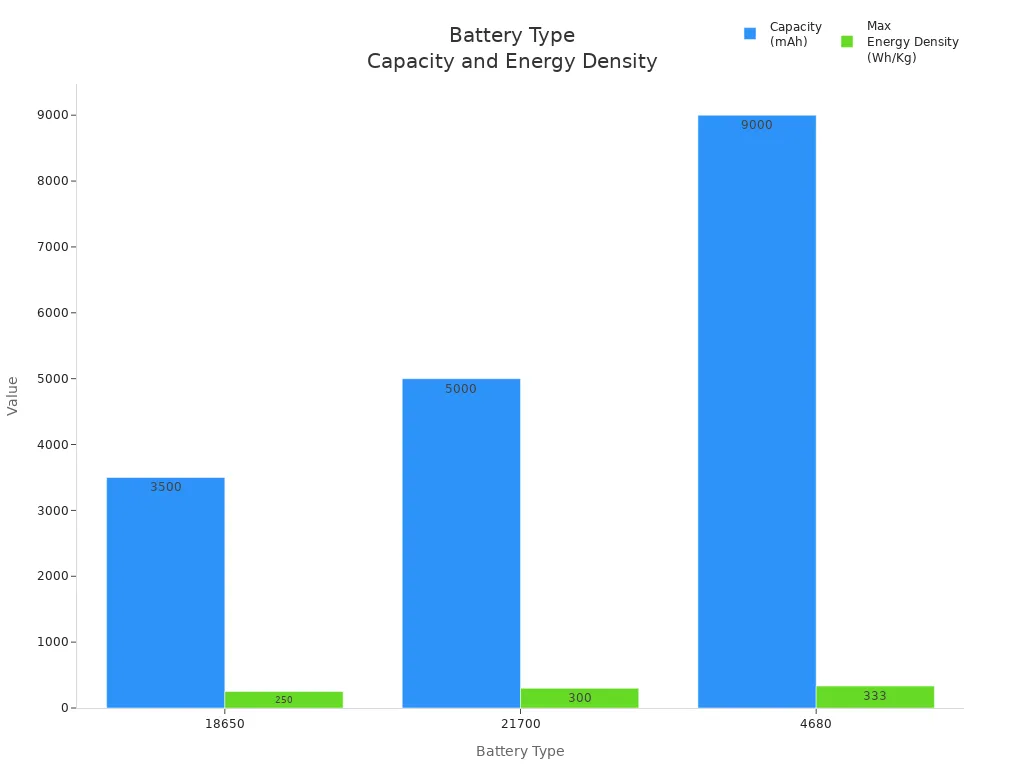
Choosing between a 21700 and 18650 battery depends on what matters most to you. Here’s a quick look at their main differences:
| Battery Type | Diameter (mm) | Height (mm) | Capacity (mAh) | Weight (g) | Energy Density (Wh/kg) |
|---|---|---|---|---|---|
| 21700 | 21 | 70 | 3000-5100 | 60-65 | 300 |
| 18650 | 18 | 65 | 2300-3600 | 45-48 | 250 |
- Think about battery capacity, device fit, total cost, and how long you want your battery to last.
- Always check your device’s needs before you buy.
Have questions or tips about picking the right battery? Share your experience in the comments!
FAQ
What is the main difference between 21700 and 18650 batteries?
You will notice that 21700 batteries are larger and store more energy. 18650 batteries fit smaller devices. Both types use lithium-ion technology, but 21700 batteries last longer between charges.
Can you use a 21700 battery in a device made for 18650?
You cannot use a 21700 battery in most devices built for 18650 batteries. The size difference prevents a proper fit. Always check your device manual before choosing a battery.
How do you know which battery is best for your device?
You should check your device’s battery compartment and read the manual. If you need longer run time, pick a 21700. For smaller devices, choose a 18650.
Are 21700 batteries safer than 18650 batteries?
Both batteries offer good safety when you use them correctly. Look for batteries with built-in protection circuits. Never charge or use a damaged battery.
How should you store lithium-ion batteries?
Store batteries in a cool, dry place. Keep them away from direct sunlight and heat. Charge them to about 50% if you plan to store them for a long time.